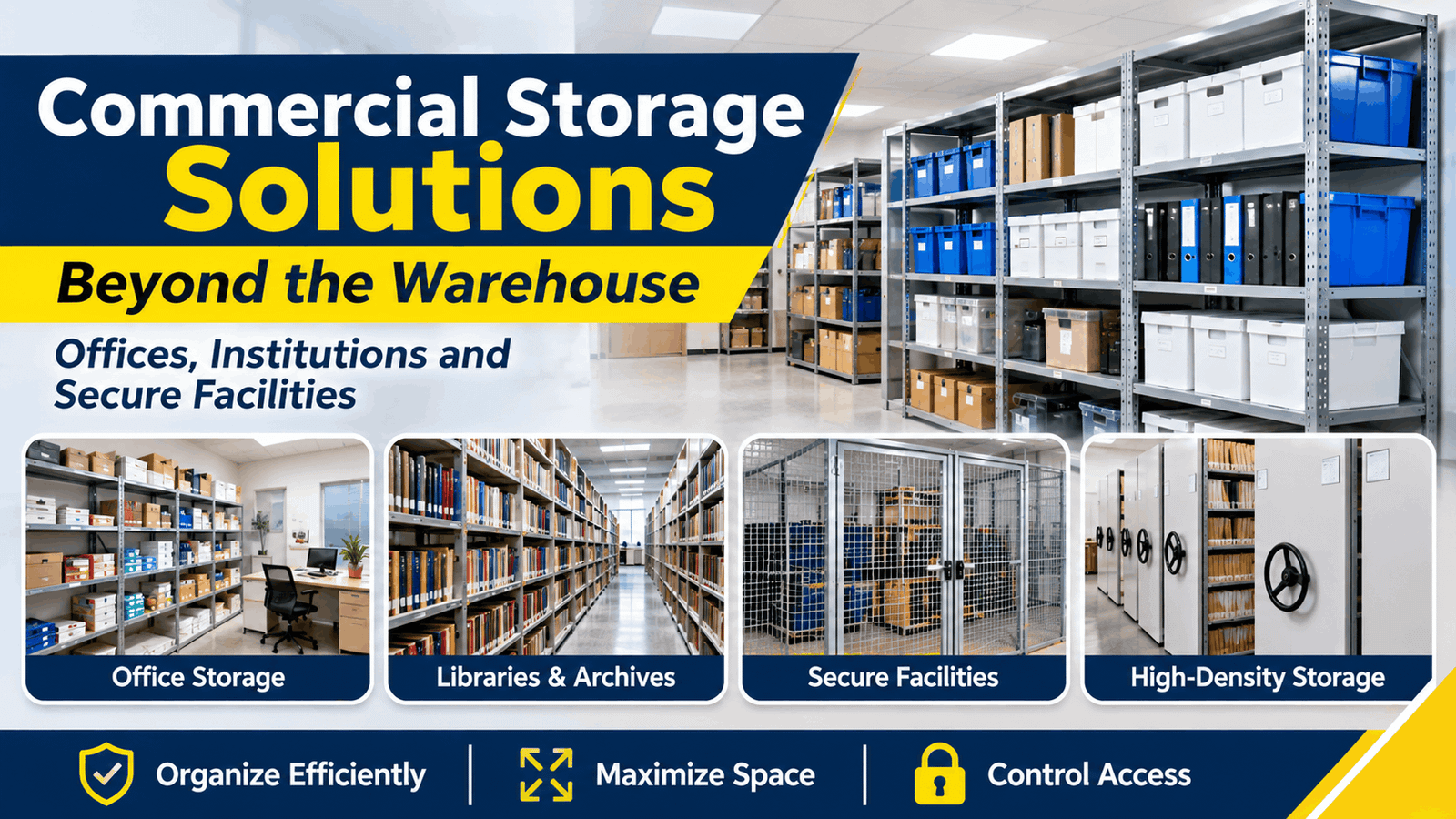
Commercial storage solutions include fixed shelving, high-density mobile shelving, cabinets and enclosures. The right choice depends on three questions: What are you storing? How often do people need it? Who should have access? An office supply room, a university archive and a restricted equipment room may all need more space, but they rarely need the same layout.
At Accurate Shelving, we help organizations in Ottawa and across Ontario compare on-site storage equipment for the way their facilities operate. Start with what happens on a busy day: who walks in, what they need to retrieve and where they put it back. That tells you more about the system you need than a room’s square footage alone.
What Are Commercial Storage Solutions Beyond the Warehouse?
Commercial storage solutions give records, supplies and equipment designated places inside a working facility. An office might need open shelves for everyday supplies and a cabinet for shared devices. A library might need fixed shelving for its public collection and compact storage for back-room records. A maintenance department might need a secure enclosure for equipment that doesn’t fit in a cabinet.
Plan each part of the room around its job. Giving archive boxes the easiest shelves to reach wastes space that could serve daily supplies. Putting shared equipment behind a lock without deciding who can issue and return it creates a different problem: staff know where the item is but can’t get it when they need it.
Which Storage Solutions Work Best in Offices?
Keep everyday supplies where staff can see and reach them. Give active files, archived records and shared devices separate locations when they have different access needs. This makes the supply room easier to use without turning every cabinet into a catch-all.
Where Should Everyday Supplies and Shared Equipment Go?
Fixed shelving works well when several people need supplies throughout the day. Set the shelf heights around the cartons, bins and binders you actually store. Keep a labelled location for current stock and a separate spot for unopened cartons, so someone can replenish the shelf without searching the room.
Adjustable Spider Shelving is one option for a shared supply room where stock sizes change. If small items keep disappearing behind larger boxes, a drawer cabinet may be a better fit for those items. The same room can use open shelving for visible stock and drawers for supplies that need their own compartments.
How Should Offices Separate Active Files From Archived Records?
Keep frequently requested files close to the staff who use them, with access appropriate to the records. Move archived files to labelled boxes with assigned shelf locations. A label such as “2024 contracts” is more useful when the records index also tells staff which bay and shelf hold that box.
Check box depth and loaded weight before choosing records storage shelving. Boxes that fit when empty can be awkward to lift when full, particularly if staff must pull them out above shoulder height. Give frequently retrieved boxes positions that are practical to reach and leave room to remove them without shifting neighbouring stock.
What Storage Works for Libraries, Archives and Other Institutions?
Institutional storage needs can vary within one building. A public library collection may have several users browsing different rows at once. A staff archive may see only a few requests each day, but still need space for years of records. Plan those areas separately.
When Does Fixed Shelving Make More Sense?
Choose fixed shelving when people need regular access to different sections at the same time. Permanent aisles let one person browse a collection while another returns items elsewhere. In a shared institutional stockroom, the same arrangement can help staff retrieve supplies without waiting for another aisle to open.
Plan shelf heights around the materials, leave space where collections are expected to grow and check how people approach each row. A layout that fits more shelves on paper may be harder to use if doors, corners or busy routes leave too little room to work.
When Is High-Density Mobile Shelving Worth Considering?
Consider high-density mobile shelving for a space-constrained archive or reserve collection where retrieval is periodic. The rows move to open an aisle where it’s needed, reducing the floor area set aside for permanent aisles. The trade-off is that people may need to wait if they want different rows at the same time.
Accurate Shelving works with Spacesaver, a high-density mobile storage supplier. Before specifying a system, check the floor’s ability to support the loaded installation, the proposed rail arrangement and how many staff members need access at peak times. If those patterns vary across the building, comparing mobile and fixed shelving can help you decide which areas benefit from each.
How Can Secure Facilities Control Access to Stored Equipment?
Decide what needs to be restricted: access to a specific item or entry to an entire storage area. A cabinet may be enough for shared devices or tools. An enclosure can make more sense for larger equipment or multiple shelving bays that need to sit behind one controlled entrance.
When Are Lockable Cabinets a Good Fit?
A lockable cabinet can work for equipment that designated staff issue and receive, such as shared laptops, test instruments or maintenance tools. Give each item a marked position so staff can see what’s out and where it belongs when returned.
When comparing industrial storage cabinets, check usable internal dimensions, the locking option and the space needed to open doors or drawers. Match the lock and key access to the facility’s procedures. The cabinet provides a physical barrier; the issue and return process tells staff who has the equipment.
When Should You Use a Wire Mesh Enclosure?
A wire mesh enclosure can define a restricted equipment bay while keeping its contents visible from outside. For example, staff can check whether a cart has been returned without opening the gate. Plan the gate opening and approach around the largest item that will move through it.
Visibility is useful for some equipment rooms and unsuitable for others. If the contents must be concealed, specify a storage arrangement that provides visual privacy. Check the facility’s access requirements before choosing the enclosure, door and locking hardware.
What Should You Confirm Before Choosing a Storage System?
Walk the space as if you were retrieving the largest item on the busiest day. Check whether you can open the cabinet, pass another person or move a cart without blocking a doorway. Then ask whether the layout still works when inventory is at its peak.
Before requesting a quote, gather your floor plan, item dimensions and weights, peak quantities and access requirements. Mark door swings, drawer clearance and delivery routes. Those details help you compare how much storage each option adds and what it will be like to use.
Share your storage requirements with Accurate Shelving to compare shelving, cabinets and enclosures for your office, institution or secure facility.
What Else Should You Know About Commercial Storage Solutions?
These questions can help you narrow down your options before requesting a layout or quote.
What Is the Best Shelving for a Shared Office Supply Room?
Adjustable fixed shelving is a good starting point when several staff members need direct access. Match shelf depth and spacing to the supplies and cartons you store.
When Is Mobile Shelving a Good Choice for an Archive?
It’s worth considering when floor space is limited and staff can retrieve records through shared aisles. Confirm the loaded floor requirements and how many people need access at once.
Can Fixed and Mobile Shelving Be Used in the Same Facility?
Yes. Use fixed shelving for everyday supplies or public collections and consider mobile shelving for reserve stock or boxed records that are retrieved less often.
What Is the Difference Between a Lockable Cabinet and a Wire Mesh Enclosure?
A lockable cabinet restricts access to the items inside it. A wire mesh enclosure controls entry to a larger storage area while allowing people to see through the perimeter.
What Information Should You Provide When Requesting a Storage Quote?
Share your floor plan, item dimensions and weights, storage quantities, retrieval frequency and access requirements. Note any doors or routes the equipment must fit through.