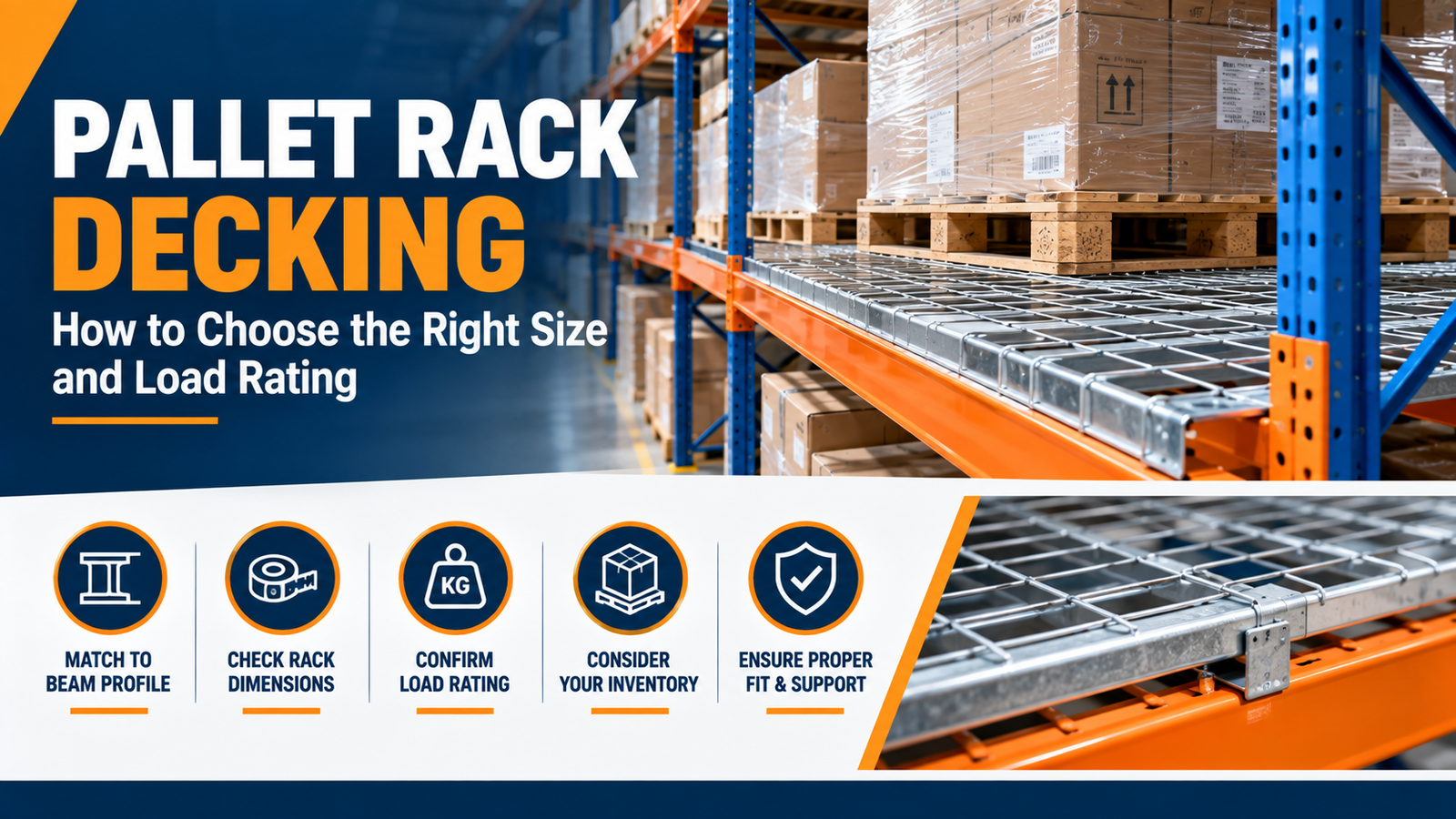
Pallet rack decking should fit the beams beneath it and suit the weight and shape of the goods above it. A deck that looks the right size can still be wrong for your rack if its support channels do not sit correctly or its rating assumes a different kind of load.
If you are adding decks to an existing warehouse rack, start with the rack measurements, then work back from what you store. Accurateshelving supplies wire mesh decks for pallet racking and can help match them to your setup. For a broader look at where decking fits alongside warehouse security products, see our guide to wire mesh decks and partitions.
What does pallet rack decking need to do in your warehouse?
Pallet rack decking is a surface placed across a rack’s front and rear beams. Wire mesh decking creates an open platform that can help support suitable pallets, cartons or other inventory when the deck is specified for that use. Its channels underneath transfer load toward the beams; the visible mesh is only part of the assembly.
An intact pallet presents a different support problem from small boxes placed directly on the mesh. Start with actual storage conditions.
What measurements do you need before choosing pallet rack decking?
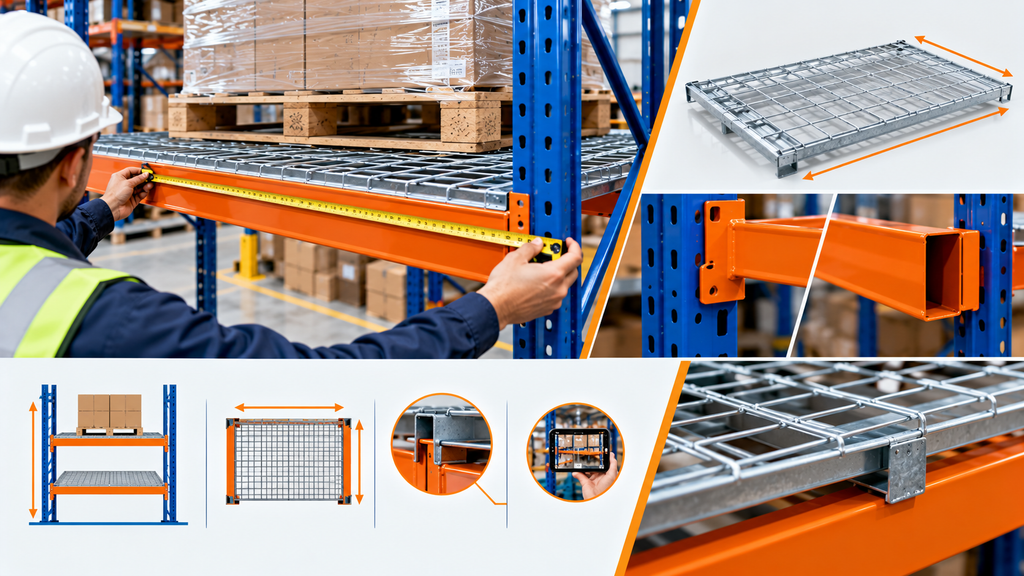
Measure the rack itself as well as the pallet. The deck must span the front and rear beams correctly, fit across the bay in the intended number of panels and engage with the beam profile as designed. If you are unsure where a dimension begins and ends, photograph the rack and ask the supplier to confirm it before ordering.
How do rack depth and beam length affect deck size?
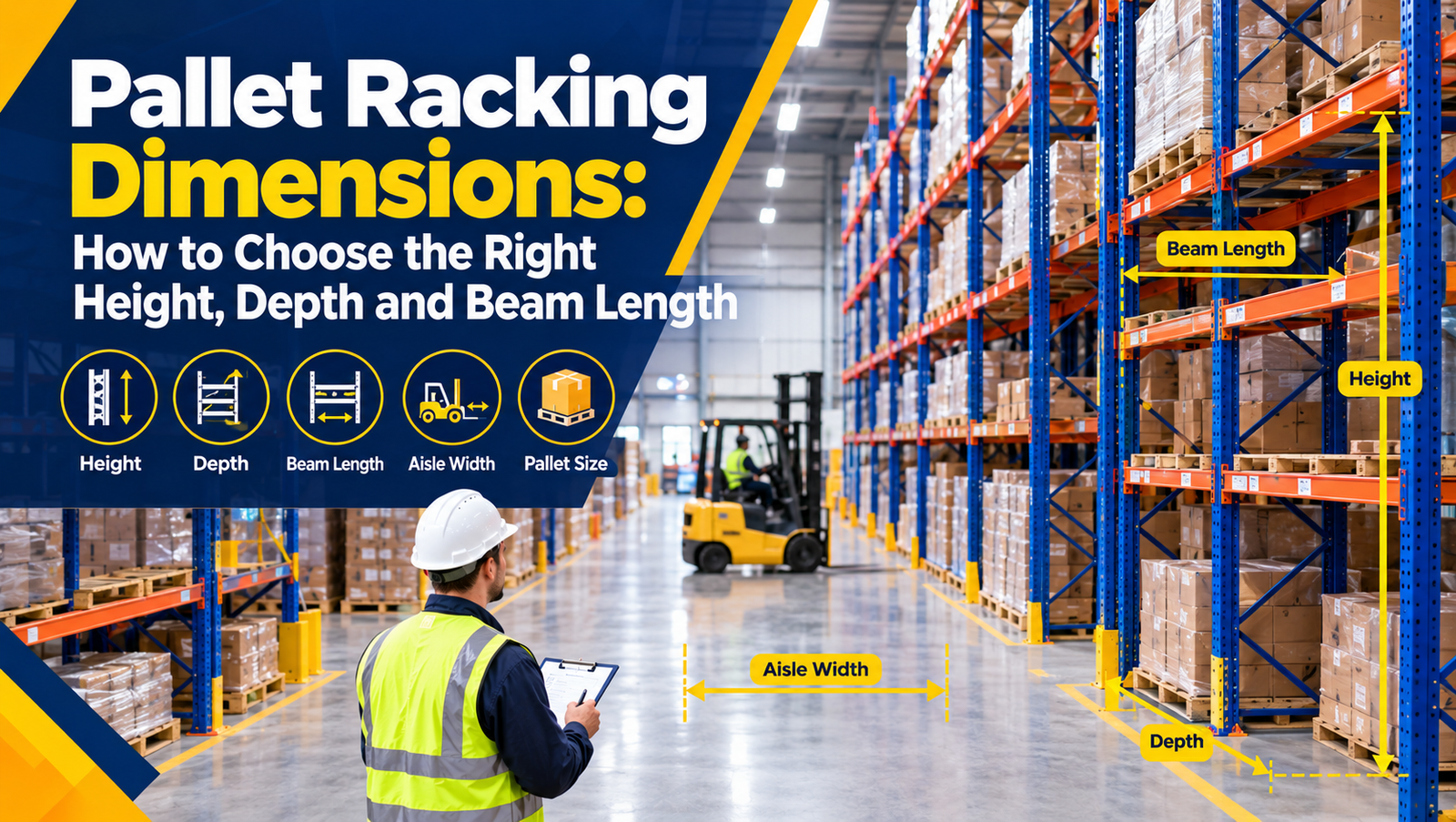
Rack depth describes the front-to-back frame dimension, while beam length describes the horizontal span of a level. They answer different sizing questions. A deck’s depth must suit the distance and seating surfaces of the front and rear beams; its width and the number of decks determine how the full beam span is covered.
For example, a 96-inch beam alone does not tell you which deck width to buy. Confirm the panel count and beam details too.
Why does the beam profile matter?
The beam profile determines where the decking’s edges and support channels sit. Step beams and box beams, for instance, do not necessarily accept the same deck design. A deck that rests neatly on one style may seat poorly on another even if its overall width and depth look correct.
When replacing a deck, photograph both beams and the old deck’s underside. Check stated compatibility even when a deck is advertised as “universal.”
How do you match a wire mesh deck’s load rating to your inventory?
Start with the heaviest load that may be stored at that position, including its pallet or container. Then ask how the deck manufacturer states its rating and whether your load is supported in the way that rating assumes. Deck capacity and rack capacity are separate checks: a suitable deck cannot make an underrated beam or upright safe.
Are your loads evenly distributed or concentrated?
A uniformly distributed load spreads weight across the deck. A machine sitting on four narrow feet places much more weight at a few contact points. Two loads with the same total weight can therefore behave differently on the mesh and its support channels.
Tell the supplier whether pallets, bins, cartons or equipment will sit on the deck, and where their contact points fall. If the published capacity applies only to evenly distributed loading, do not treat it as a rating for a concentrated load. Confirm the specific deck and rack configuration before placing unusual or heavy items on it.
Can decking increase the capacity of an existing pallet rack?
No deck automatically raises the engineered capacity of the rack beneath it. Beam capacity, upright capacity, beam elevations and the overall rack configuration still govern what the system can carry. The decking must also have a suitable rating for its own intended use.
If your loads or rack configuration have changed, have the pallet racking system and its documented ratings reviewed.
How do stored items affect the decking you choose?
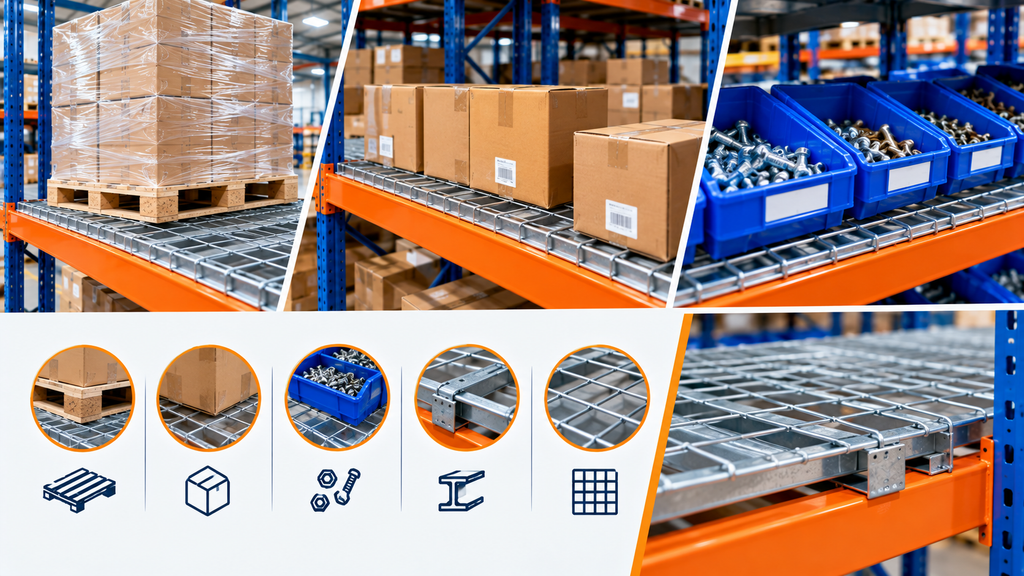
Consider the footprint, packaging and handling method of the goods, not just their total weight. A deck chosen for reserve pallets may not be the best fit when workers begin placing individual cartons directly on it. The supplier needs to know both what is stored today and any planned change in use.
Will you store pallets, cartons or small loose items?
Check the condition and orientation of the pallets and how they bear on the beams and deck. Damaged or unusual pallets can create different support points from the ones assumed in the original rack design. For cartons, compare the carton footprint with the mesh opening so items do not tip or pass through it.
Small loose parts should go into suitable containers or a storage solution designed for them. Wire mesh decking is not a universal shelf surface simply because it covers the space between beams.
Do support channels and mesh openings matter?
Yes. Support channels under the mesh affect how the deck bears on the rack. Their design and placement should be compatible with the beam profile and intended load. Mesh openings affect how well smaller items are supported and how easily light and sprinkler water can pass through the level.
The open surface is useful in many warehouses, but it does not, by itself, establish fire-code compliance for a particular facility. Sprinkler arrangements and storage conditions need to be considered as part of the full warehouse design.
What should you check before adding decking to existing pallet racking?
Look at the existing structure before treating decking as a simple add-on. Check for damaged beams or uprights, missing or loose connections, corrosion and any mismatch between the rack’s current configuration and its capacity documentation. A new deck should not conceal a problem underneath it.
Also confirm that the chosen panels will sit securely without rocking, that handling equipment can place loads as intended, and that the goods do not extend into unsafe clearances. If damage or undocumented alterations are present, address those first. Our warehouse racking maintenance guide explains what to watch for during ongoing use.
What information should you send when requesting a decking quote?
A good quote begins with enough detail to confirm fit and use. Send the beam length and profile, front-to-back rack depth, number of decks needed per level, number of levels, and clear photos of the beams and any existing decks.
Add the dimensions and maximum weight of the pallet or product, plus a note if cartons or equipment will rest directly on the mesh.
If the warehouse is damp, cold or exposed to other demanding conditions, mention that too so the proposed finish and specification can be checked. Accurate Shelving’s wire mesh decks page invites buyers to send beam dimensions for a recommendation. You can also request a quote with those details rather than choosing from a picture alone.
Final thoughts
The right pallet rack decking is the deck that fits your actual beams, supports the way your inventory bears on it and works within the rack’s documented capacity. Measure the structure, describe the load honestly and confirm the specification before ordering.
Those few checks can save an expensive mismatch and make the storage level more useful from day one.
FAQs
Can you add wire mesh decking to existing pallet racks?
Often, yes, if the deck’s dimensions, support channels and beam interface match the rack and its intended use. Check the existing rack’s condition and capacity information first.
How do you measure a pallet rack for decking?
Record the beam length, front-to-back rack depth and beam profile, then confirm the deck width, depth and number of panels needed per level with the supplier. Photos help verify where the deck will sit.
Is the deck load rating the same as the beam capacity?
No. The decking and the rack structure have different ratings. Both must suit the actual load and configuration; the lower relevant limit cannot be ignored.
Can cartons sit directly on wire mesh decking?
They can when the particular deck is rated for that use and the carton footprint is adequately supported by the mesh. Check small packages for tipping or fall-through risk.
How many wire mesh decks do you need per rack level?
It depends on the beam span and the width of the decks specified for that rack. Confirm the panel arrangement with the supplier instead of dividing the beam length by an assumed standard size.