A racking system that was installed correctly can still become unsafe over time, simply through the wear of normal, everyday warehouse activity. Installation gets a system compliant on day one, but maintenance is what actually keeps it that way for years afterward.
At Accurate Shelving, this guide breaks down how a proper maintenance program works, what inspectors actually look for, and how often it needs to happen to keep a facility genuinely safe and compliant.
Why Does Racking Need Maintenance After a Compliant Installation?
Getting a system anchored and certified on install day is only the beginning of its working life, not the end of the safety conversation.
Installation is a starting point, not a guarantee
A correctly anchored, fully compliant system on install day, covered in detail in our guide to warehouse racking installation, can still develop real structural issues months later from forklift impact, vibration, and everyday wear.
A one-time inspection only captures a single moment
A single inspection provides a snapshot of a system’s condition, but it doesn’t protect against damage that happens the week after the inspector leaves the building.
How Often Should Warehouse Racking Be Inspected?
There’s no single interval that fits every facility, since the right frequency depends on how the racking actually gets used.
Frequency depends on how hard the racking works
Facilities with heavier forklift traffic, higher load weights, or tighter aisles generally need more frequent inspections than lower-activity operations with wider clearances and lighter loads.
Routine checks and formal inspections serve different purposes
Monthly internal visual checks catch obvious issues quickly, and in Ontario specifically, these aren’t optional. The province requires storage rack inspections at least once a month as part of a facility’s regular safety obligations. A formal annual inspection by a qualified inspector then provides the more detailed, documented review that full compliance actually requires on top of those monthly checks.
How Is Rack Damage Actually Classified During an Inspection?
Not every scuff or dent means the same thing, and a proper inspection uses a structured way to tell the difference.
A three-tier system separates cosmetic wear from real danger
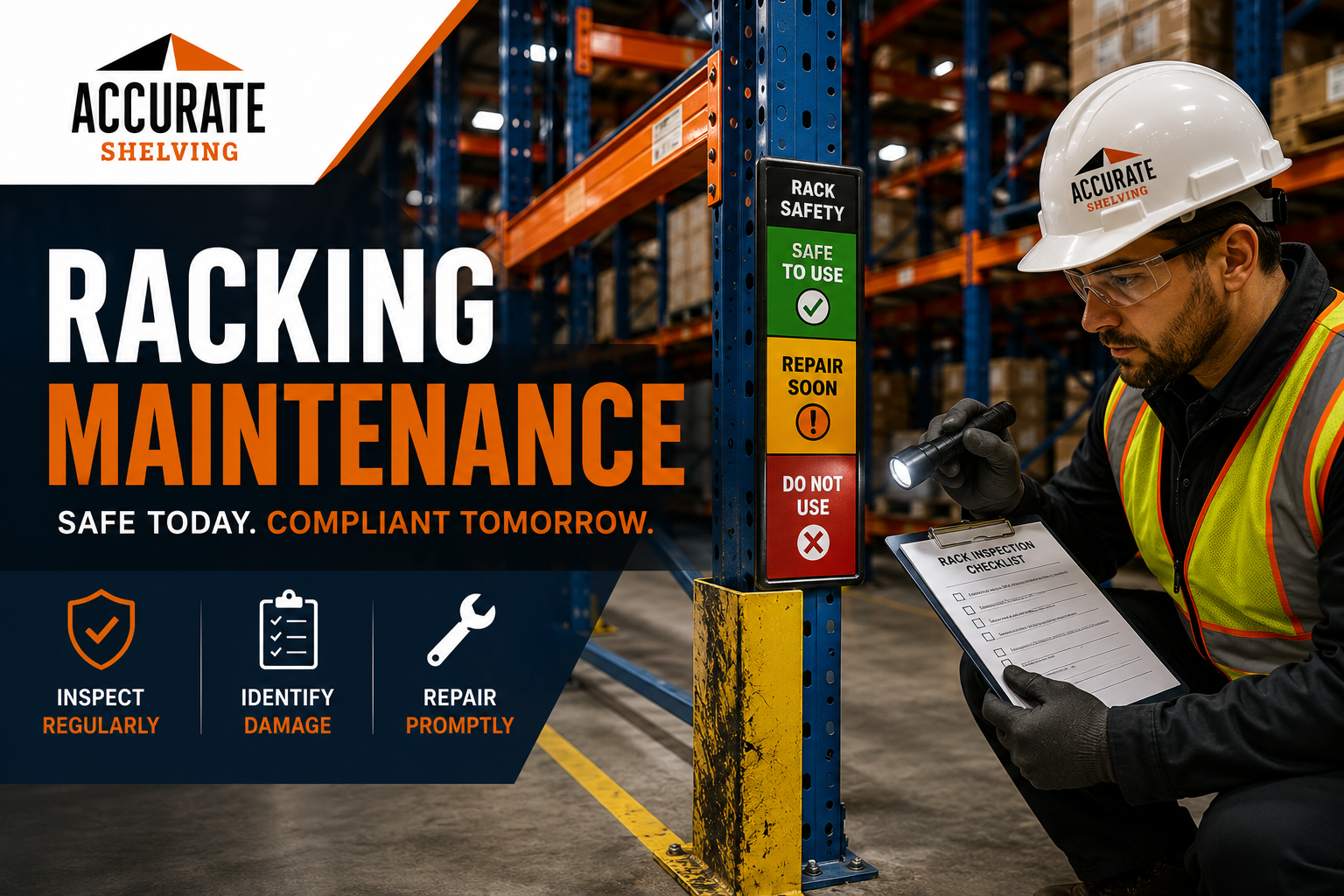
Most inspectors classify findings using a green, amber, and red system, where green issues get logged and monitored, amber issues get scheduled for repair, and red issues take the rack out of service immediately.
The line between amber and red usually comes down to a measurement
Beam deflection, column plumb, and anchor condition all have specific tolerances, so the classification isn’t a guess. It’s a measured comparison against a known limit, not a judgment call made from across the aisle.
What Early Warning Signs Should Warehouse Staff Watch For?
Staff working the floor every day are often the first to notice the small signs that come before a bigger failure.
Beam deflection and dislodged connections
Visible sagging beyond normal flex, missing safety clips, or a beam that isn’t fully seated are all signs a connection needs attention before the next load goes on top of it.
Leaning frames and anchor bolt issues
A column that’s out of plumb, or an anchor bolt that’s loose, missing, or backed out of the floor, is one of the clearest indicators that a bay’s stability is already compromised. Pedestrian walkways running along the back of a rack row are worth checking too, since these often need dedicated backstop protection to prevent product from falling into a space where people are walking.
Overloading and repeat damage point to bigger problems
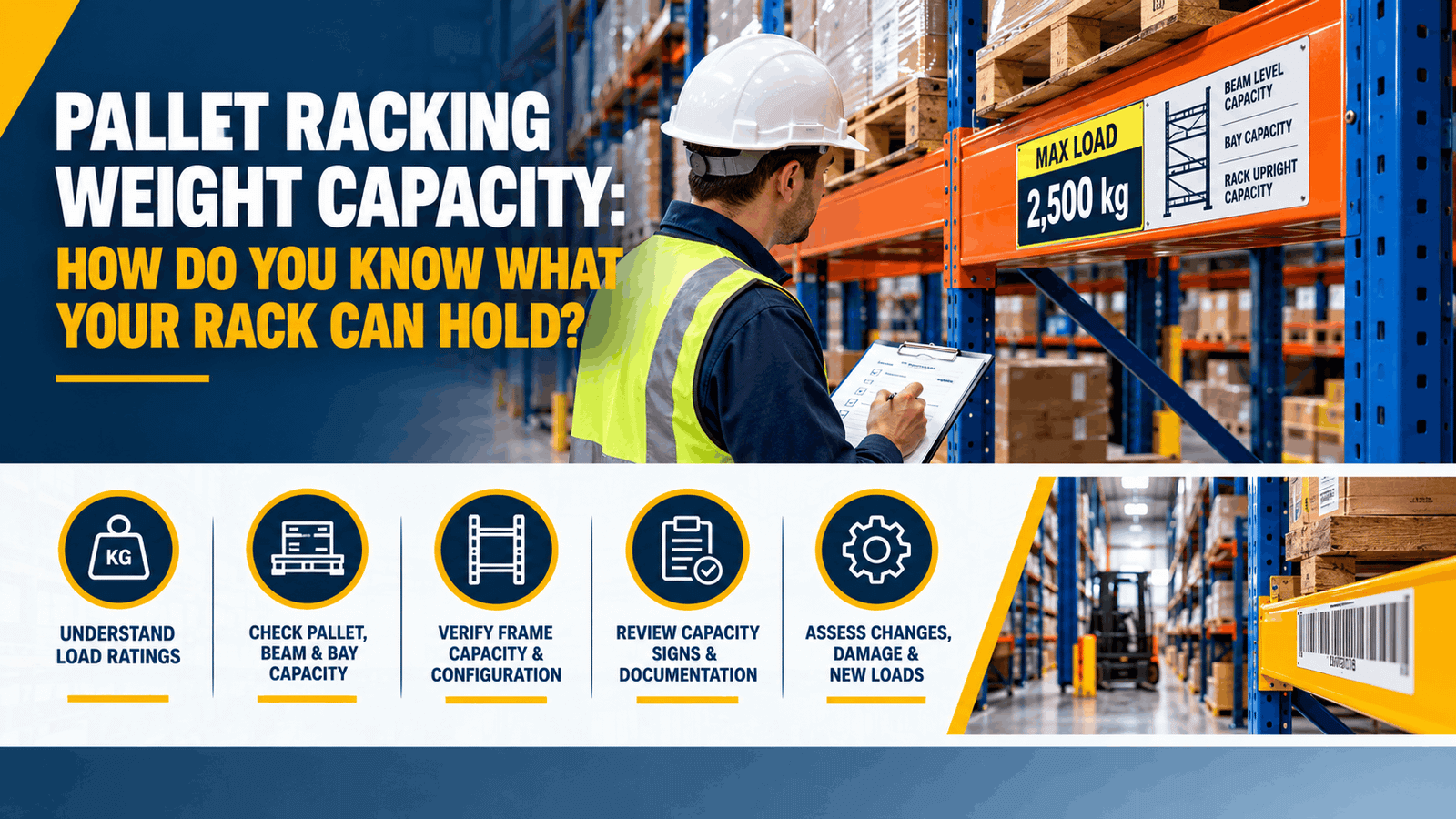
A rack stocked beyond its rated capacity, pallets sitting misaligned on the beam, or cracks appearing in the floor beneath a bay are all signs worth flagging just as much as damage to the rack itself. Damage that keeps reappearing in the exact same spot is often a signal that the area needs additional guarding, different staff training, or simply more clearance, not just another repair.
What Compliance Standards Govern Ongoing Racking Maintenance?
Maintenance isn’t just good practice. In most jurisdictions, it’s an ongoing legal obligation layered on top of the original installation standards.
RMI and ANSI MH16.1 set the inspection baseline
Industry standards call for inspection by a competent person at least annually, and immediately after any incident that could have caused structural damage to the system.
Canadian jurisdictions add their own documented requirements
Provinces layer their own obligations on top of that baseline, from the current CSA A344:24 user guide for steel storage racks in Ontario to CNESST requirements in Quebec, all of which expect a documented, repeatable inspection process rather than an occasional walkthrough.
Does a Repair or Reconfiguration Require a New Inspection?
This is the step most facilities genuinely don’t expect, and it’s one of the easiest ways to fall out of compliance without realizing it.
Modifications reset the compliance clock
Repairs, layout changes, and beam reconfigurations can all trigger the need for a fresh Pre-Start Health and Safety Review, not just a quick note added to a maintenance log somewhere. In Ontario, that review has to be carried out by a professional engineer under the Occupational Health and Safety Act, not just documented internally.
This is the step most facilities miss
It’s common for a facility to assume their original PSR still covers the system after changes have been made, when in practice most jurisdictions treat a modified system as needing its own review. The same principle applies after a warehouse relocation, since reinstalling racking at a new site is effectively a fresh installation from a compliance standpoint.
How Should Findings from a Rack Inspection Be Handled?
Spotting damage is only half the job. What happens after the inspection is often what actually determines whether a facility stays safe.
A finding that isn’t tracked isn’t actually fixed
The most common failure in facilities that do inspect their racking is a finding that gets logged and then forgotten, which is why repairs need a defined timeline and someone accountable for closing them out.
Documentation protects the facility, not just the racking
Keeping inspection reports, repair records, and PSR documentation on file gives a facility defensible proof of compliance if it’s ever questioned during an audit or after an incident.
Getting Warehouse Racking Maintenance Right
A racking system’s safety doesn’t end at installation. It depends on an ongoing maintenance program that catches damage before it becomes a failure, not one that only reacts after something’s already gone wrong.
Accurate Shelving has spent over 21 years installing and maintaining racking systems across Canada, including facilities throughout Ottawa and Eastern Ontario, with inspection and repair support that keeps your facility compliant well past day one. Visit our About Us page to learn more, or reach out through Contact Us for a hands-on racking maintenance assessment for your warehouse.