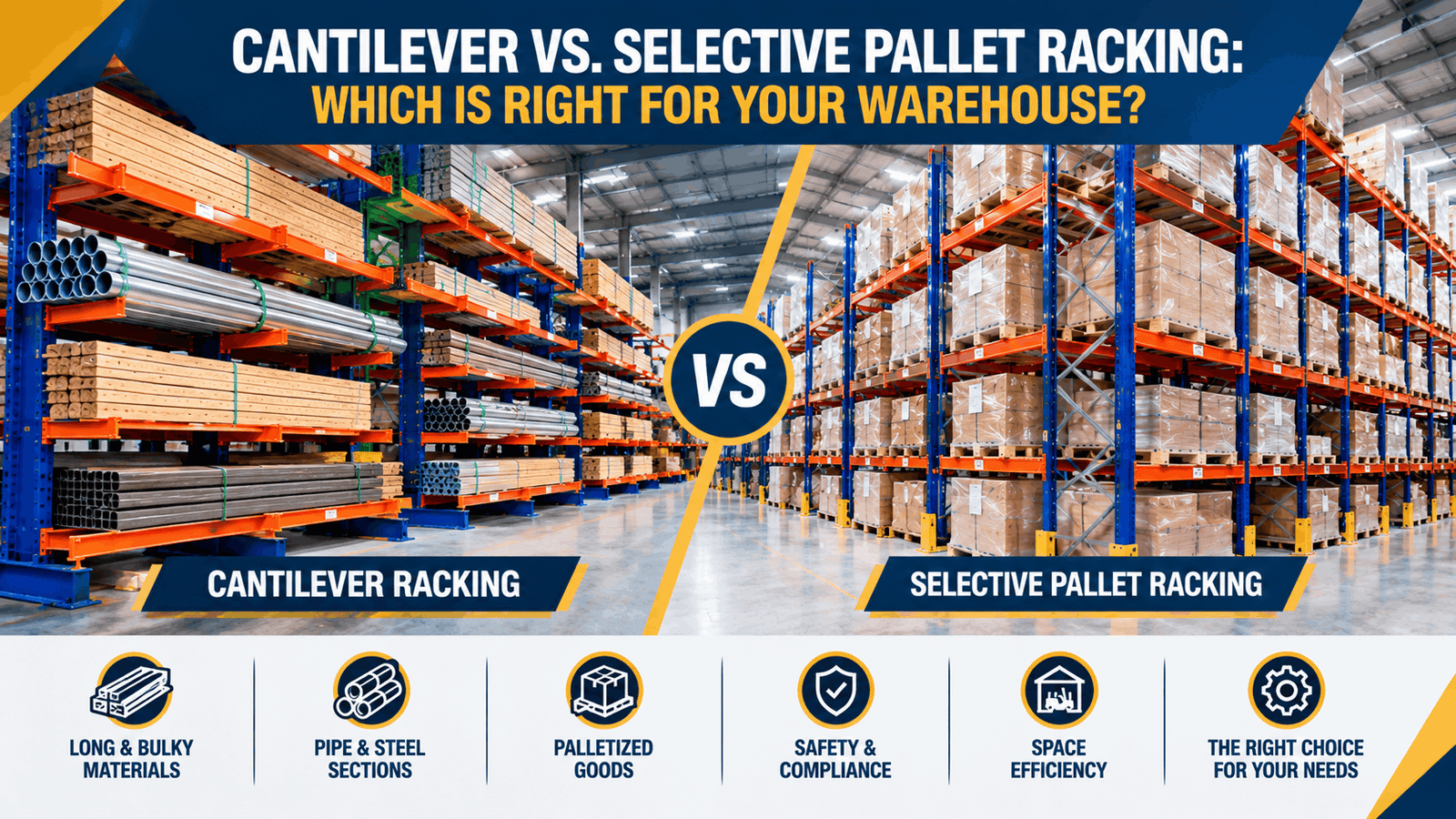
Cantilever racking generally suits long or irregular materials that need open-front support, such as lumber, pipe and steel sections. Selective pallet racking generally suits compatible palletized loads that need individual access. If your warehouse handles both, separate storage zones may serve the operation better than choosing one system for everything.
At Accurate Shelving, we help businesses match storage equipment to their inventory and daily work. The cantilever vs. selective pallet racking decision starts with how each load is supported, moved and retrieved, not which system looks stronger in a photograph.
What Is the Main Difference Between Cantilever and Selective Pallet Racking?
The main difference is the supporting structure and loading face. Cantilever racks carry material on projecting arms, while selective pallet racks use framed bays and horizontal beams to support suitable palletized loads.
How Does Cantilever Racking Support Long Materials?
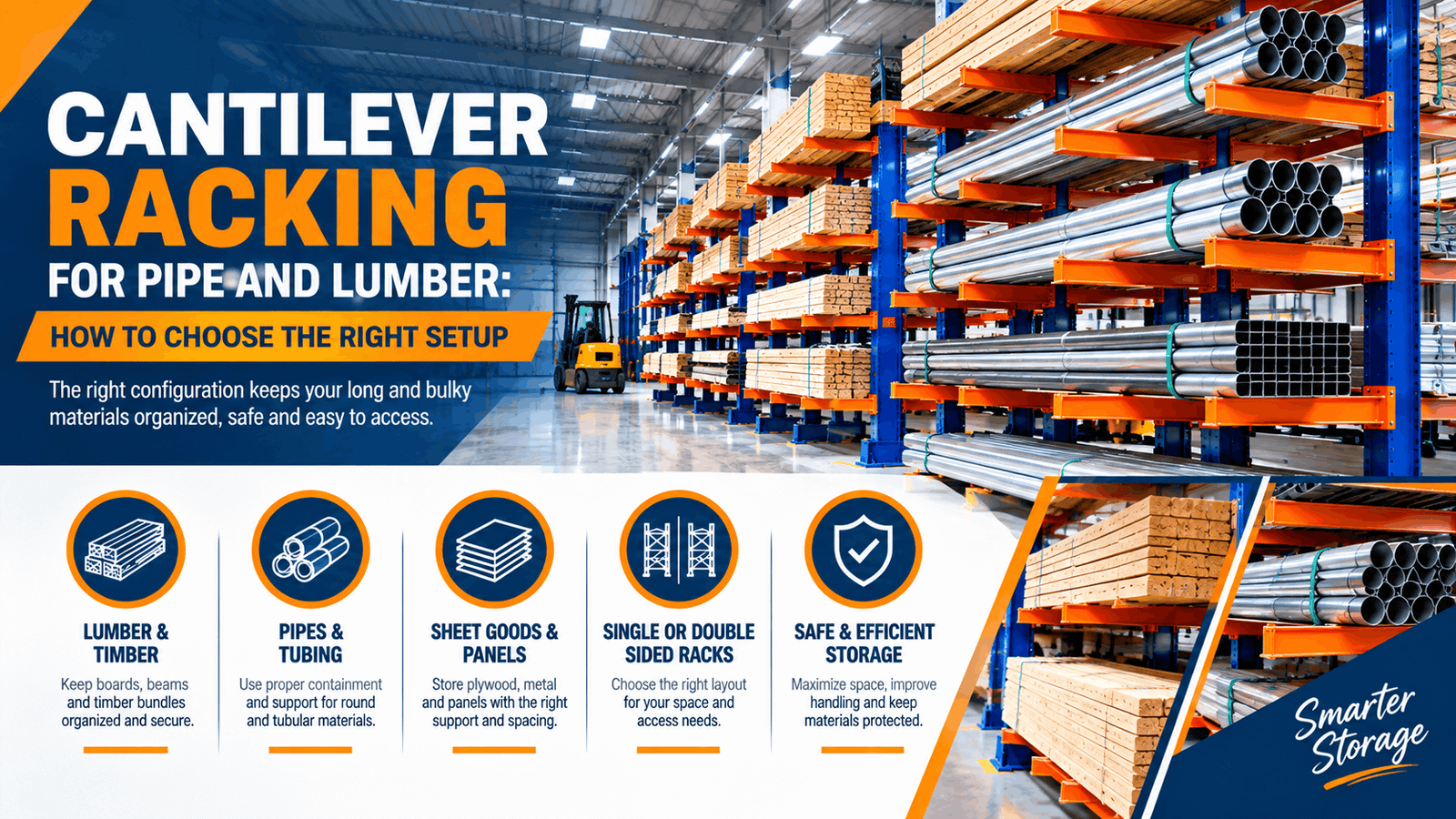
Cantilever arms extend from columns connected to bases, leaving the front open. This allows appropriately supported long loads to span the intended support positions without front columns obstructing access.
That design can suit lumber bundles, pipe and other irregular stock. It still needs support spacing, arm selection and any retention provisions matched to the material.
How Does Selective Racking Support Palletized Goods?
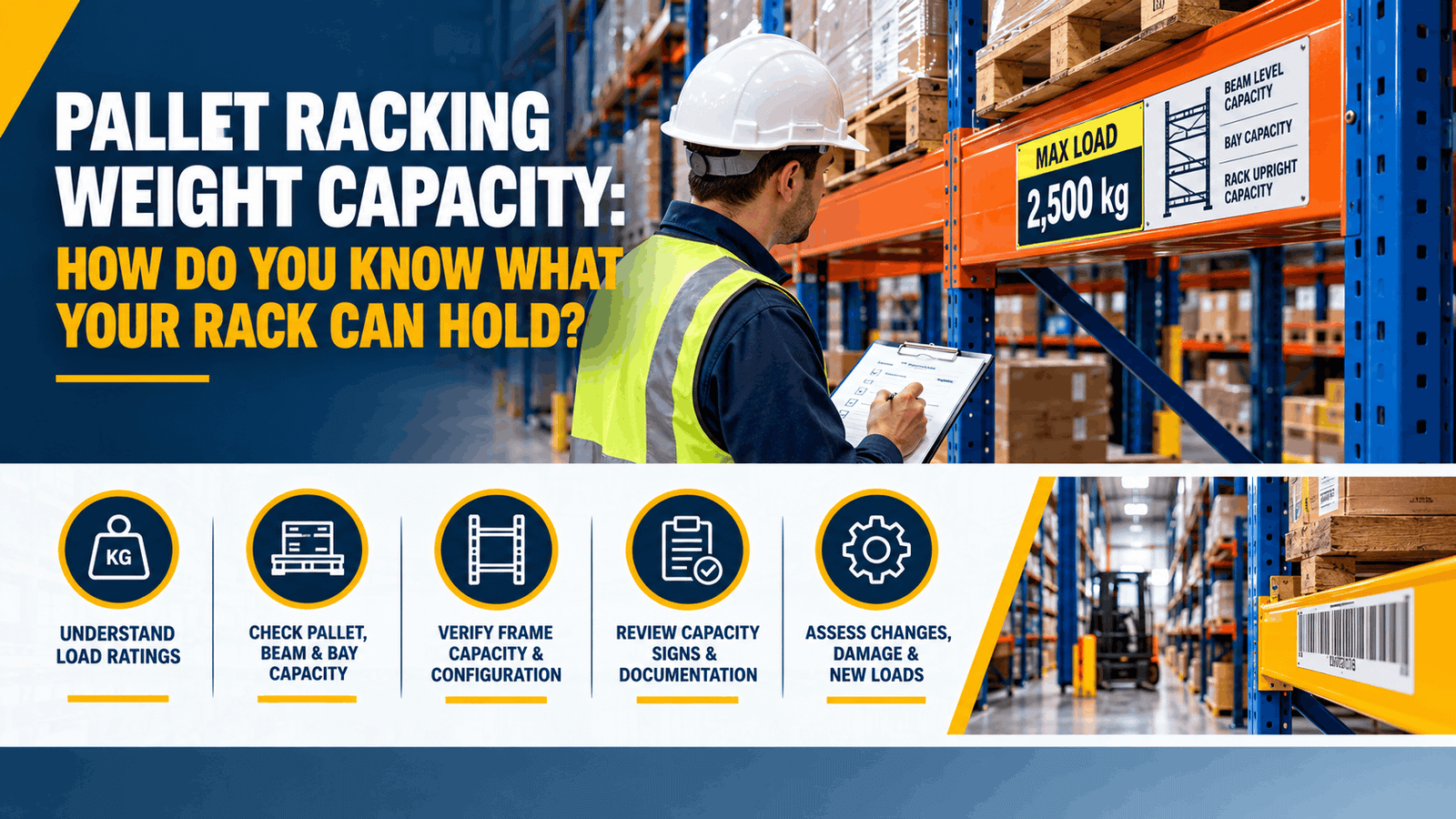
Selective racking uses upright frames connected by horizontal load beams. In a conventional single-deep arrangement, each pallet position is accessible from its aisle without moving another stored pallet first.
Rows can stand individually or back-to-back. Back-to-back rows remain single-deep from their respective access aisles; they are not the same as double-deep storage.
When comparing warehouse racking systems, identify the actual stored unit first: a supported bundle, individual lengths or a loaded pallet.
When Is Cantilever Racking the Better Fit?
Cantilever deserves consideration when load length, shape and support needs make conventional pallet bays unsuitable. Its value comes from providing the right access and support for those materials.
Does Your Inventory Need an Unobstructed Loading Face?
Long timber packs and steel sections can be awkward to place between the front uprights of a conventional pallet bay. Cantilever’s open face allows a different loading arrangement, provided the material reaches the specified supports.
The limitation is that open access does not make every load suitable. Short remnants, flexible material and round stock can need different support or containment arrangements from the original bundle.
Are You Retrieving Bundles or Individual Lengths?
A supplier needs to know whether employees retrieve complete bundles or pick individual pieces. Opening a strapped bundle can change how the remaining material behaves, even as its weight decreases.
Our cantilever racking guide explains the system’s configuration options. For selection, the important question is whether each intended load, including partially used stock has an appropriate storage position.
When Is Selective Pallet Racking the Better Fit?
Selective racking is a strong candidate when goods are stored on compatible pallets and operators need direct access to different pallet positions. It can accommodate varied inventory without requiring deep lanes of matching stock.
Are Most Goods Already Stored on Compatible Pallets?
Cartons, packaged products and manufacturing supplies often move through receiving and storage as palletized units. Selective racking can keep those units accessible at multiple levels.
Confirm pallet dimensions, condition and loaded weight, together with the required support arrangement. A pallet that travels successfully on a truck is not automatically suitable for every rack configuration.
Selective racking’s limitation appears when the load cannot be supported appropriately within its bay or creates unsuitable handling conditions.
Do You Need Frequent Access to Different SKUs?
A high SKU count means many distinct products. Direct pallet access helps when orders involve different items and operators need to retrieve a particular pallet without rearranging other stock.
Our selective pallet racking guide explores that flexibility further. Selective access can also support stock-rotation procedures, but it does not automatically enforce first-in, first-out movement; identification and operating practices still matter.
How Do the Systems Compare for Space and Handling?
Useful storage capacity includes the space needed to retrieve inventory. Comparing empty rack footprints or counting levels alone can make an unsuitable layout appear efficient.
Which Makes Better Use of Your Available Space?
Cantilever can organize long materials that otherwise occupy awkward floor locations. Selective racking can organize palletized stock into accessible bays. Each uses space effectively when the inventory suits its support arrangement.
Account for rack depth, load overhang, access aisles and staging. Neither system is universally denser, and cantilever still requires working space in front of its open loading face.
For mixed inventory, compare how many usable storage locations each proposed layout provides rather than forcing unlike loads into the same measurement.
What Equipment and Clearance Does Each Require?
Check the equipment used for the actual load, including attachments, lifting movement and turning space. A truck that fits an empty aisle may not manoeuvre there with a long bundle.
Cantilever and selective layouts both need suitable approach and withdrawal clearance. Neither should be assumed compatible with every forklift simply because it has an open aisle.
Good warehouse layout planning brings load dimensions, equipment movement, building columns and adjoining activities into the same assessment.
Which System Can Handle Your Required Load?
Both systems can be specified for demanding applications. Their verified configurations determine capacity, so one equipment category should not be declared stronger than the other.
How Do Arm Ratings Differ From Beam-Level Ratings?
Cantilever documentation identifies arm loads and the supporting column configuration. Selective-rack documentation commonly identifies beam-level ratings alongside frame and bay limits.
An individual arm rating is not directly comparable with a complete pallet-rack bay rating. Ask what each figure represents and which loading conditions it assumes before comparing equipment.
What Loading Conditions Need Verification?
Provide maximum load weights, dimensions, support contact points and the proposed arrangement across the system. Load distribution matters alongside the total weight.
Do not establish cantilever suitability simply by dividing a bundle’s weight by the number of arms. Likewise, a selective beam rating alone does not establish that every level can be fully loaded simultaneously.
Changing arm positions, beam elevations or components may require renewed verification. Confirm the revised arrangement before using it.
Can Cantilever and Selective Racking Work Together?
Yes. Different stock groups can justify different systems within the same facility. Combining them can preserve suitable support and access without forcing every item into one storage format.
For example, a building-materials distributor might store timber or pipe in a suitably configured cantilever zone and palletized packaged products in a selective zone.
Plan the zones together. Incoming loads need staging space, equipment needs workable routes, and long-material retrieval should not block access to pallet storage. The combination is useful only when both areas function during normal activity.
What Should You Check Before Choosing a System?
Prepare an inventory and handling brief. Record maximum load dimensions and weights, pallet or bundle condition, retrieval method, access frequency and the equipment already used.
Include expected changes: new stock lengths, larger quantities or different packaging can affect the choice. Measure available space, clear height and building obstructions, and identify indoor or outdoor conditions.
Have installation and site suitability reviewed alongside the configuration. Both systems also need ongoing condition checks, including connections and areas exposed to handling damage.
Confirm the proposed arrangement and documentation before ordering. Selecting a familiar rack first and investigating load fit afterwards can leave you with equipment that does not serve the operation.
Final Thoughts: Which Racking System Fits Your Warehouse?
Choose cantilever for suitable long-material applications needing open-front support. Choose selective pallet racking for compatible palletized goods requiring individual access. Use both where separate inventory groups justify separate storage zones.
Discuss your warehouse racking requirements with Accurate Shelving. Share stock dimensions, load weights and handling details to compare suitable configurations and request an estimate.
What Else Should You Know About Cantilever and Selective Racking?
These questions clarify suitability and future changes.
Can Cantilever Racking Store Pallets?
It requires a specifically suitable, approved support arrangement. Do not assume pallet storage is acceptable because individual arms have sufficient stated capacity; the complete configuration must suit the load.
Can Selective Pallet Racking Store Long Materials?
Only with an appropriate designed support and handling arrangement. Long stock should not simply be placed across ordinary bays without reviewing support positions, capacity and retrieval requirements.
Is Cantilever Racking Stronger Than Selective Racking?
Neither is universally stronger. Verified components, configuration, loading conditions and installation determine capacity. Compare ratings for the intended application rather than relying on the system name.
Which System Needs Less Aisle Space?
The load, handling equipment and required manoeuvre determine clearance. Compare proposed layouts using actual operating requirements; neither system has one aisle width suitable for every application.
Can One System Be Converted Into the Other?
They use different structural arrangements. Existing components should not be assumed interchangeable. A proposed change needs a properly specified solution, with compatibility and suitability confirmed before use.