Racking design and equipment selection are usually treated as two separate decisions, when they’re really one decision made twice. The wrong forklift for a racking layout doesn’t just underperform. It can make an otherwise well-designed system genuinely difficult to use.
At Accurate Shelving, this guide breaks down how to match material handling equipment to a racking system, from aisle width to load capacity, so the two decisions actually work together instead of fighting each other.
Why Should Racking and Equipment Be Chosen Together?
Treating these as sequential purchases, rather than one connected decision, is where most mismatches start.
Two decisions that function as one
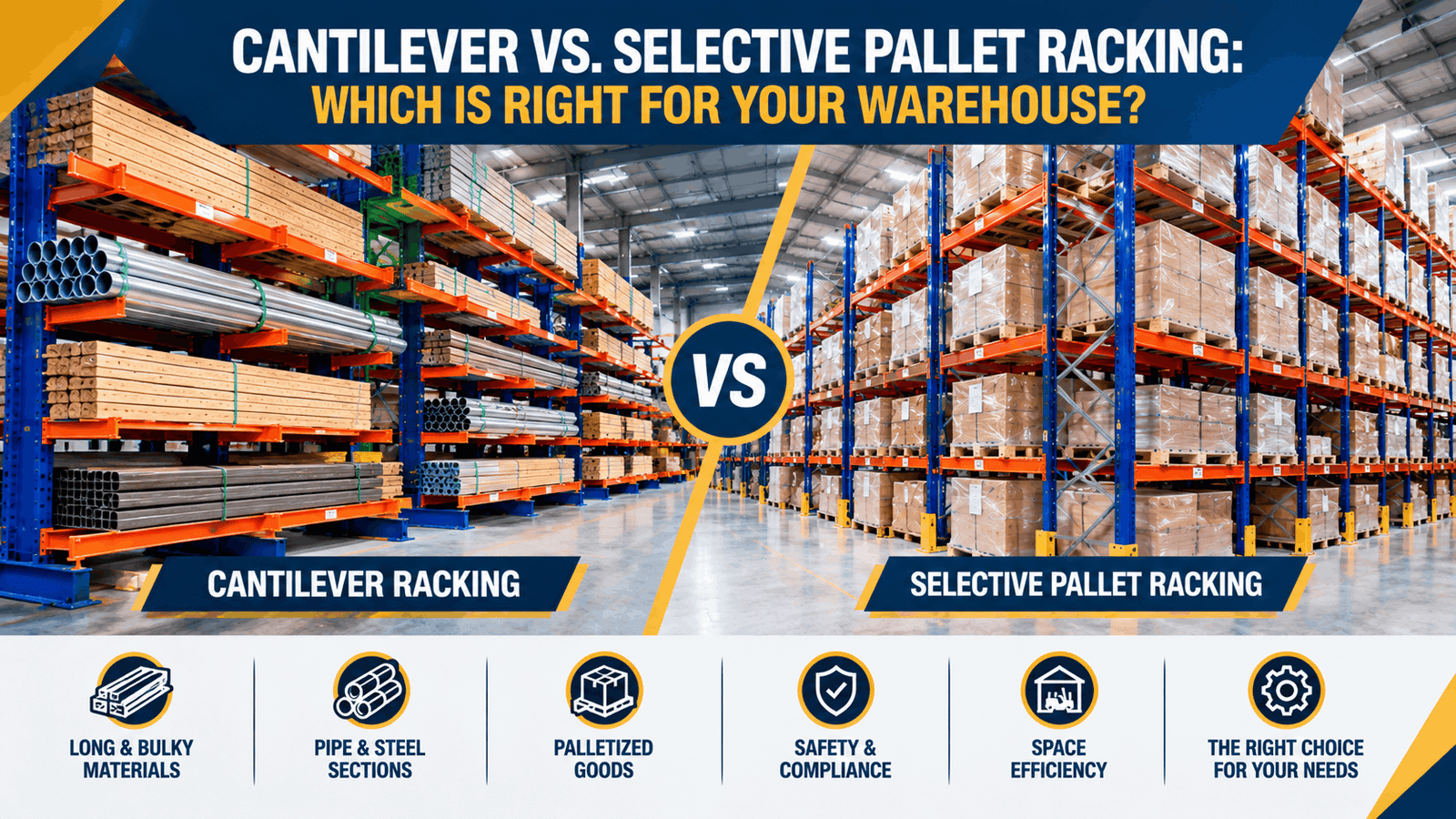
The racking layout determines what aisle width is available, and the aisle width determines which equipment can actually operate in it, making the two choices inseparable in practice, even when they get budgeted separately.
Retrofitting equipment after the fact gets expensive fast
Designing racking first and figuring out equipment later often means discovering the ideal forklift doesn’t fit the aisles that were already built, forcing a compromise on one side or the other.
How Does Aisle Width Determine Which Forklift You Need?
Aisle width and forklift type aren’t really two separate questions. They’re the same question answered from opposite directions.
Wide aisles suit the most common, most flexible equipment
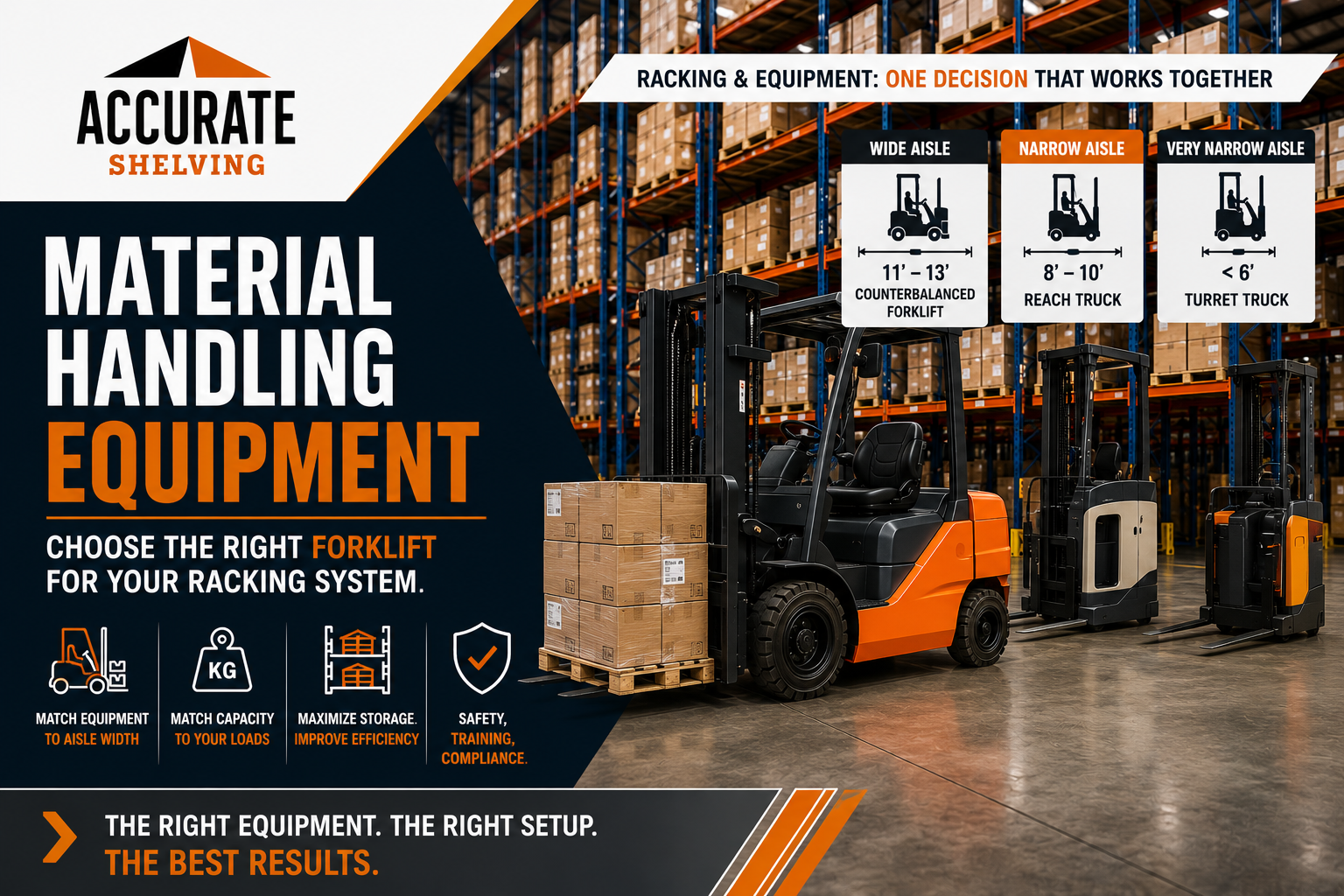
Standard counterbalanced forklifts need roughly 11 to 13 feet of aisle space, making wide aisles the most forgiving option and the easiest to staff, since this is the most familiar equipment type on most sites.
Narrow aisles call for reach trucks
Reach trucks extend into racking without the body of the machine fully entering the aisle, which lets them operate in aisles as tight as 8 to 10 feet while still handling a full range of pallet weights.
Very narrow aisles require turret trucks and stricter conditions
Turret trucks rotate their forks to work in aisles under 6 feet, the tightest configuration available, but they depend on guidance systems and floor flatness standards that a standard warehouse floor may not already meet.
How Much Storage Capacity Can the Right Equipment Choice Add?
The payoff for matching equipment to a tighter aisle isn’t abstract. It shows up directly in how much inventory fits in the same building.
Narrower aisles mean more racking in the same footprint
Shifting from wide to narrow aisles can increase storage capacity by roughly 20 to 25 percent, without adding a single square foot to the building, a gain that connects directly to the same principles behind good warehouse optimization.
The trade-off is equipment cost and floor requirements
Denser layouts require more specialized equipment and, in the case of very narrow aisles, stricter floor flatness standards than a facility may already have in place.
What Other Material Handling Equipment Does a Warehouse Need?
Forklifts get most of the attention, but they’re rarely the only equipment a facility actually depends on day to day.
Pallet jacks for floor-level, short-distance moves
Manual or electric pallet jacks handle everyday pallet transport across short distances, without the cost or footprint of a full forklift sitting idle between larger moves.
Order pickers and stackers for vertical access
Order pickers raise both the operator and the load to shelf height for piece-picking, while stackers handle simpler vertical lifting in tighter spaces than a forklift would ever need.
What Safety Standards Apply to Warehouse Equipment and Aisles?
Choosing the right equipment is only half the picture. Operating it safely within that aisle is the other half.
Operator training isn’t optional for powered equipment
Forklifts, order pickers, and powered stackers all require certified operator training before use, regardless of how simple the equipment looks to run from the outside.
Aisle design has to account for pedestrians, not just equipment
Facilities with foot traffic in equipment aisles need defined pedestrian lanes, since aisle width calculated for a forklift alone doesn’t account for people sharing that same space during a shift.
How Do You Plan Racking and Equipment Together from the Start?
Getting this right isn’t about picking the best forklift in isolation. It’s about designing both pieces around each other from day one.
Match load capacity to what the racking actually holds
Equipment load capacity should reflect the real weight of palletized inventory, not just the racking’s own load rating, since the two are often evaluated independently but have to perform together on the floor.
Design for the equipment you’ll need in five years, not just today
Facilities that plan with future growth in mind avoid the costly redesign that comes from outgrowing equipment a racking layout, covered in more detail in our guide to warehouse racking installation, was never built to accommodate.
Getting Racking and Equipment Right Together
Racking and material handling equipment aren’t two separate purchases. They’re one decision that has to work together from the first layout sketch, not something to reconcile after the racking is already bolted down.
Accurate Shelving has spent over 21 years designing racking systems across Canada with equipment compatibility built into the layout from day one. Visit our About Us page to learn more, or reach out through Contact Us for a hands-on assessment of the racking and equipment combination that fits your warehouse.