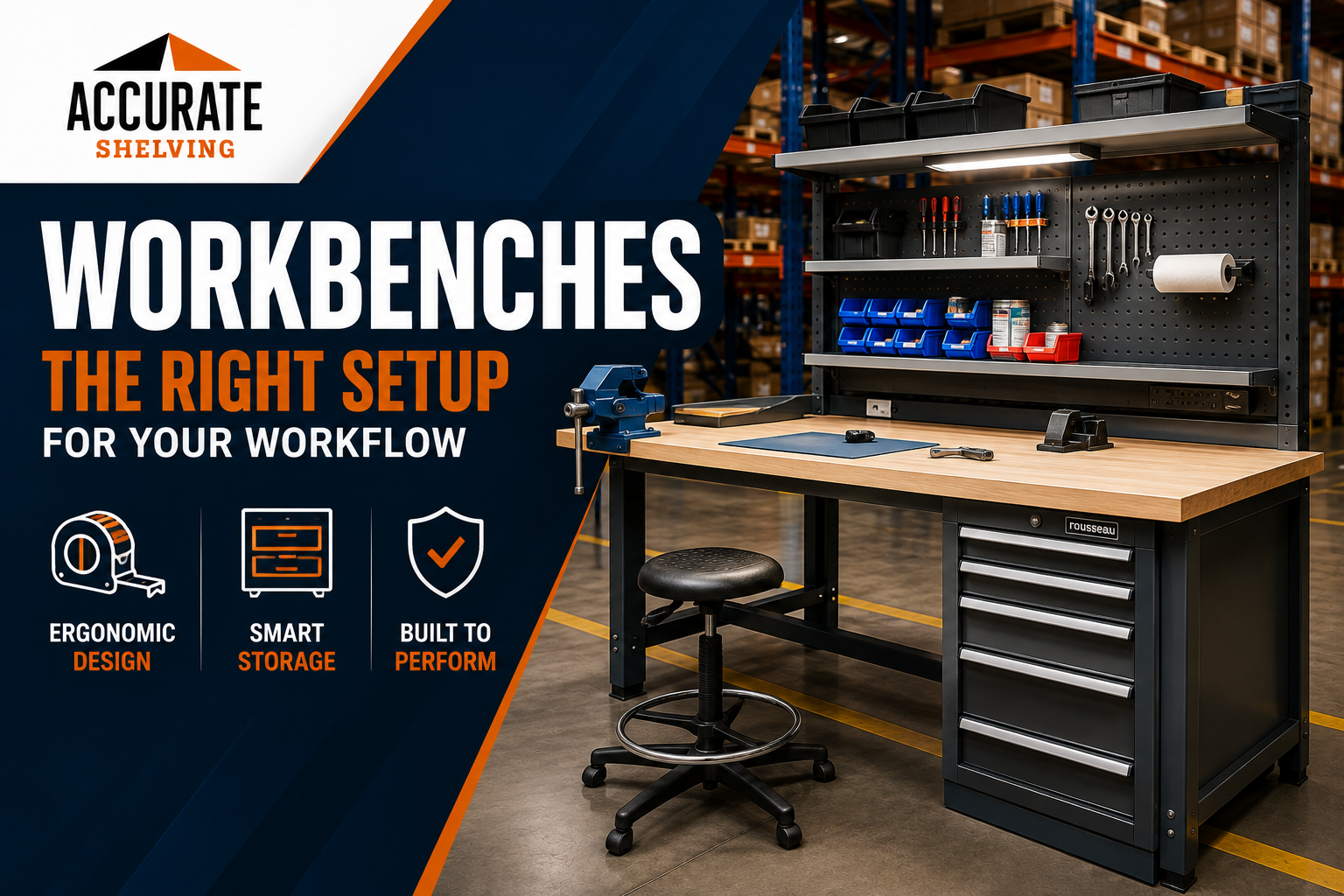
The wrong workbenches doesn’t just look wrong sitting in a facility. It slows down every task performed at it, day after day, in ways that are easy to overlook until they add up.
At Accurate Shelving, this guide breaks down how to choose the right workbench setup, from height and surface material to storage and load capacity, so the bench actually fits the work being done at it.
What Makes a Workbench Setup Right for a Specific Job?
Before comparing features, it helps to start with what a workbench is actually supposed to do for the person using it.
A workbench is a workflow decision, not just furniture
The right setup depends on the task being performed at it, whether that’s electronics assembly, heavy component repair, or general maintenance work across a busy shift.
Getting it wrong shows up in productivity, not just comfort
A workbench that’s the wrong height, surface, or configuration for the job slows workers down and increases strain over a full shift, not just on an occasional bad day.
Should You Choose a Fixed or Height-Adjustable Workbench?
This is usually the first real decision, and it comes down to who’s using the bench and how consistently.
Fixed workbenches for consistent, single-user tasks
A fixed-height bench offers a stable, no-moving-parts setup that works well when the same task and the same worker use it consistently, shift after shift.
Adjustable workbenches for shared or multi-shift use
Manual crank or electric height adjustment lets a bench serve multiple workers of different heights, or the same worker switching between sitting and standing throughout the day.
How Does Workbench Design Affect Ergonomics and Productivity?
Beyond height, the layout of a workbench has a real effect on how much strain builds up over a shift.
Sit-stand flexibility reduces fatigue over a full shift
Alternating between sitting and standing throughout the day reduces the strain that comes from staying in one position for hours without a break in posture.
Reach and layout matter as much as height
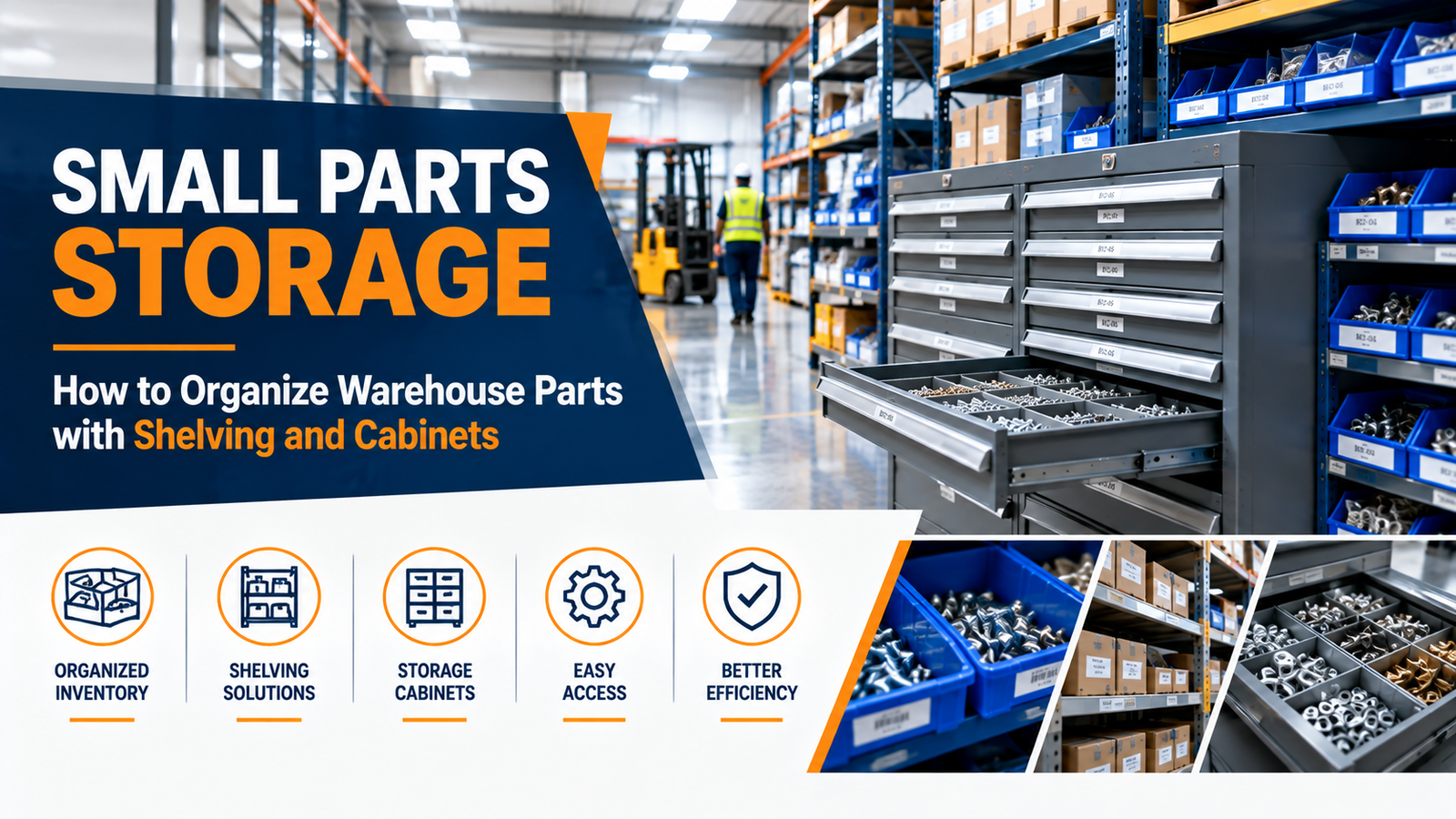
Keeping frequently used tools and components within easy reach reduces the repeated stretching and bending that leads to repetitive strain over time, a theme that connects closely to how we think about organizing small parts more broadly.
When Does a Workstation Need ESD Protection?
For some environments, this isn’t optional. It’s a requirement built directly into how the workstation needs to be built.
Static discharge is a real risk around sensitive electronics
Electronics assembly, component placement, and testing all involve direct contact with parts that static discharge can damage or destroy instantly, sometimes without any visible sign at the time.
ESD compliance follows a recognized standard
Workstations built for this environment are expected to meet ANSI/ESD S20.20 requirements, covering surface resistance and proper grounding, not just a static-resistant tabletop bo$lted onto a standard frame.
Which Work Surface Material Fits Your Application?
The surface a workbench uses matters just as much as its height or frame, and the right choice depends entirely on what happens on top of it.
Laminate and ESD laminate for general and electronics work
Standard laminate handles everyday assembly and inspection tasks well, while ESD laminate adds static protection for electronics-sensitive environments without sacrificing durability.
Solid wood and steel for heavy or high-impact work
Solid maple or stainless steel surfaces hold up better where heavy parts, repeated impact, or mounted equipment like a vise put real, ongoing stress on the tabletop.
How Should a Workbench Be Configured for Storage and Access?
A workbench’s usefulness often comes down to how well it keeps tools and parts organized right where they’re needed.
Integrated drawers keep tools and parts within reach
Drawer units built directly into a workstation, with maximum-extension access, eliminate the hard-to-reach corners common with separate shelving positioned nearby. This is the same principle behind the drawer systems in HD cabinets, just built directly into the work surface itself.
Secure, lockable storage protects sensitive work areas
An enclosed hutch attachment can close off a workstation at the end of a shift or during breaks, keeping tools and in-progress work secure without needing a separate cabinet nearby.
What Load Capacity Does a Warehouse Workbench Actually Need?
Capacity isn’t just a number to check off. It has to match the real demands of the work happening at that bench.
Match the frame to the weight of the work, not just the surface
A workbench holding heavy components or absorbing repeated impact needs a reinforced steel frame rated for that load, not just a sturdy-looking tabletop sitting on thin legs.
Distributed load matters more than a single number
Capacity ratings typically assume a uniformly distributed load, so how weight is actually placed across the surface affects real-world performance as much as the rated maximum ever does.
Getting Your Workbench Setup Right
The right workbench setup comes down to matching height, surface, storage, and capacity to the actual work being done at it, not choosing the first bench that happens to fit the available floor space.
Accurate Shelving has spent over 21 years supplying and installing Rousseau workbenches and workstation systems across Canada, configured around your facility’s real workflow. Visit our About Us page to learn more, or reach out through Contact Us for a hands-on assessment of which workbench setup fits your warehouse or production floor.
Frequently Asked Questions
Should I choose a fixed or height-adjustable workbench?
Fixed benches suit consistent, single-user tasks, while height-adjustable benches work better for shared workstations or tasks that alternate between sitting and standing.
Does my workstation need ESD protection?
If it’s used for electronics assembly, component placement, or testing, yes — static discharge can damage sensitive parts without an ESD-safe surface and proper grounding.
What’s the difference between laminate and steel work surfaces?
Laminate suits general assembly and inspection work, while solid wood or stainless steel holds up better under heavy parts, repeated impact, or mounted equipment.
Can drawers be built directly into a workbench?
Yes, integrated drawer units with maximum-extension access keep tools and parts within reach without relying on separate nearby shelving.
How much weight should a warehouse workbench be able to hold?
It depends on the work performed there, but the frame should be rated for a uniformly distributed load that matches the heaviest components or tools regularly placed on it.