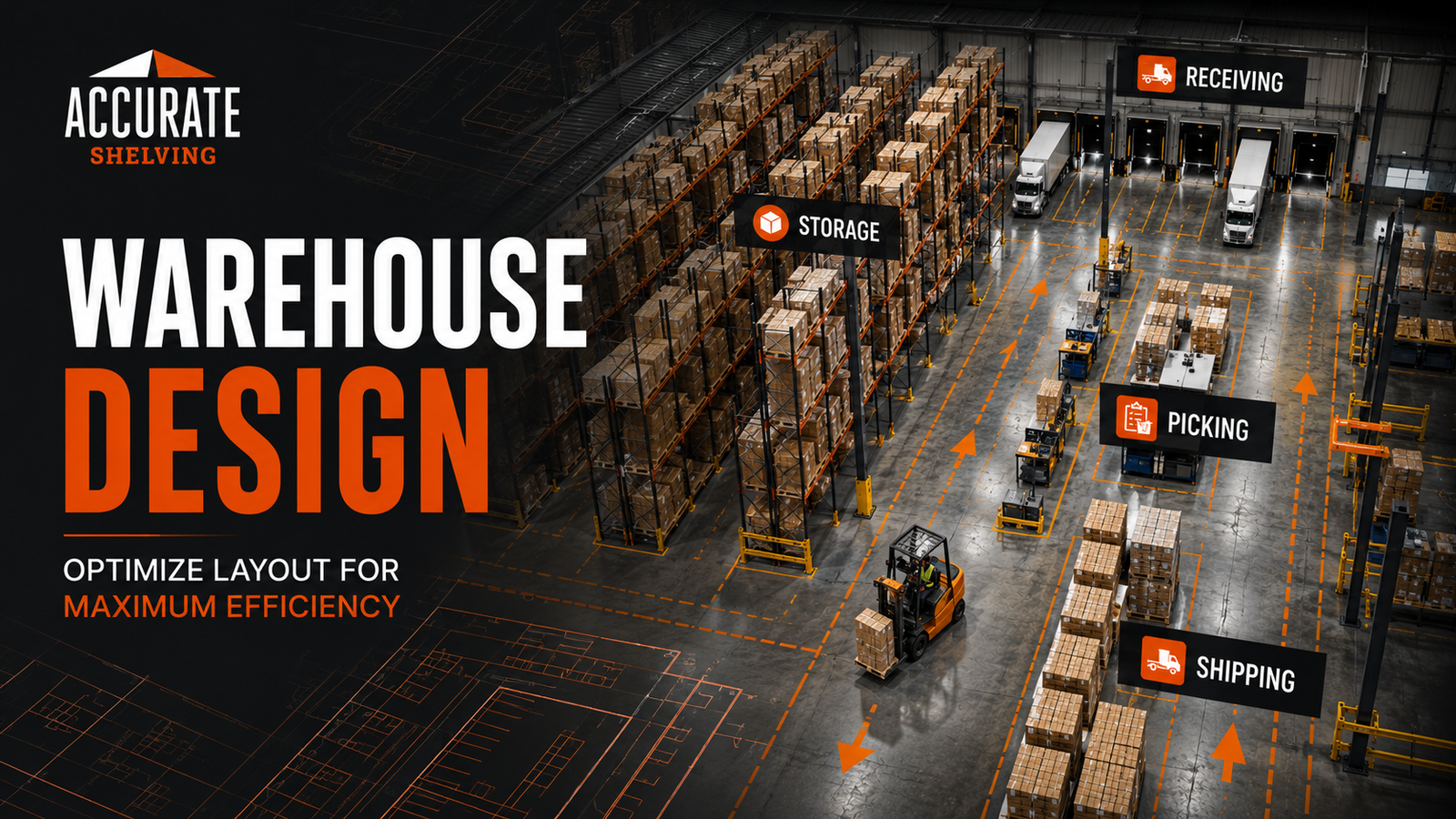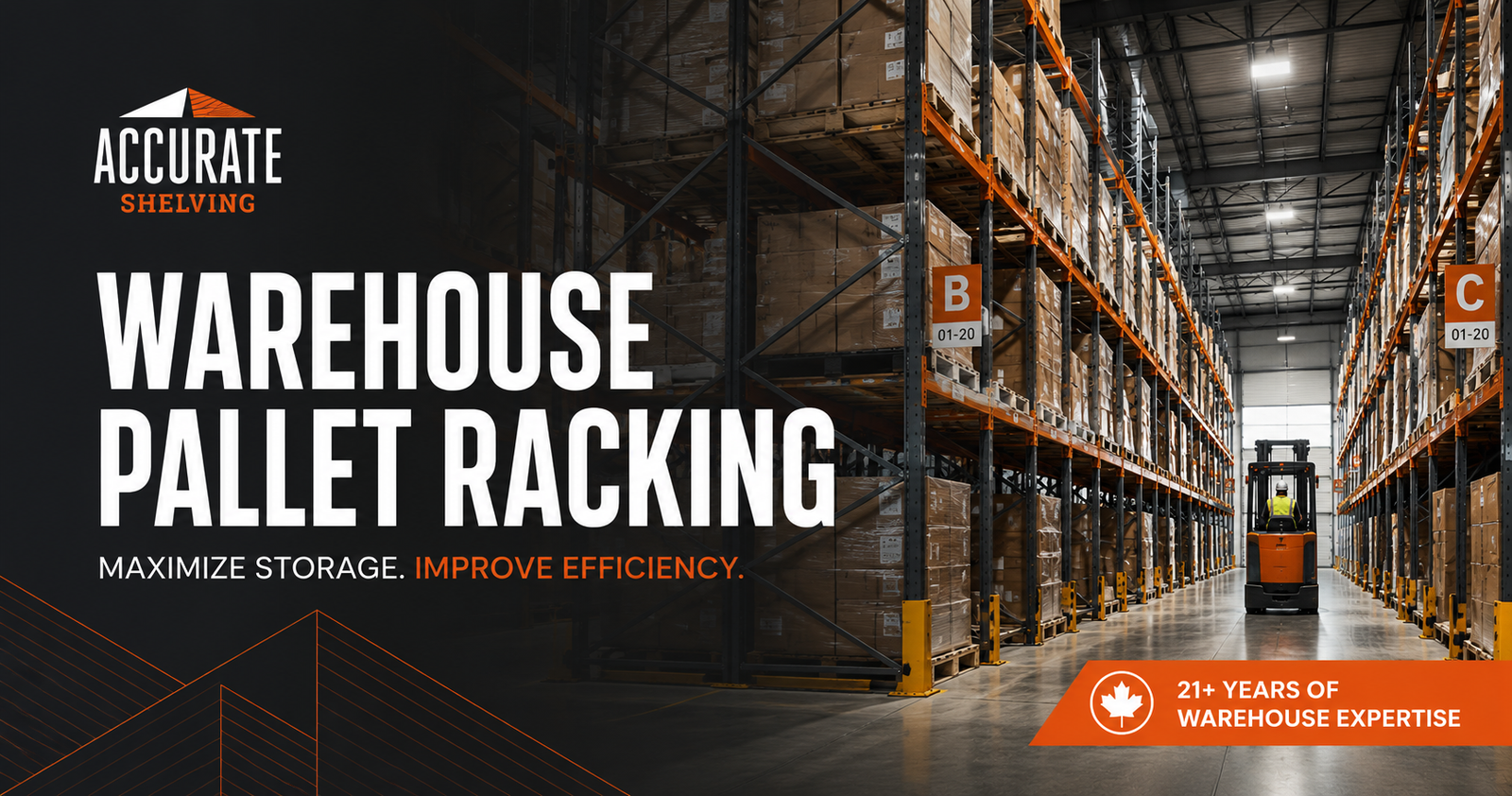
Your warehouse is drowning in inefficiency pallets pile up, aisles clog, and finding inventory takes hours. The solution? A properly designed warehouse pallet racking system.
At Accurate Shelving, we’ve spent 21 years helping Canadian businesses maximize storage capacity by 30-70% through expert system design and installation.
What is Warehouse Pallet Racking?
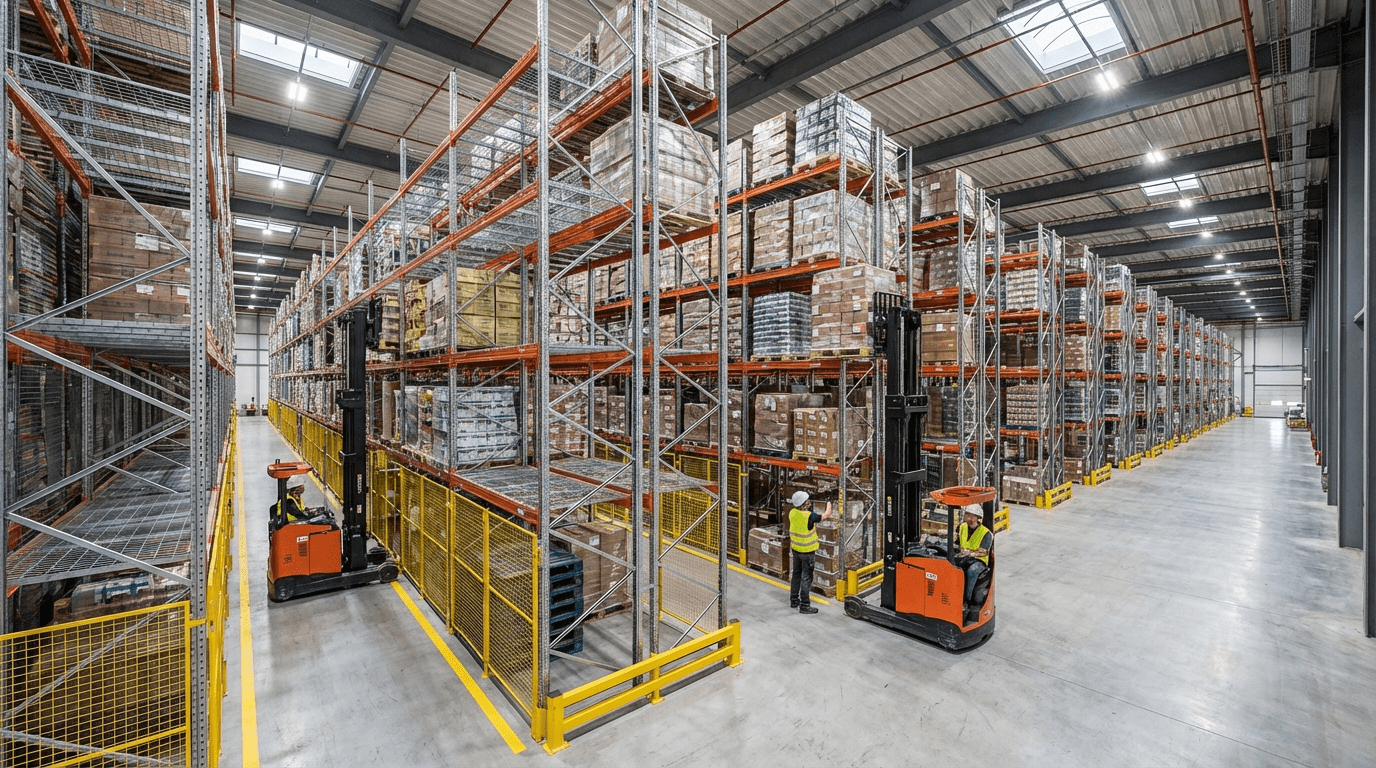
Warehouse pallet racking is a storage system designed to organize and store palletized goods vertically using upright frames, horizontal beams, and optional decking. Rather than wasting floor space with stacked pallets, racking systems allow forklifts to access multiple storage levels efficiently.
How Does Pallet Racking Maximize Warehouse Space?
Vertical storage transforms unusable ceiling height into productive inventory capacity. A standard warehouse with 12-foot ceilings can achieve 3-4 storage levels, multiplying pallet positions without expanding the building footprint. This vertical approach eliminates floor clutter, improves inventory visibility, and accelerates picking operations.
What Are the Essential Components?
Every pallet racking system relies on upright frames (vertical posts), horizontal beams (shelf supports), base plates (floor anchoring), braces (lateral support), and optional decking or safety accessories. These components work together as an integrated structure that meets Canadian safety standards and WSIB compliance requirements.
What Are the Main Types of Warehouse Pallet Racking Systems?
Different operations require different systems. Your choice depends on inventory variety, storage density needs, turnover rates, and available space. Understanding these four primary systems guides your selection.
Selective Pallet Racking: The Industry Standard
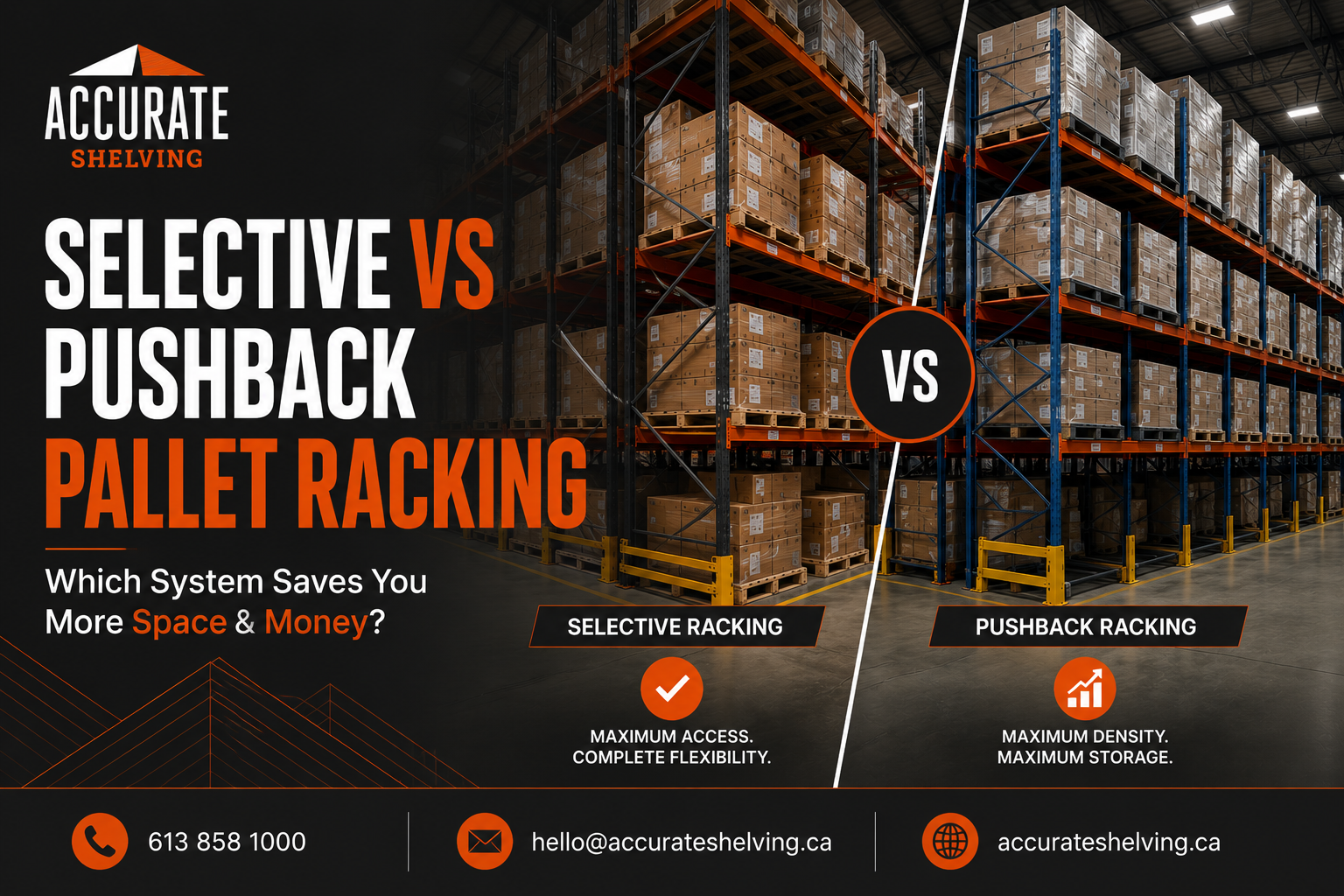
Selective racking allows direct access to every pallet without moving others, each position is independently accessible from the aisle. This makes it ideal for operations with high product variety (high SKU counts) and frequent inventory rotation.
How It Works: Pallets are stored one-deep in rows with dedicated aisles. Forklifts simply navigate to any level and retrieve the specific pallet needed. No digging through lanes or rearranging pallets required.
When to Use It: E-commerce fulfillment centers, retail distribution networks, and warehouses prioritizing quick access over maximum density. If you need flexibility and products change frequently, selective racking delivers the accessibility advantage.
Key Metrics:
- Storage density: 60-70%
- Best for: High-SKU, high-turnover operations
Pushback Pallet Racking: High-Density With Maintained Selectivity
Pushback racking stores multiple pallets in a single lane, typically 3-6 deep. When you load a new pallet, it pushes existing pallets back along inclined rails. When retrieving, gravity advances remaining pallets forward, like a spring-loaded inventory management system.
How It Works: Forklifts load pallets at the front lane. Each new pallet pushes others backward. Picking happens from the front only, making this a LIFO (Last-In-First-Out) or FIFO system depending on configuration.
When to Use It: High-volume, low-SKU operations storing bulk goods. Beverage distribution, food storage, and warehouses with fewer product varieties but massive inventory quantities benefit significantly from pushback systems.
Key Metrics:
- Storage density: 75-85% (40% more capacity than selective)
- Best for: Bulk goods, seasonal inventory, FIFO/LIFO operations
Drive-In Pallet Racking: Maximum Density for Seasonal Storage
Drive-in racking eliminates aisles entirely forklifts drive directly into the racking structure itself, accessing pallets stored deep within the system (sometimes 20+ deep). This delivers absolute maximum storage density but sacrifices accessibility.
How It Works: Instead of lanes between rows, the racking creates storage channels. Forklifts navigate within these channels to deposit and retrieve pallets. It’s a LIFO system where last-in pallets come out first.
When to Use It: Seasonal inventory management, bulk commodity storage, and cold storage facilities where reduced cooled space means significant utility savings. Operations with 2-3 main products and tolerance for sequential access gain maximum benefit.
Key Metrics:
- Storage density: 85-90% (highest possible)
- Best for: Seasonal businesses, cold storage, limited SKU variety
Pallet Flow Racking: Automated FIFO for Regulated Industries
Pallet flow racking uses gravity and rollers to automate inventory rotation. Pallets load from the back on a slight incline and naturally roll forward via gravity. When picking from the front, the next pallet automatically advances, true FIFO (First-In-First-Out) without human error.
How It Works: Load pallets from the top/back. They roll down inclined rails with rollers. Pick from the front. The next pallet advances automatically. No manual moving required.
When to Use It: Perishable goods with expiration dates, pharmaceutical distribution, and any operation where regulatory compliance demands FIFO rotation. High-volume picking environments rely on pallet flow for speed and accuracy.
Key Metrics:
- Storage density: 70-80% (high with automatic sequencing)
- Best for: Perishables, pharmaceuticals, regulated industries
How Do You Choose the Right System for Your Warehouse?
The perfect system depends on understanding your specific operation. A strategic decision framework ensures you select the system that balances density, accessibility, cost, and compliance.
Assess Your Inventory Profile
How many different products (SKUs) do you stock? High variety demands selective racking for quick access. Low variety (1-5 main products) allows high-density systems like pushback or drive-in. What’s your pallet weight and turnover rate? Heavy items or fast-moving inventory belong in easily accessible locations.
Evaluate Your Physical Constraints
Measure your warehouse ceiling height, floor space, and aisle widths. High ceilings (25+ feet) allow drive-in or flow racking. Limited space requires mobile or drive-in systems. Existing equipment matters, do you have standard forklifts or specialized reach trucks? This determines what systems actually work operationally.
Consider Compliance Requirements
Handle perishables or pharmaceuticals? FIFO rotation isn’t optional pallet flow racking becomes essential. In cold storage? Mobile racking significantly reduces cooled space (major utility savings). Plan compliance into your selection from day one.
What Should You Expect During Professional Installation?
Professional installation is non-negotiable. Poor installation leads to structural failure, safety violations, and expensive rework. A properly installed system protects your warehouse for 15-25 years.
Phase 1: Pre-Installation Assessment and Design
Trained professionals measure your warehouse, calculate load capacities, design layouts, and obtain necessary permits. This phase typically takes 1-2 weeks and ensures every detail meets Canadian Building Code and WSIB standards before installation begins.
Phase 2: On-Site Installation and Assembly
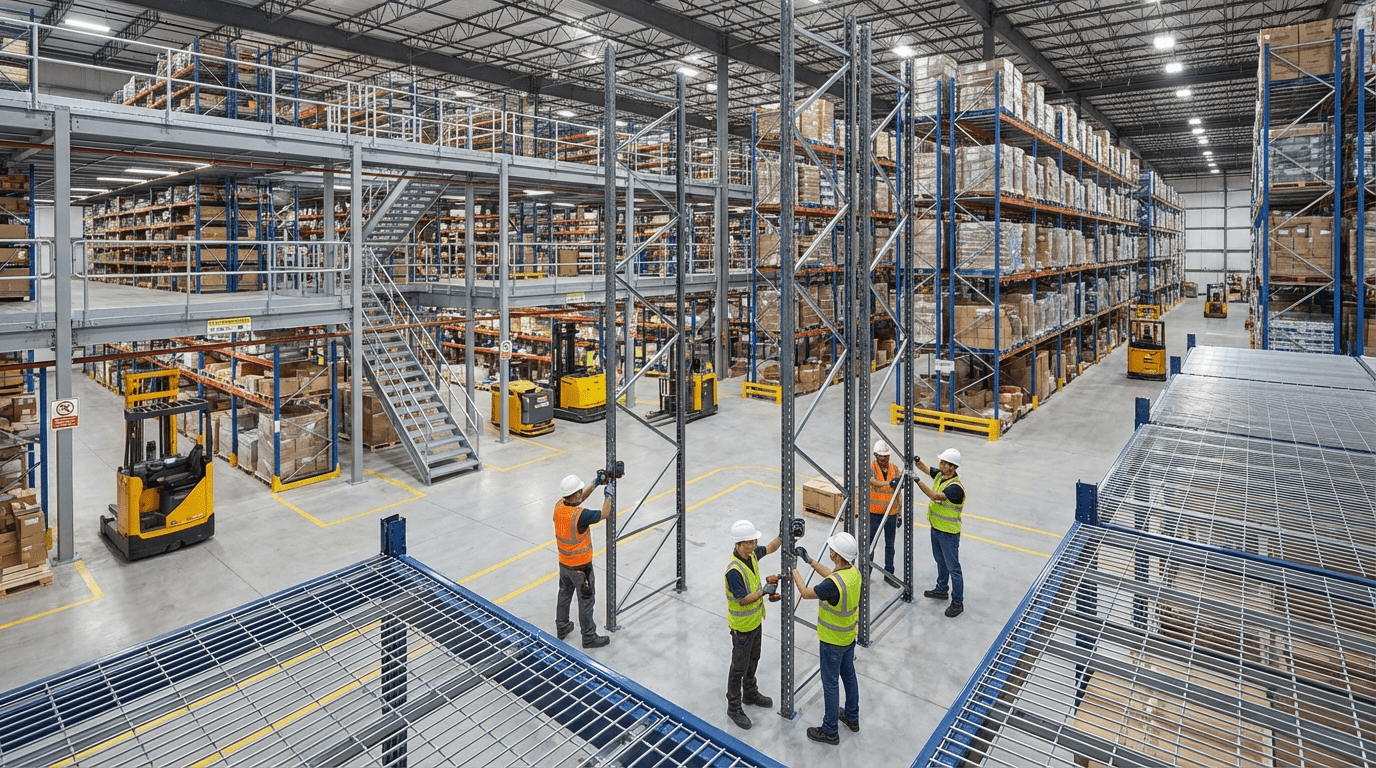
Installation involves anchoring base plates to the floor, assembling upright frames, installing horizontal beams, and verifying alignment with precision. Timeline depends on system size, small systems take 3-7 days, large installations take 3-8 weeks. Professional crews work efficiently while maintaining warehouse operations.
Phase 3: Testing, Certification, and Staff Training
After installation comes load testing, capacity label installation, and CSA compliance documentation. Staff training on safe loading and equipment operation ensures your team maximizes system benefits while maintaining safety protocols.
Why DIY Installation Fails?
Professional installers ensure structural integrity, CSA compliance, and WSIB adherence. They carry insurance and provide warranties. A failed DIY installation can collapse under load, injure workers, void coverage, and result in fines exceeding $25,000. Professional installation is the best investment you’ll make.
Ready to Optimize Your Warehouse?
Pallet racking systems transform warehouse operations through increased capacity, accelerated picking, reduced costs, and improved safety.
At Accurate Shelving, we assess your needs, recommend ideal systems, handle professional installation, and provide ongoing maintenance ensuring CSA and WSIB compliance.
Don’t waste another day with inefficient warehouse storage. Contact Accurate Shelving today for a free site assessment and discover how optimized racking can revolutionize your operation.
Frequently Asked Questions
Can I upgrade my current racking system without full replacement?
Yes, most modular systems like selective and pushback racking allow expansion or configuration changes without replacing existing sections.
What’s the difference between CSA and WSIB compliance requirements?
CSA sets design standards for how racking is built; WSIB mandates annual professional inspections and safe workplace practices both are required in Canada.
How often should warehouse staff inspect pallet racking?
Weekly visual inspections for obvious damage (bent beams, loose connections), plus annual professional CSA-certified inspections are mandatory.
What causes most pallet racking failures in Canadian warehouses?
Forklift collisions account for 90% of failures; proper operator training and column guards prevent most incidents.
How do I know if my warehouse needs a system upgrade?
If you’re storing pallets on floors, experiencing picking delays, or noticing congested aisles, your facility likely needs upgraded racking, contact Accurate Shelving for a free assessment.