A racking system is only as safe as the way it was installed, no matter how well it was designed or how much it cost. Most rack failures don’t actually trace back to bad equipment. They trace back to how that equipment was anchored and installed in the first place.
At Accurate Shelving, this guide breaks down what professional installation actually involves, and why it matters for both safety and compliance, not just getting the frames standing upright.
What Does Professional Warehouse Racking Installation Actually Involve?
Installation gets treated as a formality far too often, when it’s actually a structural process with real consequences if it’s rushed.
More than assembling metal components
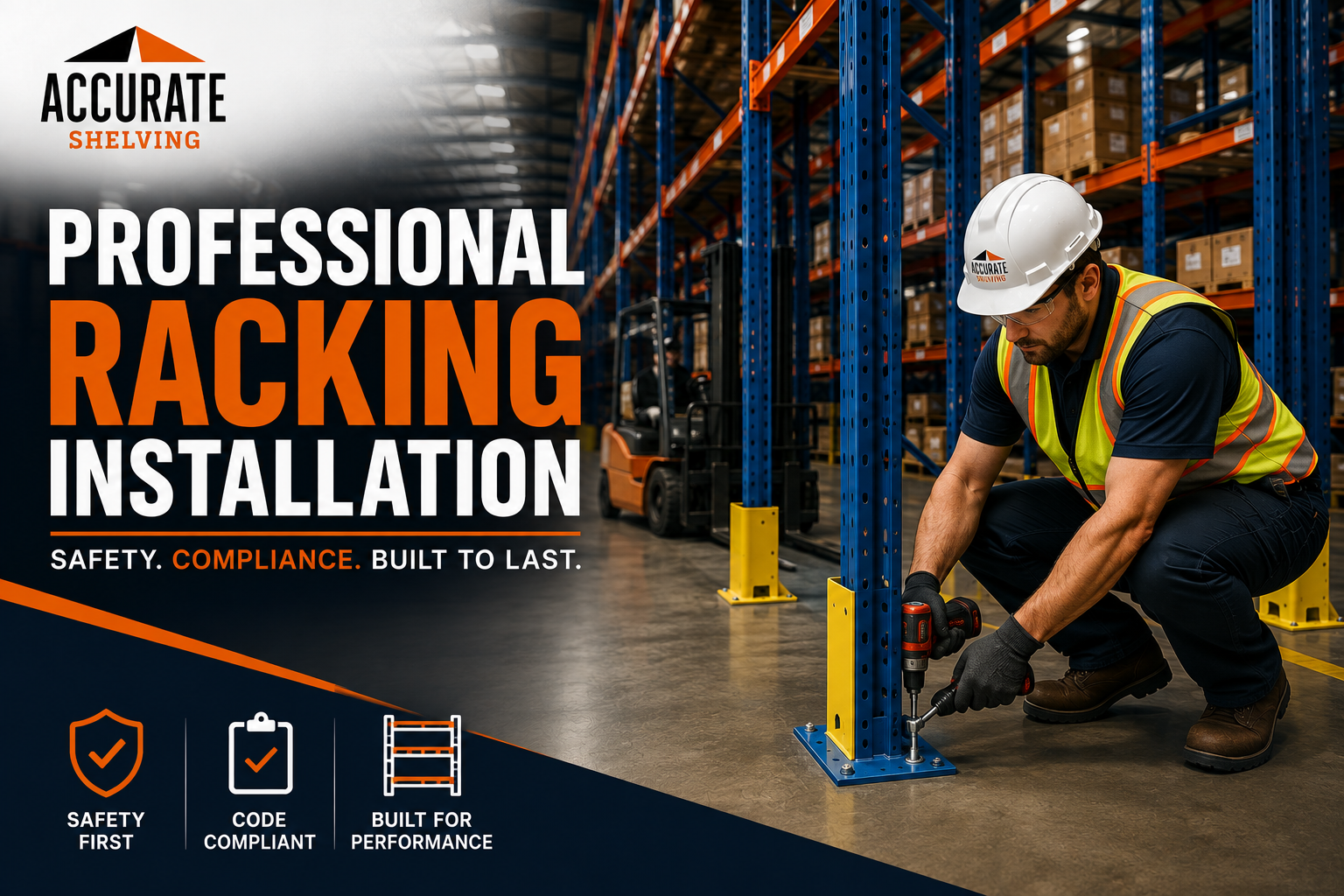
Installing racking is a structural process involving site assessment, anchoring, leveling, and inspection, not simply bolting frames and beams together and calling it done.
A site assessment shapes everything that follows
Floor condition, slab thickness, and layout all affect anchor selection and racking configuration long before installation day actually arrives.
Why Is Anchoring the Most Critical Part of Racking Installation?
Of every step in the installation process, anchoring is the one that determines whether the entire system performs the way it was designed to.
Anchoring is a structural requirement, not a finishing detail
Unanchored or improperly anchored racks are vulnerable to forklift impact, load-related uplift, and progressive instability that can end in a full collapse.
The numbers behind unanchored racking
A significant share of racking accidents in warehousing trace back directly to improper anchoring, which makes it one of the highest-stakes steps in the entire installation process, not a minor detail to rush through at the end.
What Compliance Standards Apply to Warehouse Racking Installation?
Compliance isn’t a separate checklist that happens after installation. It’s built directly into how a system is supposed to be installed in the first place.
Engineering standards set the baseline
Racking design, installation, and maintenance are generally expected to follow ANSI/RMI MH16.1 engineering standards, which cover load capacity and anchor requirements from the ground up.
A Pre-Start Health and Safety Review is often required before use
In many Canadian jurisdictions, a newly installed or modified racking system needs a documented Pre-Start Health and Safety Review confirming it meets CSA A344 and building code requirements before it goes into service.
What Happens When Racking Installation Is Done Wrong?
The gap between a system that looks fine and one that’s actually safe is often invisible until something goes wrong.
A failed inspection can happen fast
Missing or improper anchors are one of the quickest ways a system fails a safety inspection, and operating a facility that was permitted with anchored drawings but installed without them is a code violation, whether or not it’s been inspected recently.
Liability follows close behind
When a rack system fails, investigations frequently point to improper installation or anchoring as a focal point, increasing liability exposure well beyond whatever the repair itself would have cost.
How Does Load Capacity Affect Installation Decisions?
Load capacity isn’t a number printed on a spec sheet that installation can ignore. It directly shapes how the system needs to go in.
Load capacity plaques aren’t optional signage
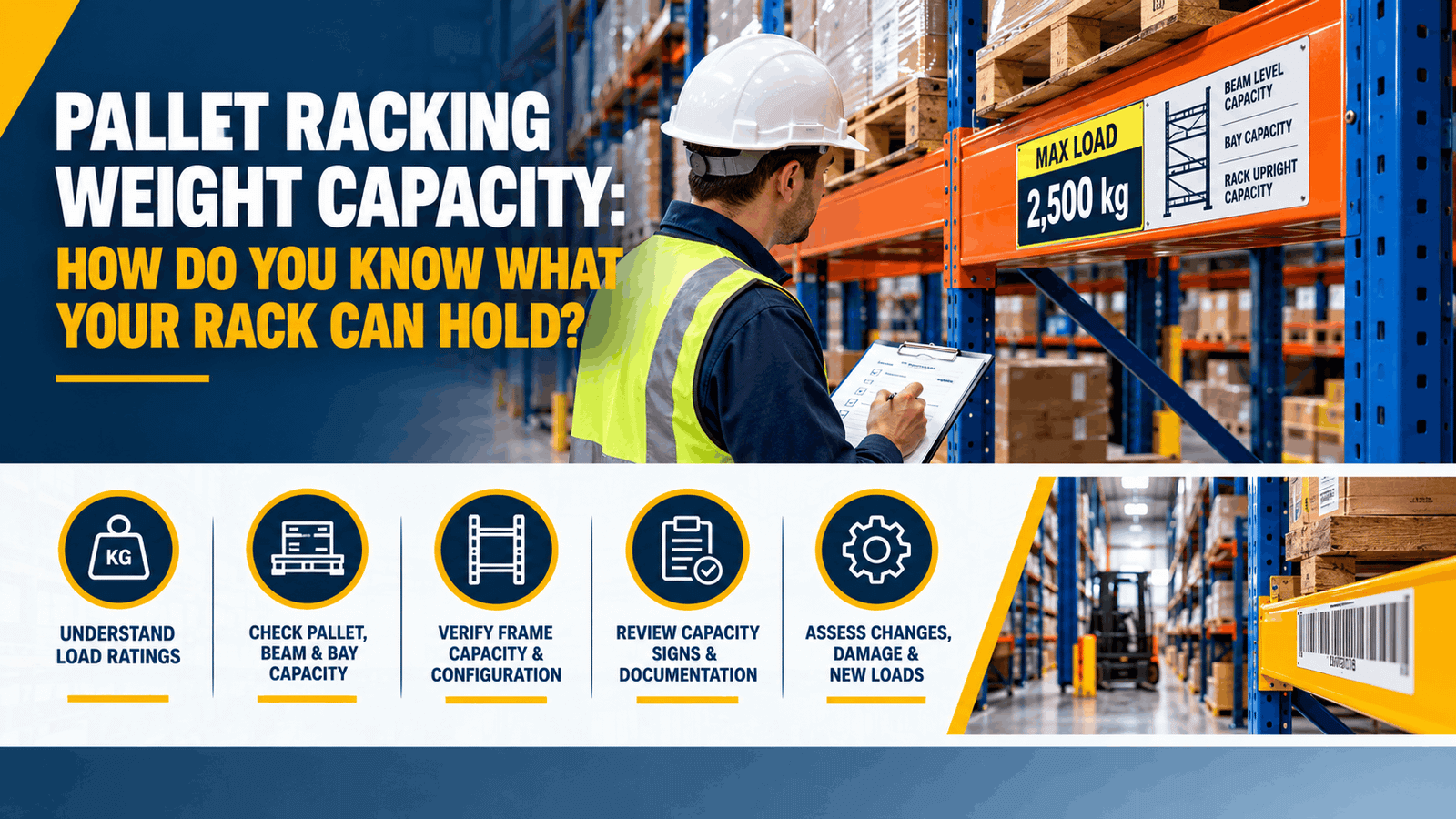
Every rack row is expected to display a load capacity plaque showing the maximum unit load per level and per bay, information that’s typically required under the same standards that govern the installation itself, not just a helpful reference for staff.
Operating outside spec voids the load rating
Installing or loading a system outside its engineered specifications can void the manufacturer’s load rating entirely, putting the facility out of compliance with the code that approved the original permit in the first place.
Should You Install Racking Yourself or Hire a Professional?
This is usually where the real decision gets made, and it’s less about cost than most people expect.
What a self-installed system risks
Without the right torque testing, shimming, and anchor knowledge, a self-installed system can look complete while still failing the structural requirements that actually keep it safe.
What a professional installer brings to the job
A certified crew can anchor an entire rack row correctly in a matter of hours, with the documentation needed to demonstrate compliance if a facility is ever inspected. Much of that also comes down to using the right material handling equipment for the job, not just manual labor.
Does Compliance End Once Installation Is Complete?
Getting a system installed correctly is the starting point, not the finish line, and treating it as the end of the process is a common mistake.
Installation is the starting point, not the finish line
Anchors, connections, and load ratings should be checked on a regular, documented schedule, since normal warehouse activity gradually puts stress on a system that was correctly installed on day one. The same logic applies when a facility relocates, since reinstalling racking at a new site carries the exact same anchoring requirements as the original warehouse relocation process demands.
What an inspection actually looks for
Anchor presence, torque, base plate contact, and signs of corrosion or concrete damage are the details a proper inspection checks, well beyond a quick visual glance across the floor. Beam locking pins and safety clips get checked just as closely, since a missing clip is often the small, easily overlooked detail that lets a forklift dislodge a beam and drop its load.
Getting Warehouse Racking Installation Right
Professional warehouse racking installation isn’t an added cost sitting on top of the equipment. It’s what actually determines whether that equipment performs the way it was designed to for years afterward.
Accurate Shelving has spent over 21 years supplying and installing racking systems across Canada, with certified crews and proper anchoring and compliance documentation on every project. Visit our About Us page to learn more, or reach out through Contact Us for a hands-on installation assessment for your warehouse.