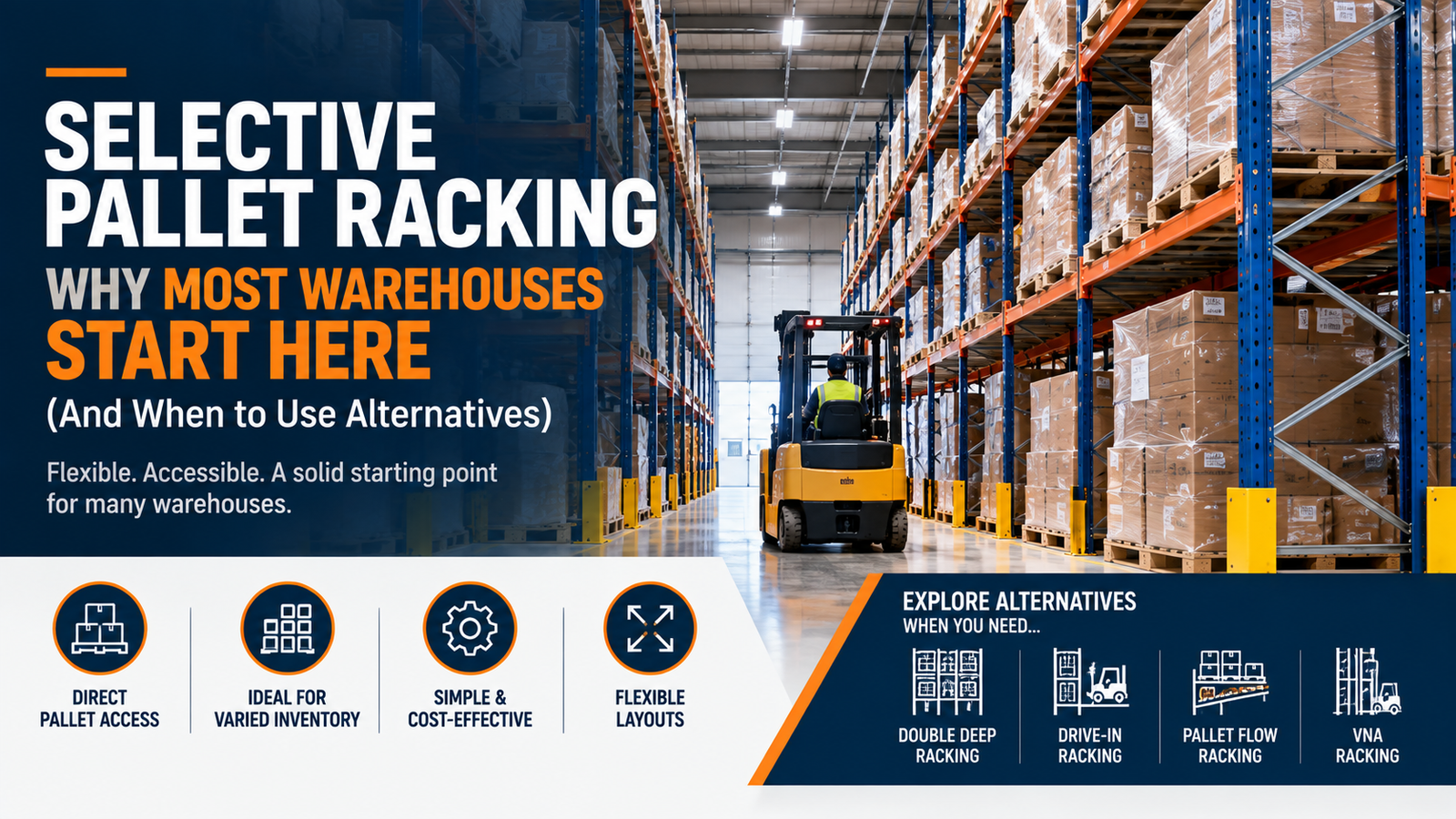
Selective pallet racking is a common starting point for warehouses because it keeps individual pallets accessible, accommodates varied inventory, and offers a relatively straightforward storage layout. For businesses handling different products throughout the day, that flexibility can matter more than fitting the highest possible number of pallets into the building.
At Accurate Shelving, we help businesses match storage systems to their space, loads, and daily operations. The decision starts with understanding what your warehouse needs: immediate access to different products, greater storage density, or a combination of both.
What Is Selective Pallet Racking and How Does It Work?
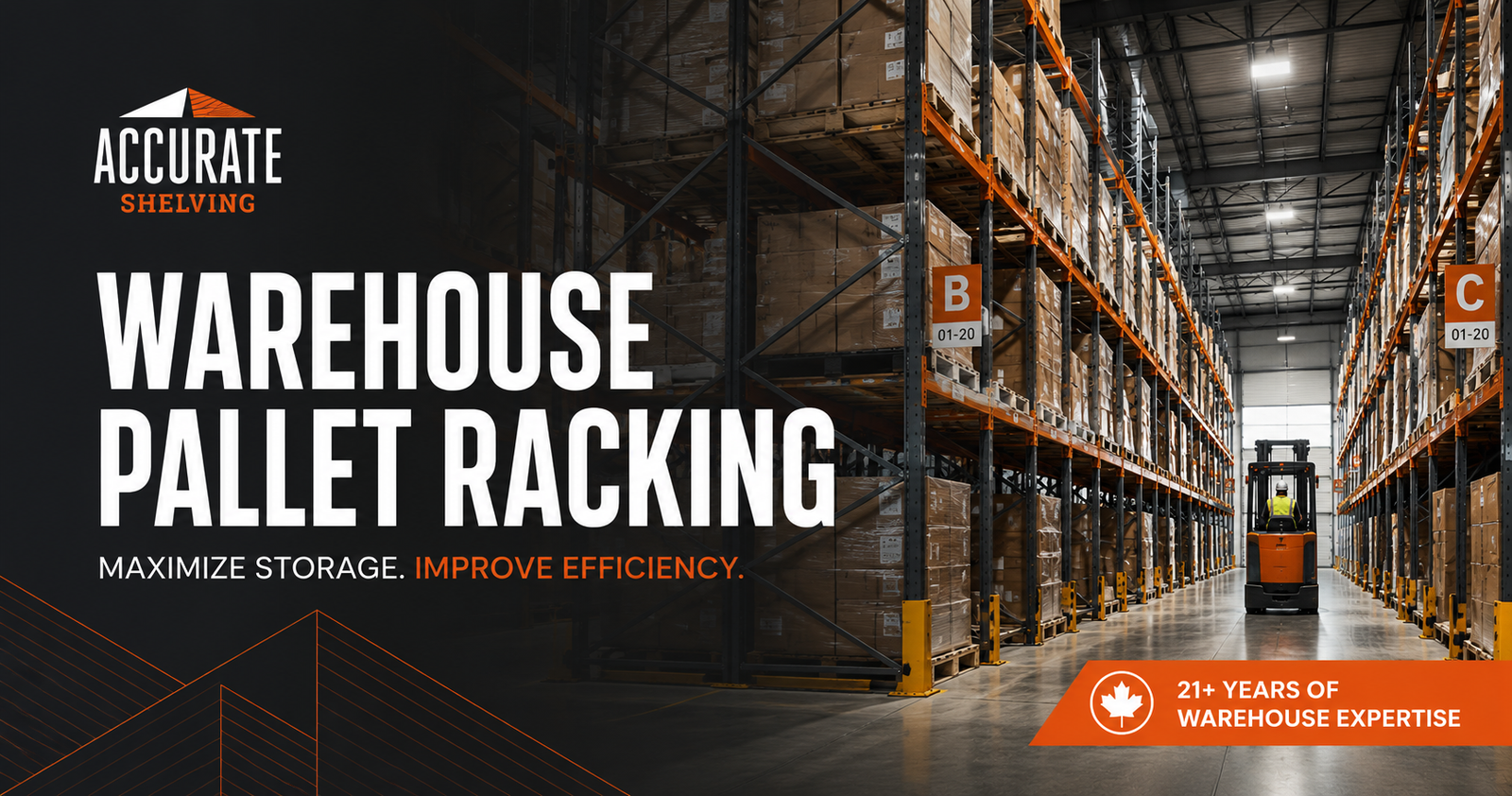
A conventional selective pallet racking system stores pallets one position deep from the access aisle. Upright frames and horizontal load beams support the pallets at multiple levels, allowing forklifts to retrieve each pallet without moving another first.
Rows can stand individually or sit back-to-back, with access from opposite aisles. Back-to-back rows are different from double deep racking: each pallet remains directly accessible from its respective aisle.
This arrangement makes selective racking a useful baseline when comparing pallet racking systems for a new facility or an existing warehouse.
Why Is Selective Pallet Racking a Common Starting Point?
Its appeal comes from a practical combination of inventory access, straightforward construction, and layout flexibility. These benefits are particularly useful when storage requirements change throughout the year.
How Does Direct Pallet Access Help With Varied Inventory?
A high SKU count means handling many distinct products. When customers order different items in unpredictable combinations, direct pallet access helps operators retrieve the required stock without shifting unrelated loads.
Selective racking also suits operations with relatively few pallets of each SKU. Each product can have an accessible location without needing enough matching stock to fill a deep storage lane.
Why Can Selective Racking Be an Economical Starting Option?
Conventional selective racks use a comparatively simple arrangement of frames and beams. They do not require the moving carts or gravity rollers found in some denser systems, which can help keep the initial equipment investment manageable.
However, rack price is only part of the decision. Installation, handling equipment, building space, and the number of usable pallet positions all affect the overall cost.
How Can the Layout Adapt as Storage Needs Change?
Adjustable beam levels allow the design to accommodate different loaded pallet heights. Additional bays may also support expansion where the building and approved layout allow it.
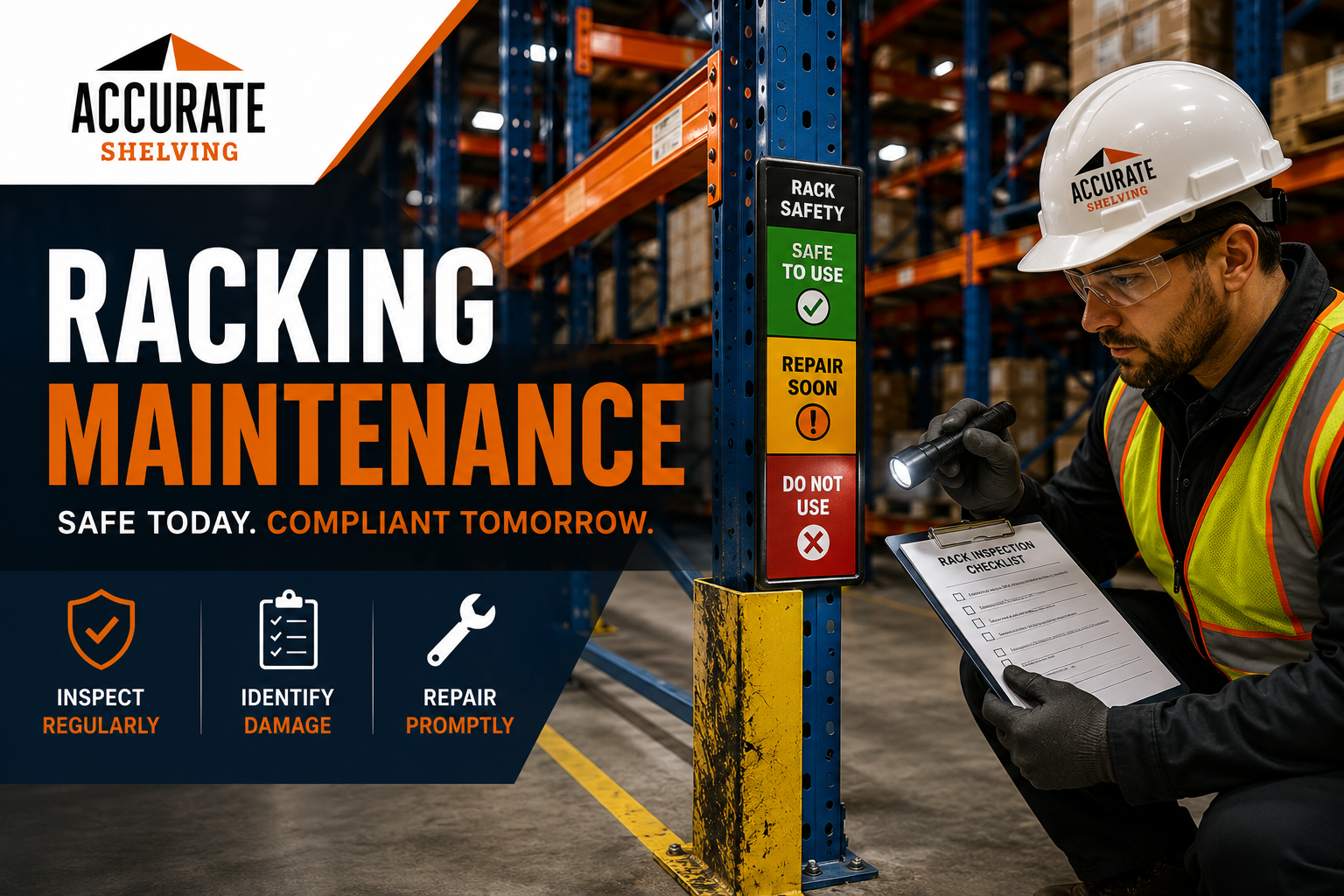
Adjustments still require care. Changing beam elevations can affect frame capacity, so reconfiguration should be checked against the system’s design requirements.
When Does Selective Racking Become a Poor Fit?
Selective racking’s main limitation is the aisle space needed to maintain direct access. That trade-off becomes more noticeable when pallet quantities grow but the warehouse footprint stays the same.
Are Access Aisles Limiting Your Required Pallet Capacity?
If a proposed layout cannot accommodate your peak stock levels, a denser storage system may deserve consideration. The assessment should include receiving, dispatch, and working space alongside rack capacity.
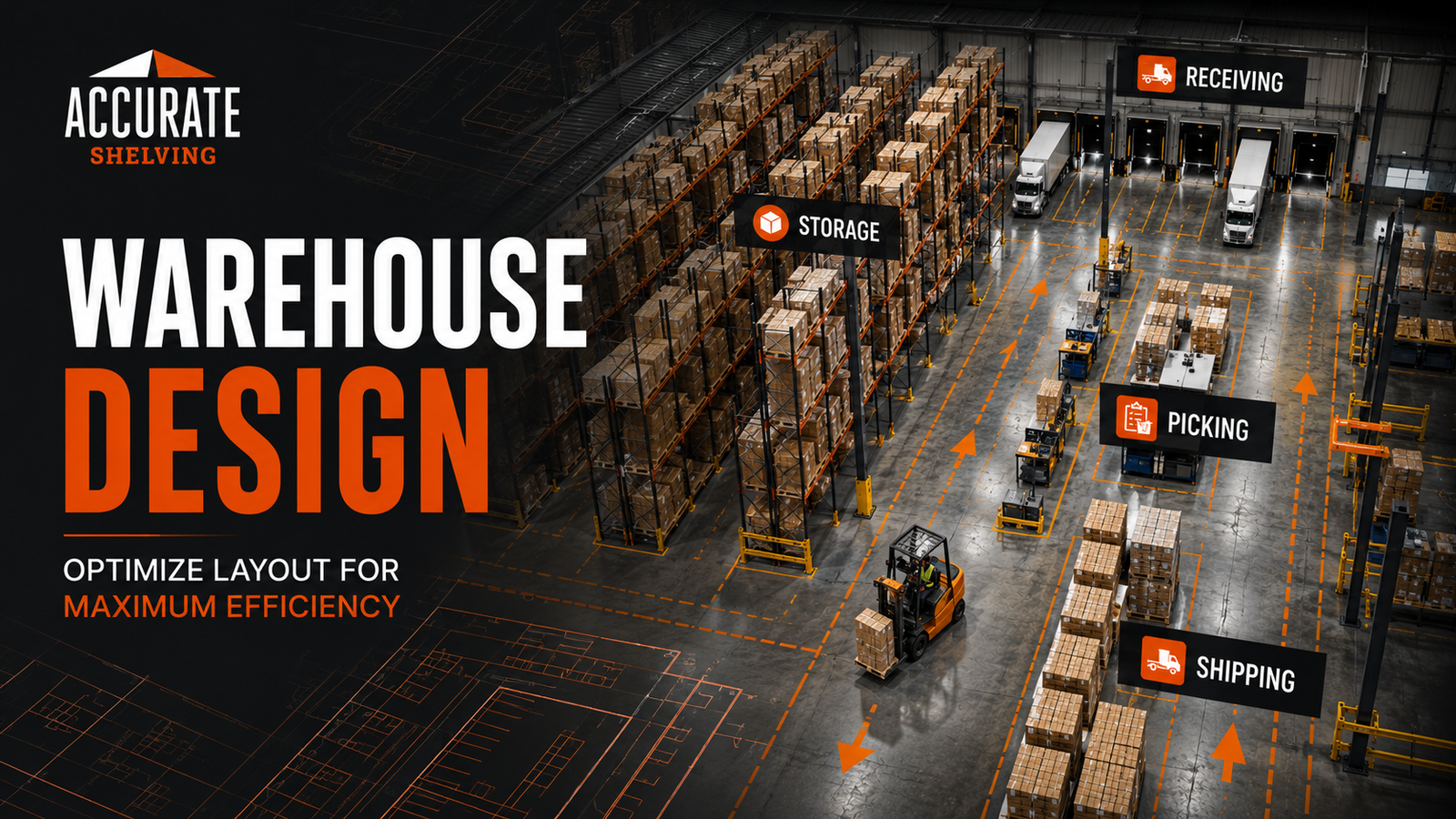
Adding more bays helps only if operators can still move, replenish, and retrieve stock efficiently. Our guide to warehouse layout planning explores how storage and movement need to work together.
Do You Store Many Pallets of the Same SKU?
Large quantities of identical products can make individual access less valuable. If pallets can be retrieved in a suitable sequence, deeper storage may use the available floor area more effectively.
The reverse also matters. A deep lane assigned to a product with only a few pallets may leave positions unused. Compare usable capacity against your actual inventory profile before choosing greater storage depth.
When Should You Consider an Alternative to Selective Racking?
An alternative becomes useful when it addresses a specific constraint, such as bulk inventory, limited floor space, or stock rotation. Each option changes how operators access and handle pallets.
When Is Double Deep Racking Worth Reduced Pallet Access?
Double deep racking stores pallets two positions deep, reducing the proportion of space needed for aisles. Access to the rear pallet depends on the front position being clear, and the layout needs compatible extended-reach equipment.
It may suit products held in multiple pallets where that access restriction is acceptable. Read our double deep racking guide for a closer look at the capacity trade-off.
When Does Drive-In Racking Suit Bulk Inventory?
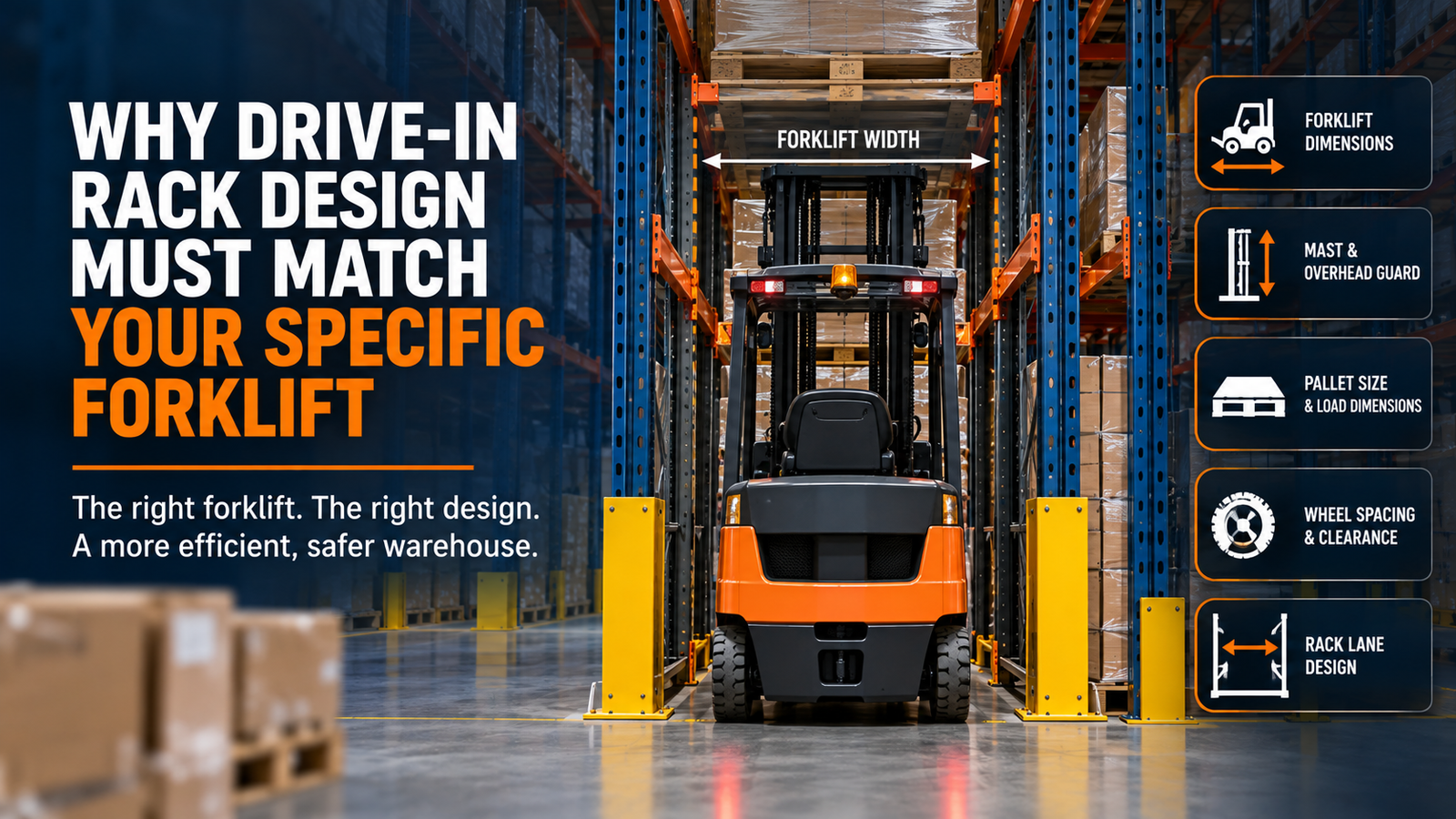
Drive-in racking allows forklifts to enter storage lanes and place pallets several positions deep. It can suit large quantities of the same SKU where storage density takes priority over individual access.
Conventional drive-in operation follows a last-in, first-out sequence. Product rotation and forklift clearances therefore need consideration before selecting the system.
When Is Pushback Racking a Better Compromise?
Pushback racking stores multiple pallets per lane while allowing loading and retrieval from the aisle. Pallets move on inclined cart systems, with each lane operating in a last-in, first-out sequence.
It can suit facilities needing denser storage while retaining access to different product lanes. Our selective vs pushback pallet racking comparison examines this choice in more detail.
When Does Pallet Flow Suit FIFO Stock Rotation?
Pallet flow racking uses inclined rollers to move pallets towards the retrieval end. Separate loading and picking faces support first-in, first-out movement within each lane.
It is worth assessing for suitable high-volume inventory requiring organised rotation. Pallet condition, load characteristics, and system compatibility also influence the specification.
Could VNA Racking Preserve Access While Reducing Aisle Space?
Very narrow aisle, or VNA, racking reduces aisle widths while retaining selective pallet access. It offers another route to greater capacity without placing pallets behind one another.
The layout requires appropriate specialist handling equipment and an assessment of the building and operating conditions. Aisles should be designed around the equipment rather than narrowed to an assumed dimension.
What Should You Check Before Choosing a Racking Layout?
A useful proposal starts with your inventory and equipment details. These establish whether a layout will work during busy periods as well as on an ordinary day.
What Are Your Pallet Sizes, Loads, and Inventory Patterns?
Record loaded pallet dimensions and weights, including any overhang. Identify your SKU count, typical pallets per SKU, peak stock levels, and retrieval frequency.
These details help establish suitable bay dimensions and load requirements. They also reveal whether individual access or deeper storage would be more useful.
Will Your Forklift and Building Suit the Proposed Layout?
Check the truck’s operating requirements, lift capability, and suitability for the intended loads. Building columns, usable height, doors, and circulation routes also influence the arrangement.
A layout needs enough working clearance for the actual equipment and loads. A generic aisle-width figure cannot establish that fit.
Could a Combination of Racking Systems Work Better?
One warehouse may benefit from selective racking for varied inventory and denser storage for bulk products. Keeping those requirements separate can make the layout more useful than applying one system throughout.
Accurate Shelving supplies several racking configurations, allowing the proposal to reflect different storage needs within the facility.
FAQs
Does Selective Pallet Racking Automatically Provide FIFO Rotation?
No. It provides access that supports FIFO stock management, but inventory records and picking procedures determine which pallet leaves first.
Is Selective Pallet Racking Suitable for a Small Warehouse?
It can be, especially where varied products need direct access. Suitability depends on the required capacity, equipment, and available working space.
Can Existing Selective Racking Be Expanded Later?
Often, subject to component compatibility, condition, design capacity, and available space. Have the proposed expansion assessed before ordering additional components.
What Information Is Needed for a Selective Pallet Racking Quote?
Provide warehouse dimensions, loaded pallet sizes and weights, required pallet positions, and forklift details. Inventory variety and stock rotation requirements help refine the proposal.
Which Racking Setup Fits Your Warehouse?
Selective pallet racking is a sensible option when accessibility and flexibility match the way your inventory moves. Alternatives become worth considering when bulk stock, rotation requirements, or limited space change that balance.
Accurate Shelving can help assess your requirements and recommend an appropriate configuration. Request a racking quote with your warehouse dimensions, pallet loads, and equipment details to start planning a system around your operation.