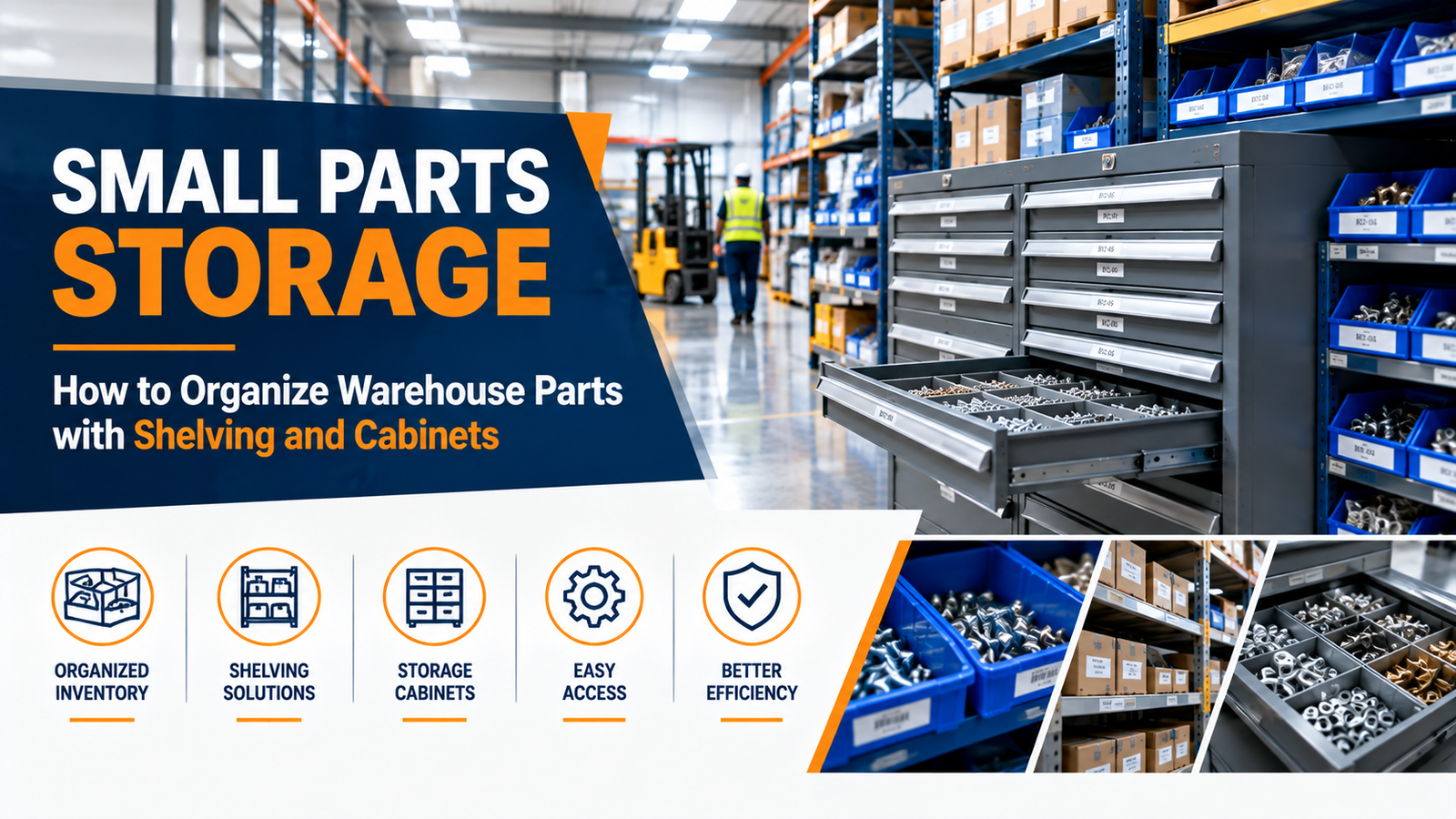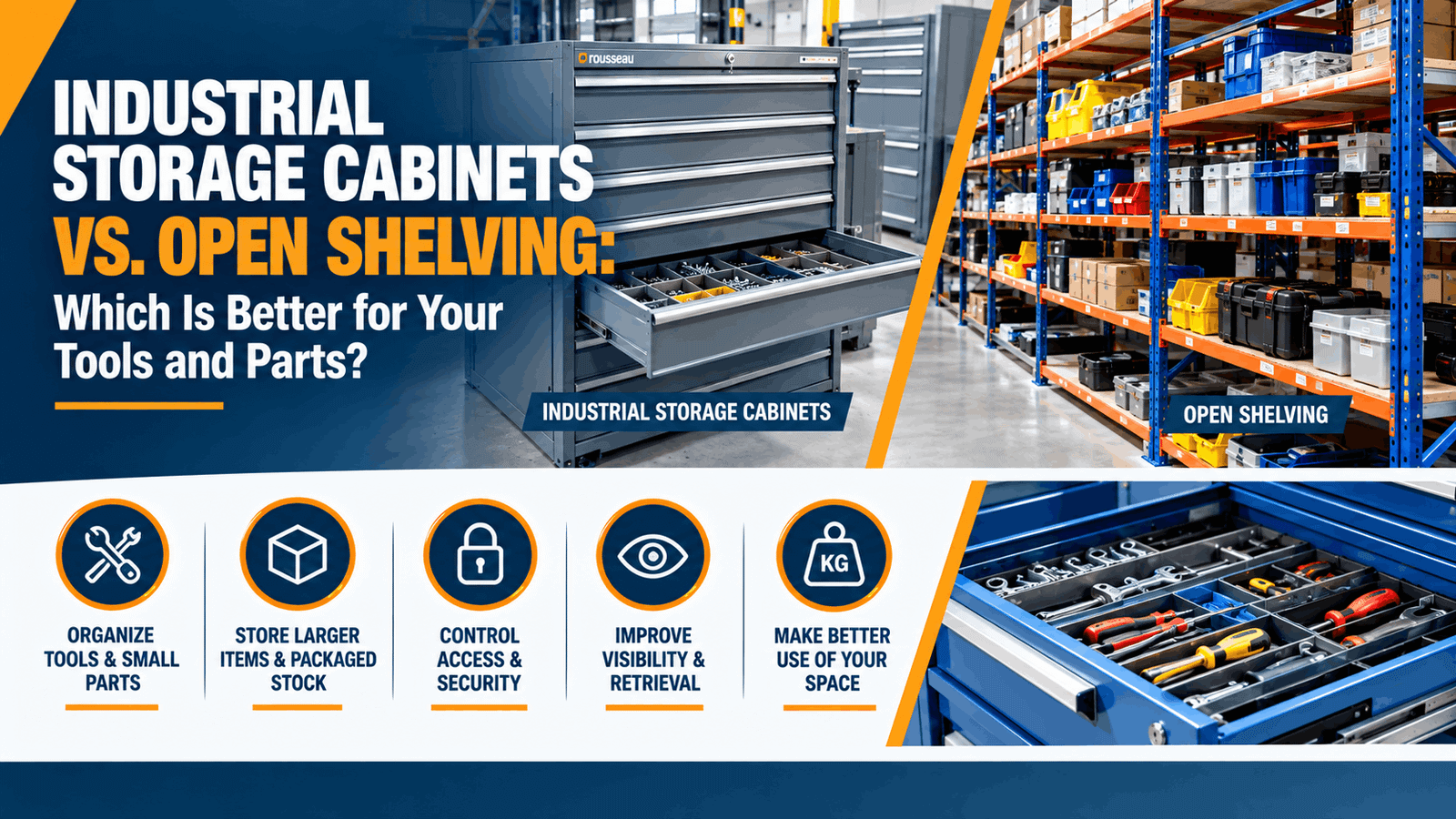
Industrial storage cabinets often suit small tools and components that need separate compartments or controlled access. Open shelving often suits larger items, packaged stock and supplies retrieved directly from a shelf. Neither is automatically better: the right choice depends on item dimensions, quantities and how people use them.
At Accurateshelving, we supply storage options for different working environments. Comparing cabinets and shelving starts with a practical question: will this equipment make the right item easier to find, retrieve and return?
What Is the Difference Between Industrial Storage Cabinets and Open Shelving?
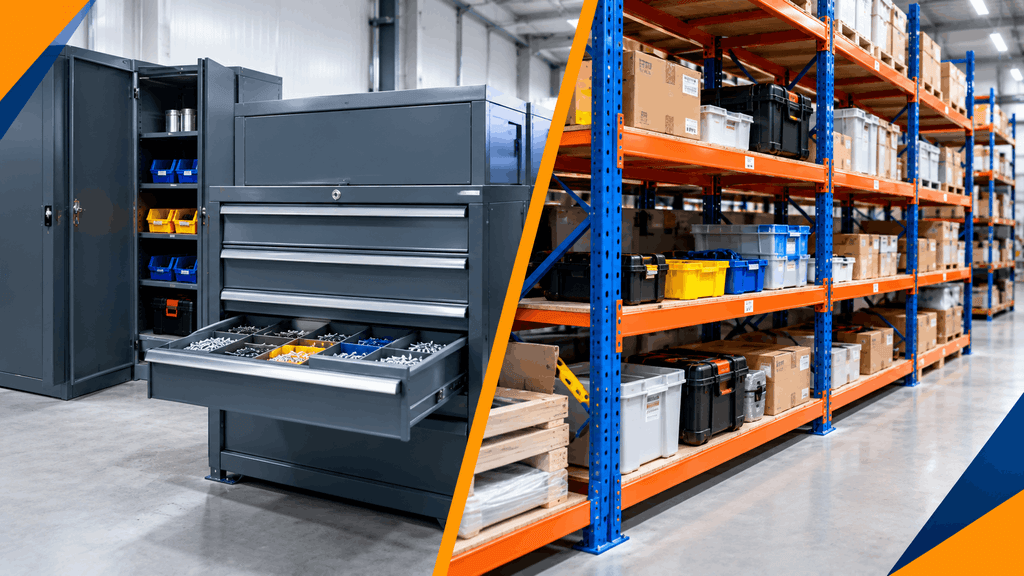
Drawer cabinets organize contents in pull-out drawers, while open shelving stores them on exposed shelf levels. Industrial storage cabinets can also have doors and internal shelves, so choosing a cabinet does not necessarily mean choosing drawers.
How Do Drawer Cabinets Organize Tools and Small Parts?
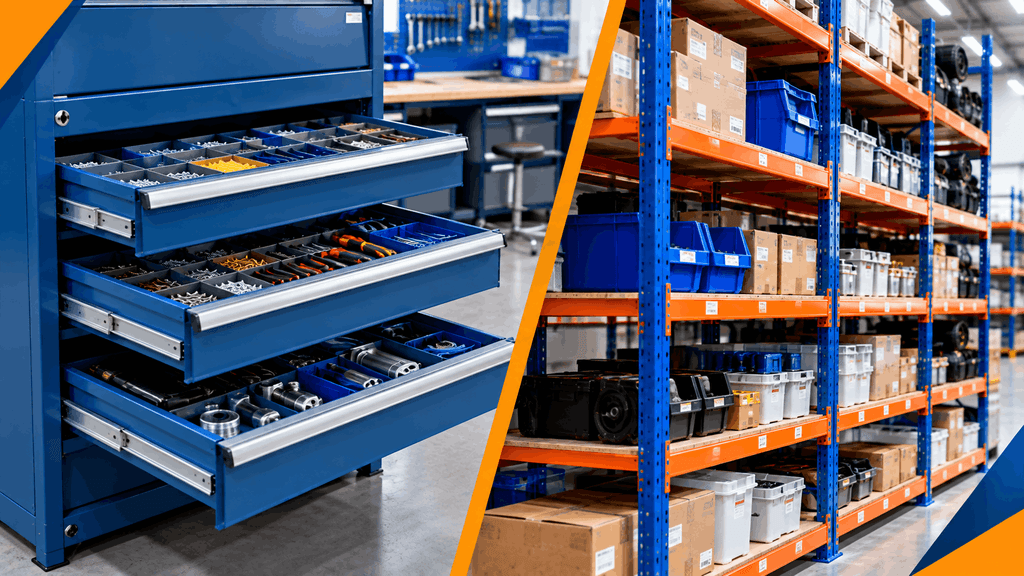
Modular drawer cabinets use suitable compartments, dividers and organizational accessories to separate items. Shallow drawers can suit small components, while deeper drawers accommodate larger tools, subject to their dimensions and load ratings.
Accurate Shelving’s industrial storage cabinets include Rousseau stationary drawer cabinets and door cabinets. Their different configurations let you match storage to the contents rather than force every item into the same compartment.
How Does Open Shelving Store Larger Items and Packaged Stock?
Open shelving provides shelf positions for cartons, containers and individual items. It can be useful when stock varies in size or needs to remain in its original packaging.
Our Spider shelving system offers different configurations and accessories. Specify shelf dimensions around the actual items, including enough room to retrieve them comfortably.
When Are Industrial Storage Cabinets the Better Choice?
Cabinets deserve consideration when separation, compact organization or controlled access is important. Their usefulness depends on selecting the right drawer arrangement or internal shelving for the inventory.
Do You Store Many Small or Similar-Looking Parts?
Separate compartments help keep different fittings, fasteners and tools from becoming mixed together. This matters when two components look alike but are not interchangeable.
Plan around replenishment quantities, not just today’s remaining stock. A drawer compartment that holds ten pieces may become impractical when a delivery brings fifty. Measure the usable compartment after dividers are installed.
Do Tools or Components Need Controlled Access?
A suitably specified locking cabinet can support controlled access to tools or selected parts. Confirm which locking arrangements are available and how employees will obtain access during a shift.
The limitation is that retrieval now includes opening the cabinet or drawer. For shared consumables used repeatedly, that extra step may offer little benefit. Choose security according to the inventory rather than enclosing everything by default.
Would Full Drawer Access Make Retrieval Easier?
Full-extension drawers can bring contents at the back into view, reducing the need to reach behind other items. This can be helpful for organized tool storage and small components.
However, the drawer needs space to open. Confirm the installation and stability requirements for the chosen cabinet, and make sure an open drawer will not obstruct a working route.
When Is Open Shelving the Better Choice?
Open shelving is often a practical choice for bulky items, packaged components and stock needing direct access. It works best when shelf spacing, containers and identification suit the inventory.
Are Your Items Bulky, Boxed or Different in Size?
Filters, cartons and larger replacement assemblies may fit more naturally on shelves than inside drawers. Adjustable shelf levels can accommodate different package heights within the system’s specifications.
Check the largest expected item before choosing shelf depth and width. An assembly that overhangs its storage position or blocks adjacent stock creates a problem even if its weight is acceptable.
Does Frequent Picking Benefit From Open Access?
Employees can retrieve stock without opening a door or drawer, and visible containers can make replenishment straightforward. This can suit frequently used supplies near the work area.
Small parts can also work on open shelving when suitable bins keep them separated. The drawback is that deep shelves and poorly arranged containers can hide stock. Clear locations and accessible placement still matter.
How Do Cabinets and Shelving Compare in Everyday Use?
Beyond what fits inside them, compare how each system uses space, exposes inventory and supports the stored load. These checks reveal trade-offs that a product photograph cannot show.
Which Makes Better Use of Your Available Space?
Drawer cabinets can organize many small items within closely spaced compartments. Shelving can use vertical space effectively for larger packages, especially when shelf heights match their contents.
Compare usable storage volume and access space together. Cabinets need drawer or door clearance; shelves need room for employees and handling equipment. Neither footprint alone tells you how efficiently the layout will work.
Which Offers Better Visibility, Protection and Access?
Open shelves let employees see containers and larger items immediately. Drawers expose their contents when opened, while enclosed storage can limit casual access and exposure.
An ordinary closed cabinet should not be assumed to be dustproof, weatherproof or suitable for hazardous materials. If the contents require special protection, confirm the relevant specification rather than relying on the presence of doors.
How Should You Compare Load Capacity?
Check the rating of each drawer or shelf and the complete unit. Consider how the load will be distributed: one heavy assembly is different from many small items spread across the available surface.
Do not assume all cabinets hold more weight than shelving. Match the proposed configuration to actual loads and follow the manufacturer’s installation and loading instructions.
Can You Combine Cabinets and Open Shelving in One Storage Area?
Yes. A combined arrangement can assign different equipment to different inventory needs. This often makes more sense than treating cabinets and shelves as competing solutions for every item.
For example, a maintenance department might place small fittings in divided drawers, packaged filters on open shelves and larger assemblies in appropriately sized shelf positions.
Our guide to organizing small-parts storage covers location planning and identification. Once equipment is selected, those practices help keep the arrangement usable.
Integrated drawers and shelving may also be an option where the system supports them. Compatibility must be confirmed; an existing shelving unit should not automatically be treated as suitable for a drawer conversion.
What Should You Check Before Choosing Your Storage System?
Start with the contents and the working conditions. Record item dimensions, weights, protective packaging, normal quantities and the larger quantities expected after replenishment.
Then consider retrieval frequency, who needs access and the space available for opening drawers, moving containers and passing nearby. Keep frequently used items within practical reach, and account for future inventory changes.
Bring these details to Accurate Shelving when discussing a configuration. They provide a better starting point than selecting a cabinet or shelving unit based only on its external dimensions.
Final Thoughts
Choose suitable drawer cabinets when compartmentalized storage and controlled access help the operation. Choose open shelving when larger items, visible stock and direct retrieval are the priority. Combine them when your inventory needs both.
Discuss your storage requirements with Accurate Shelving to compare options around your item sizes, loads and available space.
Frequently Asked Questions
Are Drawer Cabinets Better Than Shelving for Small Parts?
They can be when divided compartments improve separation and retrieval. Open shelving with suitable bins can also work well, particularly for frequently accessed consumables.
Can Small Parts Be Stored on Open Shelving?
Yes. Use appropriate containers, clear identification and accessible positions. Avoid mixing different part numbers in one unlabelled bin or placing frequently retrieved items behind other stock.
Can Drawers Be Added to Existing Industrial Shelving?
Sometimes, but compatibility depends on the shelving system, drawer hardware and loading requirements. Have the manufacturer or supplier confirm the proposed configuration before modifying it.
Do Industrial Storage Cabinets Hold More Weight Than Shelving?
Not necessarily. Capacity depends on the specific drawer, shelf and complete unit. Compare verified ratings and loading conditions rather than assuming one equipment category is stronger.
How Much Clearance Does a Drawer Cabinet Need?
Allow for the specified drawer extension or door opening, plus practical space for the user and surrounding traffic. Check the chosen model and proposed layout.