A replacement fitting may take seconds to install, yet finding the correct one can interrupt an entire job. When similar components share unlabelled boxes or disappear behind larger packages, the problem starts well before anyone reaches the workbench.
Effective small parts storage gives each component an identifiable location, enough room for its stock quantity and convenient access. Shelving and cabinets work best when their arrangement reflects what people actually pick, replenish and return.
At Accurate Shelving, we help businesses match storage equipment to their inventory and available space. Planning the parts area first makes it easier to choose a setup that stays useful as stock changes.
What Makes a Small Parts Storage System Work?
A small parts storage system organizes fasteners, fittings and replacement components into defined locations so they are straightforward to find, retrieve and return.
Consider two screws that look almost identical but have different thread pitches. Keeping them in one container creates an identification task every time someone needs one. Separate, labelled compartments make that distinction clear before picking begins.
Good warehouse parts organization also makes replenishment manageable. Staff should know where reserve quantities belong and when the picking location needs refilling. An empty drawer should not leave anyone guessing whether the part is out of stock or stored somewhere else.
How Should You Sort Small Parts Before Choosing Storage?
Start with an inventory review. Part dimensions, quantities and handling needs should determine the storage configuration before you choose cabinet sizes or allocate shelves.
Which Parts Need Separate Locations?
Assign distinct picking locations to different part numbers, especially where similar-looking items are not interchangeable. Metric and imperial fasteners, different material grades and fittings with different specifications should remain clearly distinguishable.
Keep unidentified parts and returns awaiting inspection in a separate, marked holding area. They should only rejoin usable inventory after their identity and condition have been confirmed.
For parts supplied in protective packaging, measure and plan around that packaging. Removing it simply to fit a smaller compartment may defeat its purpose.
How Do Quantity and Picking Frequency Affect the Layout?
Record normal stock levels and the largest quantities expected after a delivery. A compartment that fits today’s remaining stock may overflow when the next order arrives.
Distinguish daily picking stock from reserve stock. A frequently used washer might need an accessible drawer compartment, while unopened replenishment packages occupy a separate shelf location.
Occasionally used spares need dependable locations, but frequently picked components deserve priority access.
Should You Use Shelving or Small Parts Storage Cabinets?
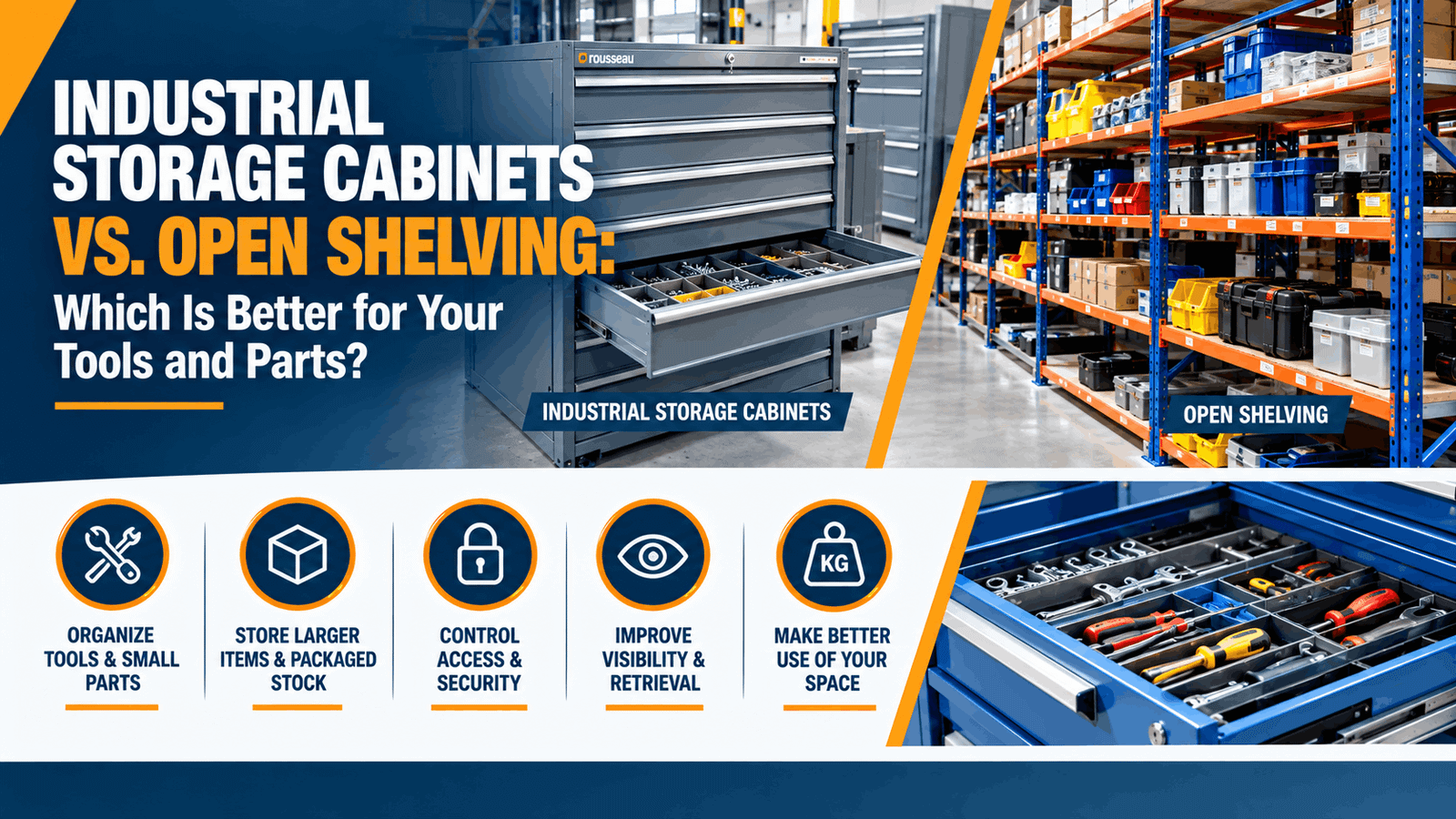
Drawers suit components that benefit from separation and compact organization. Shelving accommodates boxed items, larger packages and reserve quantities. Many parts areas need a combination because their inventory varies in size and handling requirements.
When Do Modular Drawer Cabinets Make Sense?
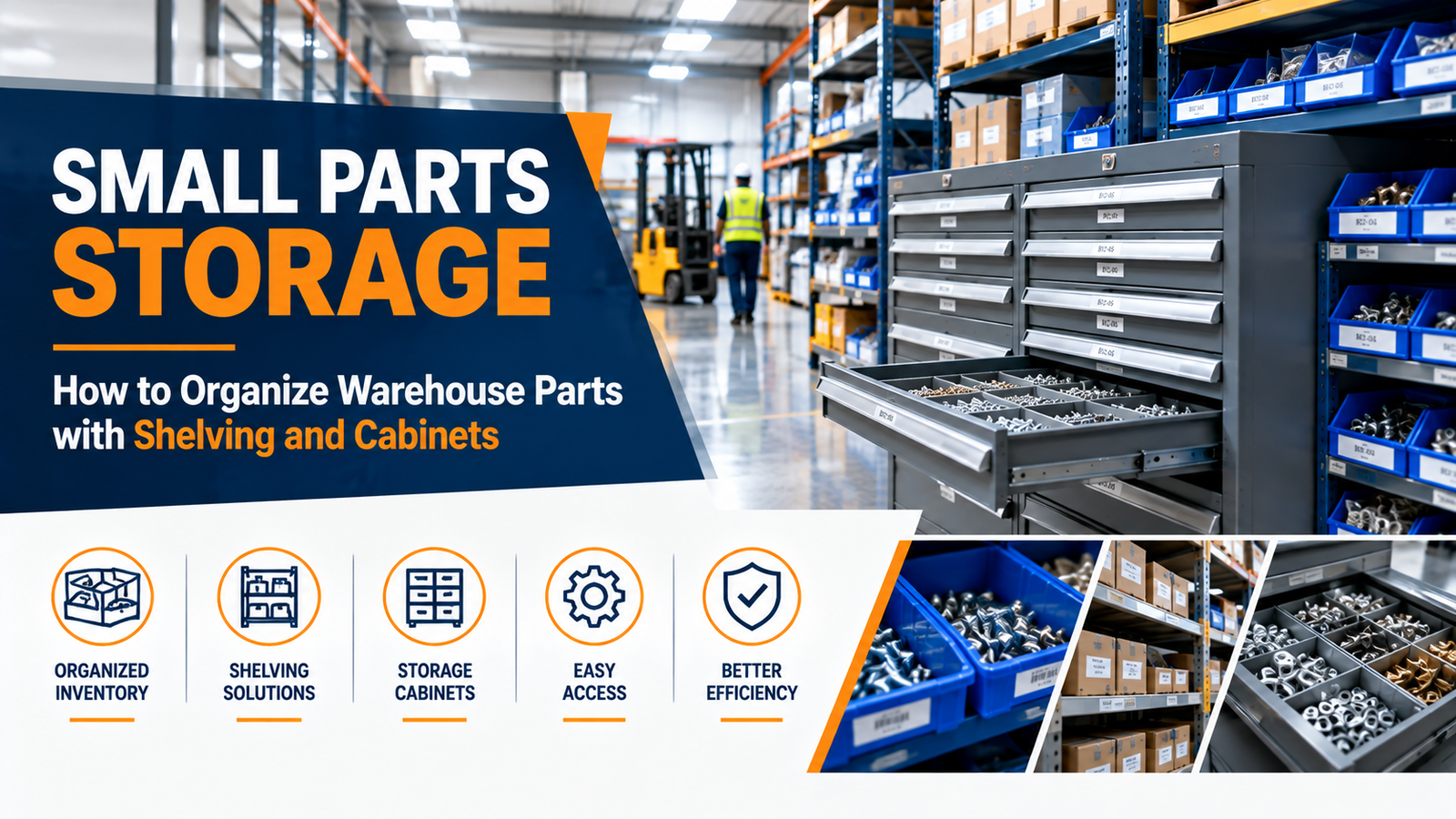
For loose hardware and small components, small parts storage cabinets provide a way to organize inventory within individual drawers. Suitable dividers can create separate compartments without assigning an entire shelf to each part number.
Choose drawer depths around the contents. A deep drawer filled with a thin layer of small parts leaves unused space above them, while a shallow drawer may not accommodate taller fittings.
Check usable internal dimensions and the specified drawer load capacity. Small metal components can become heavy when stored in quantity. Full-extension drawers can also make items at the back easier to reach. Accurate Shelving offers Rousseau cabinets with organizational accessories and full drawer access.
When Is Parts Storage Shelving More Suitable?
Shelving works well for packaged components and replenishment stock that can remain clearly identified on a shelf. It also accommodates an inventory mix that includes items too large for the chosen drawers.
Spider shelving offers configurations and accessories that can be selected around those requirements. Confirm the intended shelf dimensions, loading and available options before deciding on the arrangement.
Keep package labels facing the picking position and avoid placing unrelated items behind one another. A shelf may have spare depth without offering a practical second picking location.
When Should Shelving and Cabinets Work Together?
Imagine a maintenance store holding loose seals, boxed bearings and replacement assemblies. Seals can occupy divided drawers, bearings can remain in identified packages on shelving, and larger assemblies can have their own suitable shelf positions.
Each item receives storage suited to its handling needs, while the whole area follows one location system.
How Should You Label and Arrange Parts for Faster Retrieval?
Use labels that identify both the component and its storage location. A consistent scheme lets someone unfamiliar with the area find a part without relying on a colleague’s memory.
What Information Belongs on a Location Label?
Include a part number, a concise description and a location code. Add specifications such as size or thread type where they help distinguish similar items.
For example, A-02-D03 could mean area A, cabinet 02, drawer 03. If that drawer holds several parts, identify the individual compartments as well. Otherwise, the code leads the picker to the right drawer but leaves the final search unresolved. Use the same location references in stock records.
How Can You Keep Similar Parts from Getting Mixed?
Place labels where they remain visible during picking and replenishment. Separate compartments physically, rather than relying on a handwritten note between loose piles.
Colour coding or photographs can support identification, but retain the part number and description. Define who checks returned items and make sure replenishment staff verify the destination before pouring new stock into a compartment.
Where Should Small Parts Storage Sit in Your Warehouse?
Position storage around the tasks it supports. Components used repeatedly at one station should be conveniently accessible, while shared stock needs a location that works for everyone who uses it.
Storage integrated into workbenches and workstations can keep assembly components close to the work surface. Reserve quantities can remain elsewhere, leaving the immediate work area manageable.
A fixed picking area may suit stationary cabinets. Where maintenance tasks move between work areas, a mobile configuration may be more practical. Choosing between stationary and mobile cabinets depends on whether the inventory should stay in one place or travel with the job.
Allow space to open drawers, handle packages and replenish shelves without blocking surrounding activity. Check the loaded cabinet’s mobility, stability and installation requirements with the supplier rather than assuming every configuration works in every location.
How Can You Keep the Parts Area Organized as Inventory Changes?
Keep the location system current and make returning stock as straightforward as picking it. Even a carefully planned layout becomes confusing when new parts are placed wherever a gap appears.
Assign responsibility for approving new locations and updating records. If an item moves, change its labels and recorded location together. Remove obsolete labels so there is only one clear instruction at the picking position.
Set replenishment levels around actual usage and supply lead times. Check picking and reserve quantities together before reordering to avoid treating an empty picking compartment as a complete stockout.
Periodically review overflowing compartments, mixed items and locations that staff struggle to access. These observations can reveal when to adjust dividers, allocate a larger space or change stock placement.
This is part of ongoing warehouse optimization: storage should evolve with the operation. Leave some flexibility for additional part numbers, while keeping every adjustment within the equipment’s specified configuration and load limits.
Final Thoughts: What Should Your Small Parts Storage Achieve?
Your storage setup should make the correct part easy to find, retrieve and return. Start with your inventory, choose shelving and drawers that fit it, and use clear locations that everyone can follow.
Accurate Shelving can help you select suitable cabinet and shelving configurations. Discuss your parts storage requirements with us to plan around your inventory, available space and daily workflow.
Frequently Asked Questions
What Is the Best Way to Store Small Parts?
Store each part number in a clearly labelled compartment sized for its usual stock quantity. Keep frequently used components accessible and reserve stock in identified locations.
How Do You Organize Nuts, Bolts and Screws?
Separate them by type, size, thread and material where relevant. Use divided drawers with clear labels so similar-looking fasteners do not become mixed.
Are Drawers or Shelves Better for Small Parts Storage?
Drawers suit loose components that need separation. Shelving works well for boxed parts, larger packages and reserve stock; many parts areas benefit from both.
How Should You Label Spare Parts Storage?
Include the part number, a short description and a location code. Identify individual compartments when one drawer holds several items, and match those locations to your stock records.
How Can You Store Small Parts in Limited Space?
Match compartment sizes to the inventory and reduce unused space between shelves where appropriate. Consider modular drawers while preserving access and staying within equipment load limits.