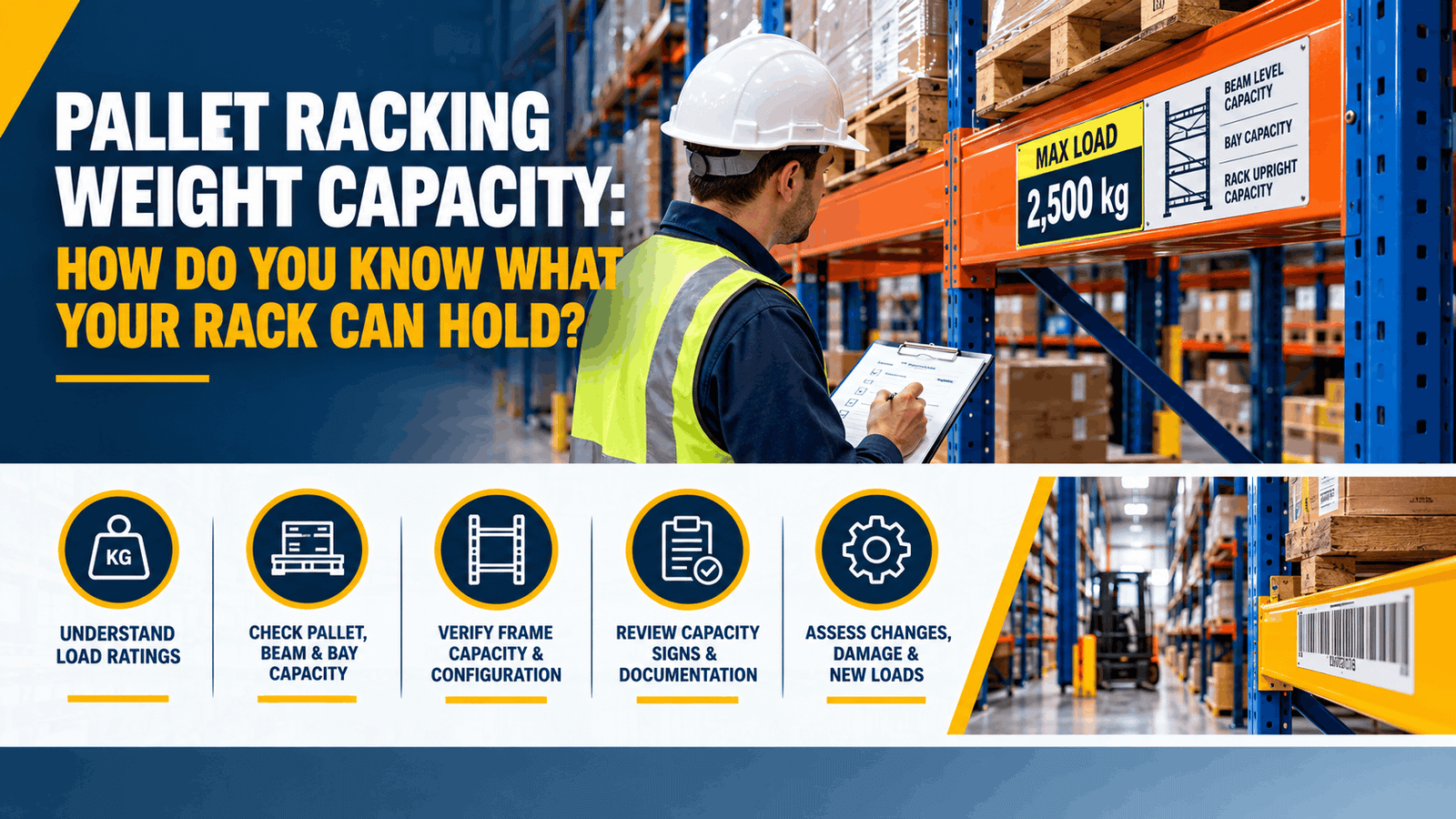
To know what your pallet racking can hold, check the documented load rating against the rack actually installed. The components, beam positions, loading arrangement and condition must match the basis of that rating. A sturdy appearance or a weight limit from a similar rack is not enough.
At Accurate Shelving, we help businesses select storage systems around their pallet loads and operational requirements. Understanding pallet racking weight capacity matters before adding heavier stock, buying used equipment or changing an existing layout.
How Much Weight Can Pallet Racking Hold?
There is no universal pallet rack weight limit. Different systems and configurations support different loads. Even two racks with similar external dimensions can have different ratings because their components and installation conditions differ.
What Is the Difference Between Pallet, Beam-Level and Bay Capacity?
A unit-load limit applies to an individual loaded pallet. A beam-level limit applies to the documented loading arrangement on that level, often supported by a front-and-rear beam pair. A bay limit applies to the total load permitted within the specified bay configuration.
These limits must work together. Keeping each level below its beam rating does not automatically establish that the complete bay can support every level fully loaded.
When comparing pallet racking systems, provide both the heaviest pallet weight and the proposed loads across all storage levels.
Why Does Upright or Frame Capacity Matter?
Frames carry loads transferred through the beam connections. Their capacity depends on the frame design and installed beam spacing, including the unsupported lengths of the uprights.
A frame rating therefore needs its configuration assumptions. It should not be treated as one fixed number that applies regardless of where the beams are positioned.
Where Can You Find Your Rack’s Verified Load Rating?

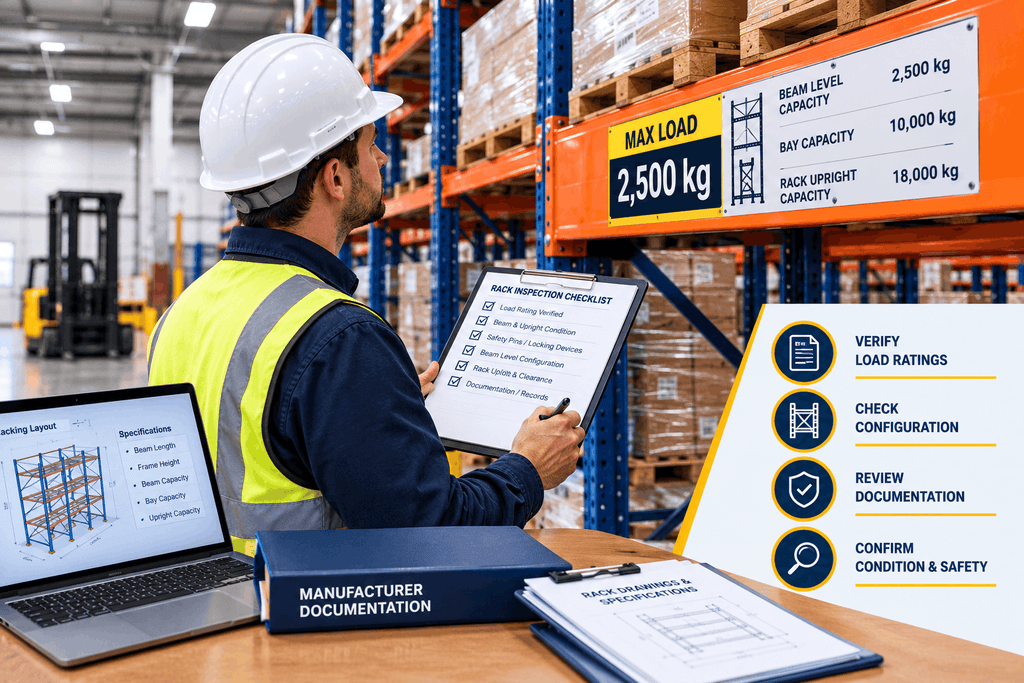
Start with the capacity sign and supporting manufacturer records or engineering documents. Then confirm that they describe the components, elevations and loading conditions currently in use.
What Should You Check on a Capacity Sign?
Read what each value represents. A sign may show limits for unit loads, beam levels or bays; these terms are not interchangeable. Check whether weights are stated in kilograms or pounds.
For example, a 2,000 kg beam-level limit does not mean that each of two pallets can weigh 2,000 kg. It describes the permitted level load under the stated conditions.
Do the Drawings and Manufacturer Records Match the Installed Rack?
Compare component identification, beam lengths, level elevations and the specified loading arrangement. Keep the relevant documents accessible so future changes can be checked against them.
An old capacity plaque may no longer apply if beams have been repositioned or components replaced. Likewise, a catalogue rating needs confirmation that its assumptions match the installation.
How Do You Calculate the Load You Need to Store?
Adding pallet weights calculates your proposed storage load. It does not calculate the rack’s structural capacity. The requirement must be compared with a verified rating for the complete arrangement.
What Counts Toward Loaded Pallet Weight?
Include the goods, pallet, packaging and anything else carried with the load. Record the heaviest expected pallet rather than relying on an average that hides heavier deliveries.
Where weights vary, use verified measurements or reliable shipment information. Check new product lines before assigning them to existing pallet positions.
How Do You Work Out the Proposed Load per Level?
Add the loaded pallet weights planned for that level. Two loaded pallets weighing 900 kg each create a proposed level load of 1,800 kg.
That figure is a storage requirement, not proof of suitability. The verified beam-level rating must accommodate the load under the intended placement conditions, while frame and bay limits must also be satisfied.
Do not derive a rack rating from pallet volume or a generic online calculator.
What Can Change Your Pallet Racking’s Capacity?
Load ratings apply under specified conditions. Changing the layout, components or location may change those conditions, so verification should happen before the altered system is loaded.
Can Moving or Removing Beam Levels Affect Frame Capacity?
Yes. Moving a level can change the unsupported length of the uprights and the applicable frame capacity. Raising the lowest beam level is particularly important to review.
Removing a level does not automatically make the rack safer simply because fewer pallets remain. The structural arrangement has also changed. Confirm the revised configuration with the manufacturer or a qualified rack engineer.
Do Replacement Components or a New Location Need Review?
Replacement beams and frames need confirmed compatibility and suitable ratings. Matching colour, dimensions or connector appearance does not prove equivalent performance.
Relocation also introduces different site conditions. Floor suitability, anchoring and other design requirements must be considered alongside the rack components. The original installation’s rating should not automatically be transferred to a new facility.
Why Does Load Distribution Matter as Much as Total Weight?
The way a load reaches the beams, decking and supports matters. A total weight below the stated limit may still fall outside the rating’s loading assumptions.
Are the Pallets Positioned as the System Was Designed?
Follow the documented pallet arrangement and support requirements. Different pallet positions or uneven loads can change how forces are distributed.
A uniformly distributed load spreads weight across the specified supporting surface. A concentrated load places more weight over a smaller area. Equipment rated for one loading condition should not automatically be used for another.
Do Decking and Pallet Supports Have Separate Limits?
Decking and pallet supports must suit the actual load and contact arrangement. A heavy item resting on small feet can create different demands from cartons spread over a deck.
Adding wire mesh decking does not automatically increase beam or frame capacity. Check the decking specification and its compatibility with the beams, as well as the rack’s documented limits.
What Should You Do If Ratings Are Missing or the Rack Is Damaged?
Missing records and damaged components prevent a straightforward capacity check. Neither problem can be resolved by guessing a lower safe weight or assuming a rack that has held stock before will continue to do so.
How Can an Undocumented Rack Be Assessed?
Gather component markings, photographs, dimensions, beam elevations, installation details and intended loads. A manufacturer, experienced supplier or qualified rack engineer can determine what further identification and assessment are needed.
If capacity cannot be established, do not load the affected rack until its suitability has been confirmed. Our guide to checking used pallet racking explains why identification and verification belong before purchase and installation.
Does Damage Invalidate a Simple Weight-Limit Check?
A rating does not establish that damaged equipment remains suitable. Bent uprights, cracked connections or damaged beams require assessment rather than an improvised reduced limit.
Restrict use of the affected area and arrange a competent assessment under your facility’s procedures, including a safe unloading plan where required. Our warehouse racking maintenance guide covers ongoing condition checks as inventory and daily activity change.
Final Thoughts: How Can You Be Confident Your Rack Suits Your Loads?
Verify the documented rating, confirm it matches the installed configuration and compare it with your actual loading requirements. Recheck suitability when loads, beam positions, components or conditions change.
Discuss your pallet loads and rack configuration with Accurate Shelving. Bring load weights, photographs and existing records so the next steps can be based on the system you have and the stock you need to store.
What Else Should You Know About Pallet Racking Weight Capacity?
These common questions clarify ratings, configuration changes and equipment selection.
Is Beam Capacity Usually Stated per Beam or per Pair?
Pallet rack beam ratings are commonly stated per pair under specified loading conditions. Check the documentation’s basis; do not double a published rating without confirmation.
Can You Determine Rack Capacity From Beam Size Alone?
No. Dimensions help identify components, but material properties, connections, configuration and installation conditions also matter. Use applicable documentation or a qualified assessment to verify capacity.
Does Raising the First Beam Level Affect Capacity?
It can. Raising the first level changes the unsupported upright length and may reduce applicable frame capacity. Verify the revised arrangement before moving beams and loading it.
Does Wire Mesh Decking Increase Rack Capacity?
Not automatically. Decking provides support under its specified conditions, but it does not independently increase the verified rating of the beams, frames or complete rack.
Can Used Pallet Racking Carry the Same Loads as New Racking?
It may, where components, condition, configuration and documentation support the required rating. Age alone does not establish capacity; verify the specific used system before loading it.