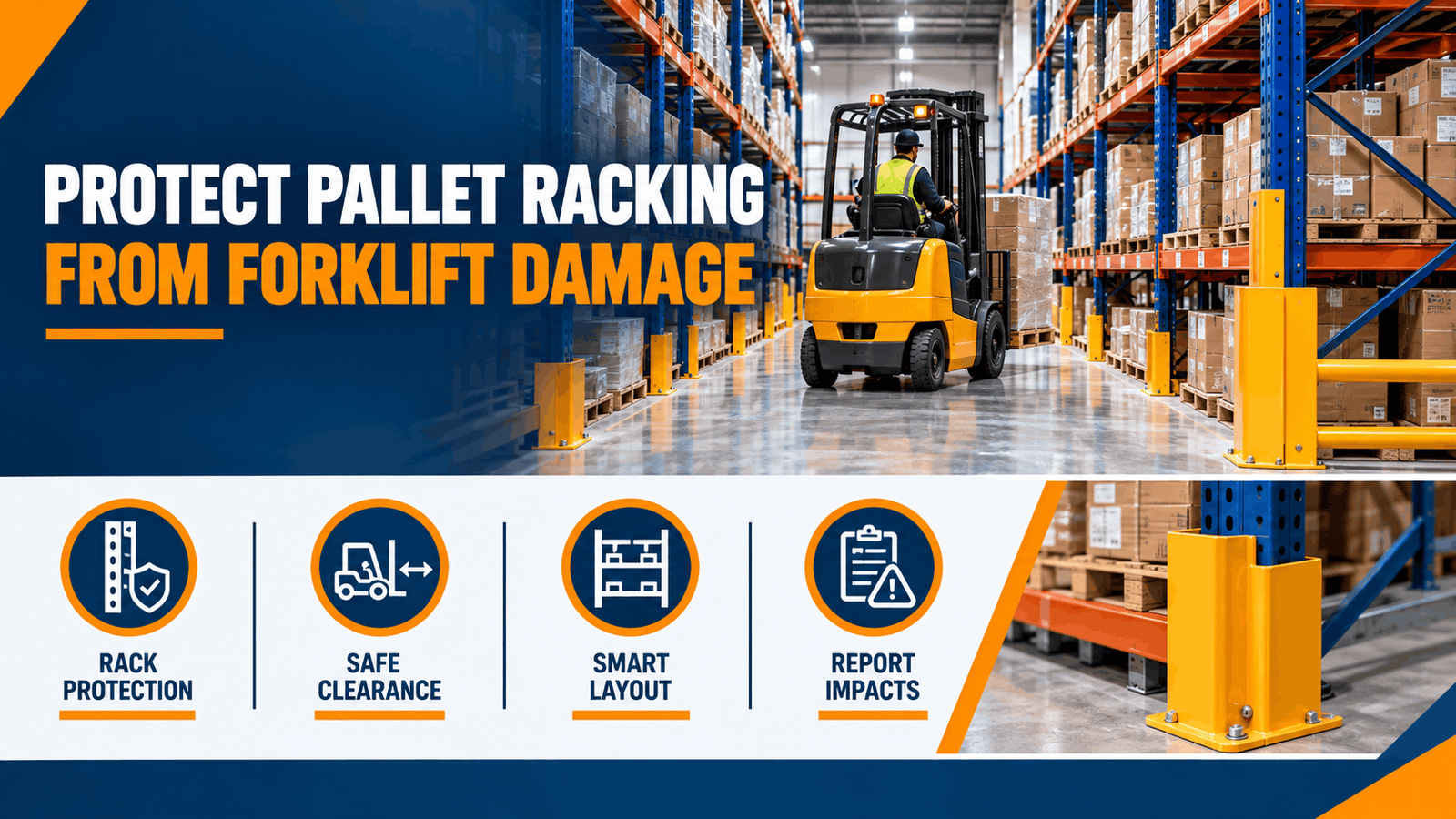
Protecting pallet racking from forklift damage takes more than fitting guards around the posts. The loaded truck needs suitable clearance, operators need workable routes, and pallets must fit their storage positions. Appropriate impact protection and prompt reporting help manage the risks that remain.
At Accurate Shelving, we help businesses plan storage around their inventory and handling requirements. Effective pallet rack protection starts by understanding where contact happens and why, then matching the layout, equipment and protection to those conditions.
Why Does Forklift Damage Keep Happening Around Pallet Racking?
Repeated contact is a reason to review the task and layout. Replacing a damaged component without addressing the cause leaves the next upright or beam exposed to the same problem.
Where Are Rack Uprights Most Exposed?
Aisle ends, intersections and locations where forklifts turn close to frames deserve particular attention. These are places where the vehicle or load can pass near structural components.
Review recorded impacts and near misses alongside normal movements. A post beside a busy turning point faces different exposure from one inside a quieter storage row. Protection priorities should reflect the actual operation.
Can Forks and Pallets Damage More Than the Uprights?
Yes. Forks or loads can contact beams, bracing and connections during placement or retrieval. A floor-level protector cannot address every contact point higher in the rack.
Separate vehicle-body collisions from handling-related contact when investigating incidents. The first may require changes to turning space or guarding; the second may reveal unsuitable clearances, pallet positioning or handling practices.
How Can Warehouse Layout Reduce Forklift Contact?
The truck, its load and the manoeuvre must fit the available working space. Adding protection to an unsuitable route can reduce clearance further, so layout and guarding should be reviewed together.
Is There Enough Clearance for the Loaded Forklift?
Check the operating requirements of the specific truck, including the space needed to turn and place the intended pallet. Account for load overhang, pallet dimensions and any protection projecting into the aisle.
There is no single aisle-width figure that proves every arrangement suitable. Good warehouse layout planning considers the equipment and load together before rack positions are finalized.
Are Congestion and Poor Visibility Creating Repeat Problems?
Temporary stock, empty pallets and equipment parked in aisles can narrow otherwise workable routes. Poor lighting or obstructed sightlines can make rack edges and approaching traffic harder to see.
Keep designated routes clear and review congestion during busy periods. Floor markings communicate boundaries, but they do not provide physical impact protection or make an obstructed route suitable for use.
Which Pallet Rack Protection Suits Each Risk?
Choose protection for the component exposed, the likely direction of contact and the operating conditions. Appearance and colour alone do not establish impact performance.
When Should You Consider Rack Post or Upright Protectors?
Rack post protectors shield individual exposed uprights. Their suitability depends on their dimensions, mounting arrangement and compatibility with the rack and surrounding space.
Accurate Shelving’s supplier range includes Cogan rack protection and guardrail barriers. Discuss the location, truck movement and available clearance when selecting an option rather than assuming one protector suits every post.
Where Can Rack-End Guards and Guardrails Help?
Rack-end protection can address exposed row ends where vehicles turn past the frames. Appropriately specified guardrails can provide a broader barrier between vehicle movement and an area needing protection.
Confirm the intended impact conditions, installation requirements and any working or deflection clearance. Positioning must preserve access, escape routes and the space needed to handle pallets.
A barrier that obstructs the operator’s normal approach can create another problem instead of resolving the original one.
What Can Impact Guards Not Do?
Impact guards cannot restore a damaged upright, increase rack load capacity or guarantee protection against every collision. Their performance depends on the product and installation conditions.
Pallet-support safety bars serve a different purpose: they support suitably positioned pallets between beams. Wire decking and rear containment also have their own functions. These should not be confused with guards specified to address vehicle impacts.
How Do Pallet Handling and Operator Practices Prevent Damage?
Suitable equipment needs consistent operating practices. Operators should understand the particular truck, loads and routes involved, including situations where they must stop and seek assistance.
Are Pallets Positioned Without Forcing or Striking the Rack?
Use pallets compatible with the support arrangement and keep loads stable. Allow the required clearance for placement and withdrawal rather than using contact with the structure to guide the pallet into position.
Repeated corrections, scraping or difficulty retrieving a pallet are reasons to investigate. Matching pallet racking systems to pallet dimensions and handling equipment helps establish a workable arrangement from the start.
Do not assume a rack that accommodates the pallet’s weight also provides adequate handling clearance.
Do Operators Know the Route and Reporting Procedure?
Site-specific instruction should cover designated routes, intersections, controlled travel and pedestrian arrangements. Operating practices must account for visibility, loads and local conditions rather than relying on a universal speed figure.
Make impact and near-miss reporting straightforward. Employees need to know whom to notify and what activity to stop. Reporting minor contact creates an opportunity to investigate before the same movement causes more damage.
What Should Happen After a Forklift Hits the Racking?
An impact needs a controlled response. The size of a visible mark does not establish whether the rack, its connections or the surrounding installation remains suitable for use.
How Should the Affected Area Be Managed?
Stop the affected activity, keep people clear and notify the responsible person. Follow the facility’s incident procedures and arrange assessment of the affected rack and surrounding area.
Where unloading is necessary, it must follow an assessed safe plan. Do not send someone into a potentially unstable area simply to remove the stock or obtain closer photographs.
Who Should Assess Damage Before the Rack Returns to Use?
A competent rack specialist or qualified engineer should assess the situation according to the damage and applicable requirements. Return to service should follow the required corrective work and confirmation of suitability.
Do not improvise repairs by straightening, welding or drilling components, or assign a guessed lower load limit. Our warehouse racking maintenance guide explains why inspection and follow-up remain important after installation.
How Can You Tell Whether Your Prevention Measures Are Working?
Track impacts, near misses and recurring locations. Check the condition of guards and their mounting arrangements alongside the racking behind them. Protection that has been struck may need attention even when the rack appears unchanged.
For example, repeated strikes at one aisle end should prompt a review of turning clearance, congestion and visibility alongside guard selection. Replacing the same protector repeatedly is evidence that the underlying conditions need another look.
Review the prevention plan when trucks, pallet sizes, routes or activity levels change. A layout that worked for one operation may need reassessment as the business grows.
Final Thoughts: What Is the Best Way to Reduce Forklift Damage?
Combine a suitable layout, compatible handling equipment, careful pallet placement and appropriately specified protection. Support those measures with clear reporting and a controlled response to every impact.
Discuss your rack protection requirements with Accurate Shelving. Share truck details, layout information and the locations where contact occurs so suitable next steps can be considered around your operation.
What Else Should You Know About Pallet Rack Protection?
These common questions clarify protection products, placement and damage assessment.
Do Rack Protectors Prevent All Forklift Damage?
No. Their performance depends on specification, installation and impact conditions. They supplement suitable clearances and operating practices, and cannot protect every part of a rack from every collision.
Are Pallet-Support Safety Bars the Same as Impact Guards?
No. Pallet-support bars support pallets between beams under specified conditions. Impact guards address vehicle-contact risks. One should not be presented as a substitute for the other.
Where Should Rack Protection Be Installed First?
Prioritize identified exposure and recorded incidents, including vulnerable posts and aisle ends. The right locations depend on vehicle routes, turning movements, loads and existing clearances.
Should a Rack Be Checked After a Minor Forklift Impact?
Yes. Report the contact and follow the facility’s assessment procedure. A small visible mark alone cannot establish that the rack or its connections remain suitable for use.
Can a Bent Rack Upright Be Straightened and Reused?
Do not improvise straightening. Repair or replacement should follow a competent assessment and an appropriate approved method, with suitability confirmed before the affected rack returns to service.