Cold storage square footage is some of the most expensive real estate in any warehouse. Every wasted cubic foot isn’t just lost storage, it’s ongoing energy cost, spent cooling air that’s holding nothing but empty aisle space.
The wrong racking choice makes that worse. It’s not just a matter of fitting in fewer pallets, poor racking decisions in a cold environment can lead to spoilage, failed safety inspections, and structural issues a standard warehouse never has to think about.
At Accurate Shelving, our pallet racking systems are engineered around exactly these pressures, and this guide breaks down the systems, materials, and compliance factors that actually matter in a temperature-controlled facility.
What Makes Cold Storage Racking Different from Standard Warehouse Racking?
Cold storage racking has to survive conditions that standard ambient racking never encounters. Temperature swings, constant condensation, and frequent washdown cycles all put stress on steel in ways a dry, room-temperature warehouse simply doesn’t.
The unique demands of a temperature-controlled environment
Sub-zero freezers, refrigerated coolers, and washdown-heavy food areas each create their own set of challenges. Condensation forms every time warm air meets cold steel, and that moisture cycle is constant in a working cold storage facility, not an occasional event.
Why cold storage space is so much more expensive to waste?
Energy costs for cooling and freezing make every square foot in a cold facility far costlier than the same square foot in a standard warehouse. A racking layout that wastes space isn’t just inefficient, it’s actively driving up the utility bill every single day it stays that way.
Which Racking Systems Work Best for Cold Storage?
Choosing the right system is where most of the real savings happen, and this is where a mid-size operation has more practical options than the automation-first pitch you’ll hear from bigger suppliers.
Selective pallet racking for accessibility and control
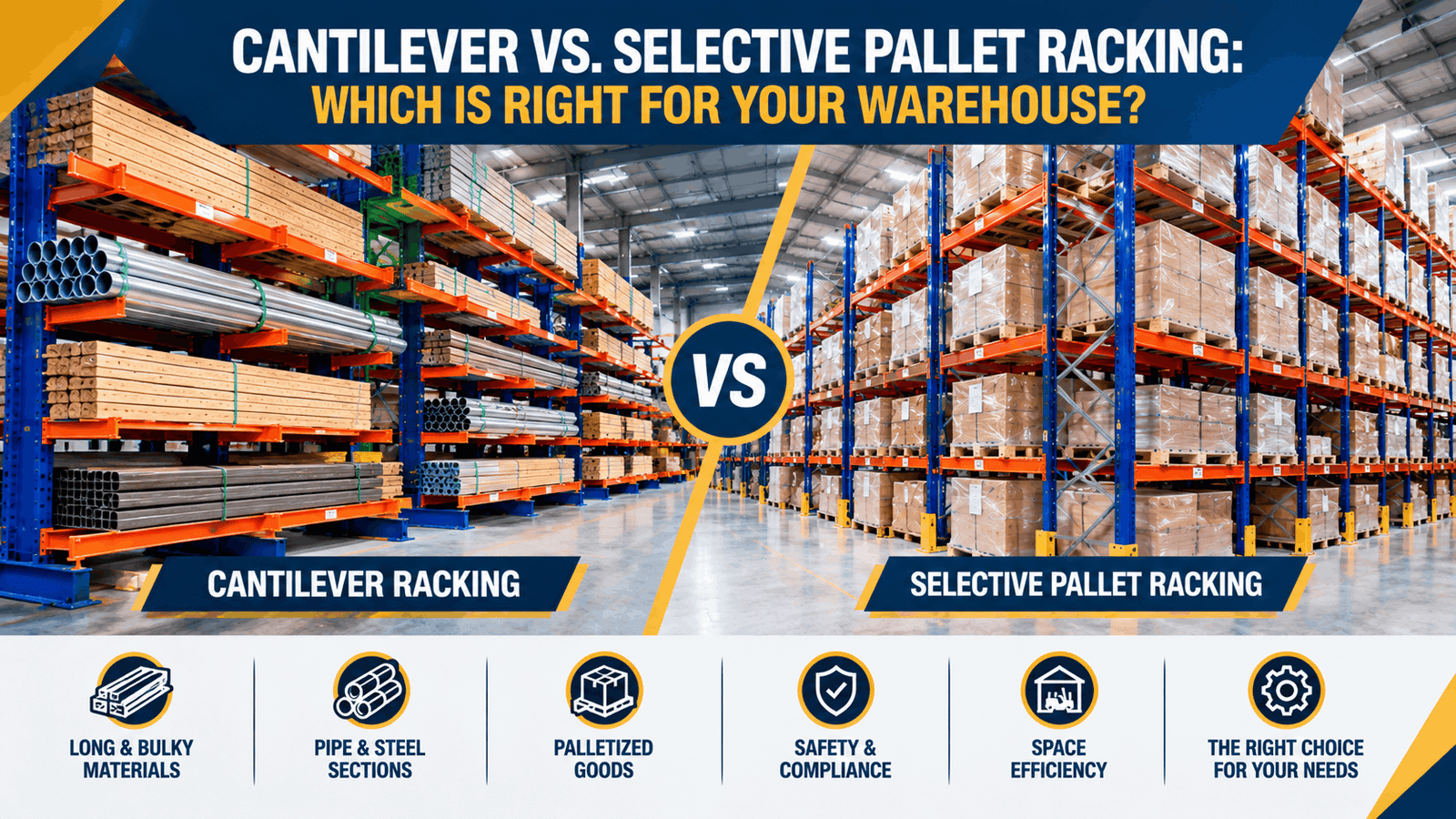
Selective pallet racking remains one of the most reliable choices for cold storage facilities handling a mix of SKUs. It gives direct access to every pallet position, which matters when a facility can’t afford to shuffle other loads just to reach one item.
For operations storing varied inventory, different products, different pallet sizes, different rotation speeds selective racking keeps everything individually accessible without the complexity of a denser system.
Pushback racking for higher density without losing flexibility
Pushback racking is where cold storage facilities often find the best balance between density and practicality. Pallets load from the front on a gravity-fed cart system, storing two to six pallets deep per lane while still keeping multiple SKUs accessible across different lanes.
Compared to basic selective racking, pushback racking significantly increases pallet count in the same footprint, directly reducing the cooled aisle space a facility needs to maintain.
Drive-in racking for high-volume, single-SKU storage
Drive-in racking loads and retrieves pallets from the same side, making it ideal for large volumes of a single product that doesn’t need frequent rotation. It’s dense, but less flexible than pushback racking, so it suits bulk frozen goods better than mixed inventory. Because forklifts operate directly inside the rack lanes, this system also depends on matching the racking to the right material handling equipment for the aisle widths involved.
Pallet flow racking for strict FIFO rotation
Where inventory has to move on a first-in-first-out basis common with perishable and date-sensitive goods gravity-fed pallet flow lanes keep older stock rotating to the front, without relying on staff to manage rotation manually.
How Do You Maximize Storage Space in a Cold Storage Warehouse?
Space optimization in cold storage isn’t just about cramming more pallets in. It’s about reducing the total cooled volume a facility has to maintain in the first place, the same principle behind good warehouse design generally, just with energy cost raising the stakes.
Build density before you build square footage
High-density configurations like pushback and drive-in racking reduce the total cooled volume needed to store the same amount of inventory, since less of that volume is empty aisle space.
Fewer aisles means lower energy costs
Every aisle that doesn’t need to exist is aisle space that doesn’t need active cooling. Compact layouts that minimize aisle count have a direct, measurable impact on energy spend.
Plan vertical space as carefully as floor space
Taller, denser racking makes use of the full cooled cube of the facility rather than leaving ceiling height empty above shorter racking runs.
What Materials Hold Up Best in Cold Storage Conditions?
Racking that performs well in a dry warehouse can fail fast in a cold, humid environment if the materials aren’t right for the job.
Why condensation is the real enemy of cold storage racking
Every time a dock door opens, warm humid air meets cold steel, depositing moisture. Left unchecked, that cycle drives corrosion far faster than most facility managers expect.
Hot-dip galvanized steel vs. standard coatings
Hot-dip galvanizing bonds a thicker zinc layer directly to the steel, giving it meaningfully stronger resistance to condensation and humidity cycles than standard powder coatings, which can crack under repeated freeze-thaw stress.
When stainless steel is worth the investment
Stainless steel is generally reserved for direct food-contact areas or extreme washdown environments, where even galvanized steel isn’t enough to meet hygiene requirements.
What Compliance Standards Apply to Cold Storage Racking?
Compliance in cold storage isn’t optional, and it shapes racking decisions just as much as space or budget does.
Food safety and material requirements
Food-grade cold storage environments fall under HACCP guidelines, which require racking materials and finishes that won’t flake, corrode, or contaminate product stored below, a standard that rules out bare steel or basic paint finishes. Facilities storing FDA-regulated goods face the same expectation under CFR 21, with routine inspections to verify it.
Load capacity and inspection standards
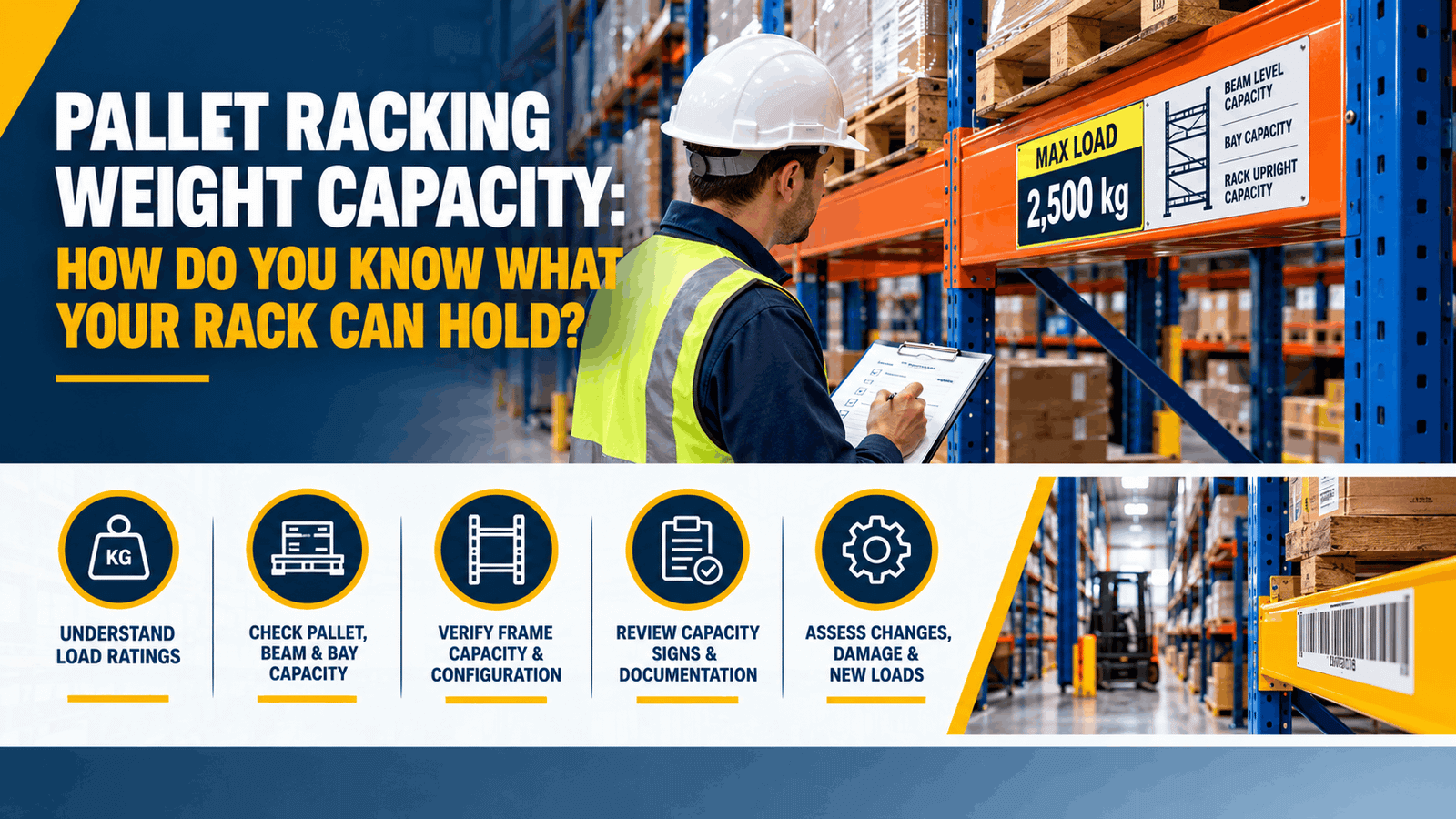
Rack design in Canada and the U.S. is generally expected to follow ANSI MH16.1 engineering standards, and every rack bay needs an accurate, visible load rating.
Cold storage racking should be inspected on a regular, documented schedule, since temperature cycling adds structural stress beyond what standard warehouse racking experiences, and OSHA’s cold stress guidelines apply to how that inspection work gets done safely, not just the racking itself.
Structural considerations for sub-zero environments
Steel can become more brittle at extreme low temperatures, particularly in blast freezer environments that run well below standard freezer ranges. That’s why weld points and load-bearing connections deserve close attention during any freezer inspection, and why racking specified for these environments often calls for impact-rated steel grades built to hold up in sustained sub-zero conditions.
How Should Product Rotation Shape Your Racking Layout?
The way inventory needs to move through a facility should shape the racking choice just as much as space constraints do.
FIFO vs. LIFO – which your inventory actually needs
Perishable and date-sensitive goods typically demand strict first-in-first-out rotation, which pallet flow or pushback racking supports naturally. Non-perishable bulk inventory can often tolerate a last-in-first-out approach, which is exactly what drive-in racking is built for.
Keeping product accessible without compromising density
The right racking configuration balances tight, energy-efficient storage with fast, reliable access whenever orders need to move, a balance pushback and selective racking are particularly well suited to.
Which Industries Rely Most on Cold Storage Racking Solutions?
Cold storage racking isn’t a one-industry concern, it spans several sectors with very different priorities.
Food and beverage distribution
Grocery, dairy, and frozen food operations depend on dense, FIFO-driven racking to protect product quality and shelf life throughout the cold chain.
Pharmaceutical and healthcare storage
Temperature-sensitive medical and pharmaceutical products require racking that supports strict compliance, traceability, and consistent conditions.
Third-party logistics and distribution centers
3PL operators managing multiple clients’ cold inventory need flexible, high-density systems, like pushback and selective racking, that scale as demand shifts.
Is Automated Cold Storage Racking Worth Considering?
Automation gets a lot of attention in cold storage conversations, but it isn’t the right starting point for every facility.
What automation adds in extreme cold environments
Systems like automated storage and retrieval systems (AS/RS) or pallet shuttle carts reduce how long staff need to work in sub-zero conditions, and can improve picking speed and accuracy in high-volume operations.
Designing with future automation in mind
Even facilities not ready for AS/RS or shuttle systems now can benefit from a racking layout that leaves room for them later, avoiding a costly full redesign down the road.
Getting Your Cold Storage Racking Right
In cold storage, racking decisions affect far more than how much fits on a shelf. They shape energy costs, product safety, and whether a facility passes its next inspection without issue.
Accurate Shelving has spent over 21 years supplying and installing pallet racking systems across Canada, including for food, beverage, and cold storage clients who need systems built for these exact conditions. Visit our About Us page to learn more, or reach out through Contact Us for a hands-on cold storage racking assessment tailored to your facility.
Frequently Asked Questions
What’s the difference between drive-in and pushback racking for cold storage?
Drive-in racking loads and retrieves from the same side for dense, single-SKU storage, while pushback racking offers more pick faces and supports multiple products per bay.
Why is galvanized steel preferred over standard coatings for freezer racking?
Hot-dip galvanizing bonds a thicker zinc layer to the steel, giving it stronger long-term resistance to the condensation and humidity cycles common in cold storage.
How often should cold storage racking be inspected?
Most facilities schedule formal inspections annually, with regular visual checks in between, since temperature cycling adds extra stress beyond standard warehouse conditions.
Does cold storage racking need to support FIFO inventory rotation?
For perishable or date-sensitive goods, yes pallet flow or similarly configured racking is typically used to enforce first-in-first-out movement.
Is automation necessary for a cold storage racking system?
No, many mid-size operations run efficiently on high-density manual racking like selective or pushback systems, though facilities can design layouts that leave room for automation later.