Few warehouses carry as much pressure per square foot as a food or beverage facility. Get the racking decision wrong here and it isn’t just wasted space, it can mean spoiled product, a contamination risk, or a failed inspection.
Strict regulation, wide product variety, and rising throughput demands make food and beverage one of the most complex categories of warehouse storage to get right. At Accurate Shelving, this guide breaks down the storage decisions that actually matter for these operations, from compliance to capacity.
What Makes Warehouse Storage Different for Food & Beverage Operations?
Warehouse storage for food and beverage carries demands that most other industries never have to think about.
A uniquely demanding category of warehouse storage
Strict food safety regulation, wide product variety, and constant innovation in packaging make conventional storage approaches uneconomical fast. What works for general merchandise rarely translates directly here.
Why getting it wrong costs more here than elsewhere?
A racking mistake in this vertical doesn’t just waste space. It risks spoilage, contamination, or a failed inspection, all of which carry consequences far beyond a slower picking process.
What Compliance Standards Apply to Food & Beverage Warehouse Storage?
Compliance shapes nearly every storage decision in this vertical, well before efficiency or capacity even enter the conversation.
FDA, USDA, and HACCP requirements shape every storage decision
Facilities handling raw ingredients, dry goods, or packaged food must meet food-grade storage and hygiene standards from day one, not as an afterthought once the racking is already installed.
Fire code commodity classifications are easy to overlook
Food products carry specific fire code classifications that affect sprinkler design. A system built for general warehouse storage can fail a fire marshal inspection once it’s filled with flammable packaging or liquid product.
Traceability and allergen segregation
Full lot and batch tracking from receiving to dispatch, along with separate storage for allergen-containing products, are baseline expectations in this industry, not optional extras.
How Do Temperature Zones Affect Food & Beverage Warehouse Storage?
Few industries juggle as many distinct temperature requirements under one roof as food and beverage does.
Ambient, chilled, and frozen zones each demand different racking
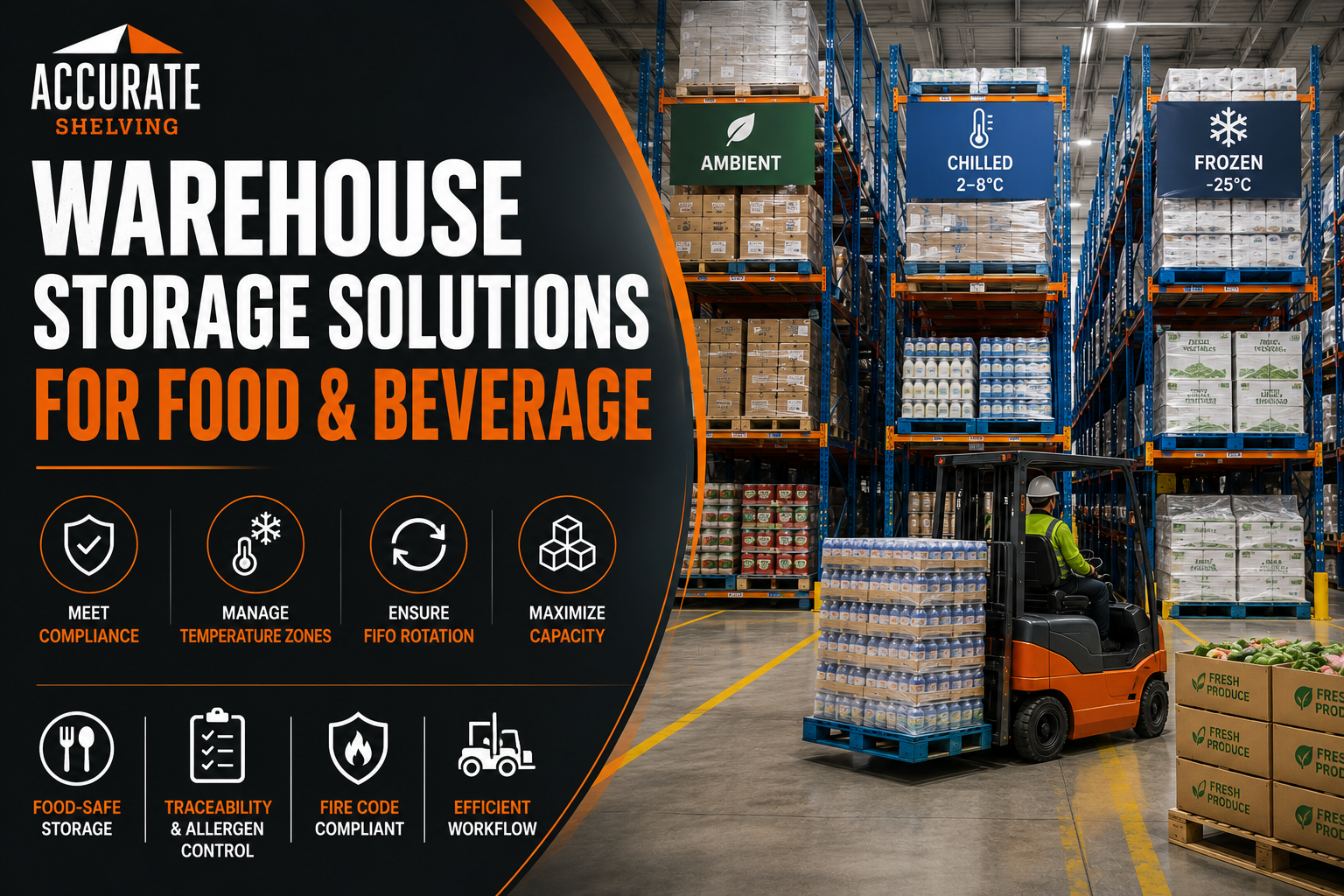
Ambient dry goods, chilled products in the 2–8°C range, and frozen goods down to -25°C each place different demands on racking materials and layout. A single racking approach rarely works across all three.
Diverse load units complicate a single-system approach
Different sizes, weights, expiration dates, and cold storage requirements mean most food and beverage warehouses combine several racking types rather than relying on one system for everything, an approach we’ve also covered in detail for cold storage environments specifically.
Why Is FIFO Rotation Non-Negotiable in Food & Beverage Storage?
Inventory rotation isn’t a preference in this industry. It’s a requirement built into how the racking itself works.
First-in-first-out isn’t a preference, it’s a requirement
Perishable and date-sensitive products depend on strict rotation to avoid spoilage and waste, making FIFO a baseline expectation rather than a nice-to-have feature.
Mechanical enforcement beats manual discipline
Drive-in FIFO tunnels and pallet flow racking physically enforce rotation, removing the human error that manual processes can’t reliably guarantee, especially during high-volume periods.
Which Racking Systems Work Best for Food & Beverage Warehouse Storage?
The right combination of racking systems does more to solve this vertical’s challenges than any single product on its own.
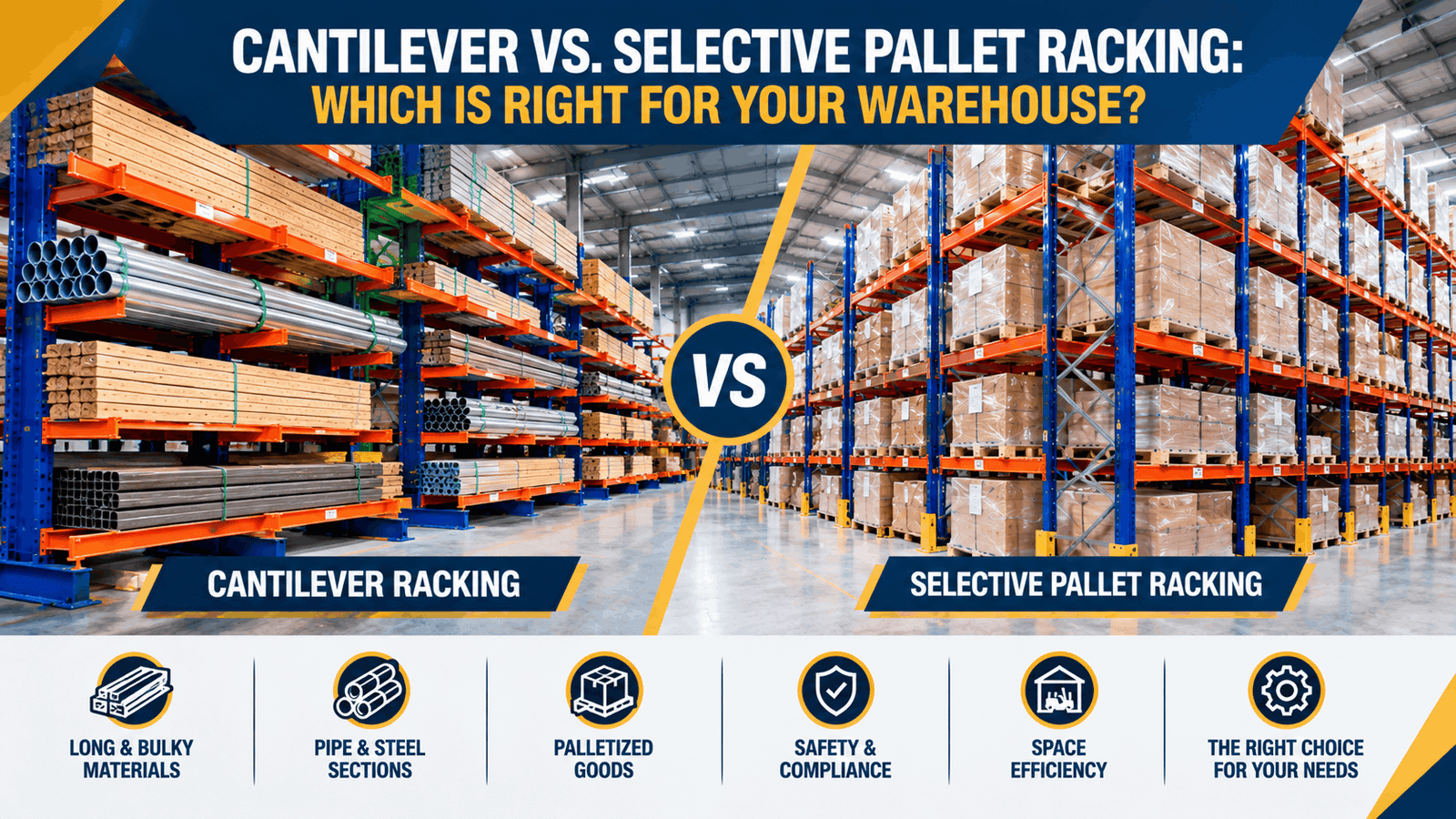
Selective racking for mixed SKUs
Selective racking keeps a wide variety of dry goods and packaged products individually accessible, suited to operations with many different products moving at different speeds.
Drive-in and pallet flow racking for high-density, rotation-driven storage
Drive-in racking is often the most cost-effective high-density option, while pallet flow adds gravity-fed FIFO rotation for date-sensitive goods that can’t wait on manual handling.
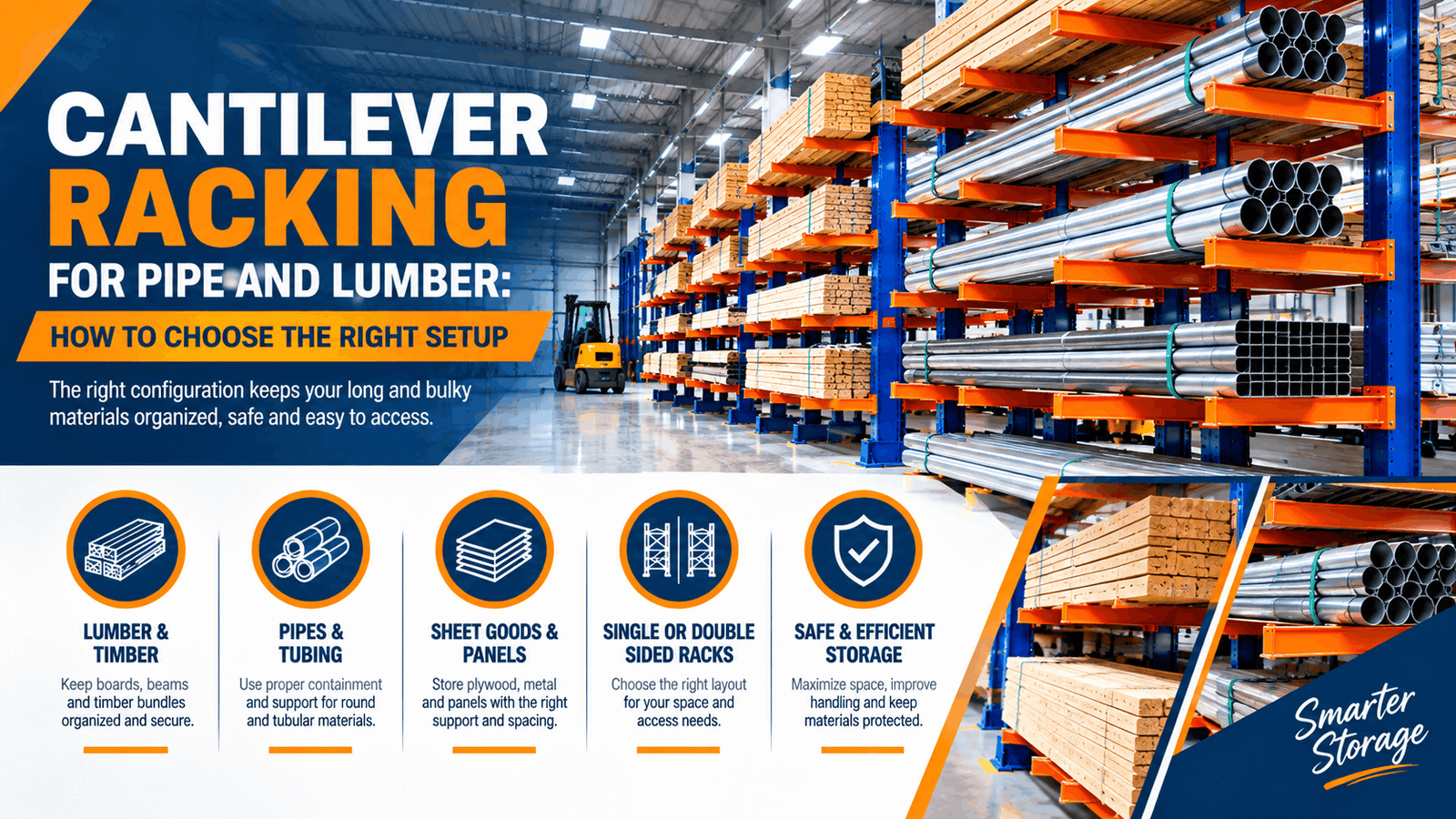
Cantilever and high-density systems for beverage and bulk storage
Beverage pallets routinely exceed standard weight limits, and bulk storage benefits from systems designed around actual product weight rather than generic assumptions carried over from general warehouse storage.
What Materials Hold Up Best in a Food & Beverage Warehouse?
Racking that performs fine in a dry, general-purpose warehouse can fail fast once it’s exposed to daily washdown and sanitation cycles.
Hygienic coatings and cleanability matter as much as strength
Racking exposed to washdown procedures needs food-safe coatings that resist bacterial growth and hold up under repeated sanitation cycles without flaking or degrading.
Corrosion resistance for cold and washdown environments
Hot-dip galvanized steel resists rust in high-humidity or washdown conditions far better than standard paint finishes, which matters most in cold storage and food processing areas where moisture is constant.
How Do You Maximize Capacity in a Food & Beverage Warehouse?
Capacity in this vertical comes from matching the right system to each product category, not from picking one racking type and using it everywhere.
Combine racking types instead of relying on one system
Most efficient food and beverage warehouses layer selective, drive-in, and high-density racking together, matching each product category to the system that fits it best rather than forcing everything into a single configuration. This kind of layered approach is really an extension of good warehouse optimization principles applied to a more demanding environment.
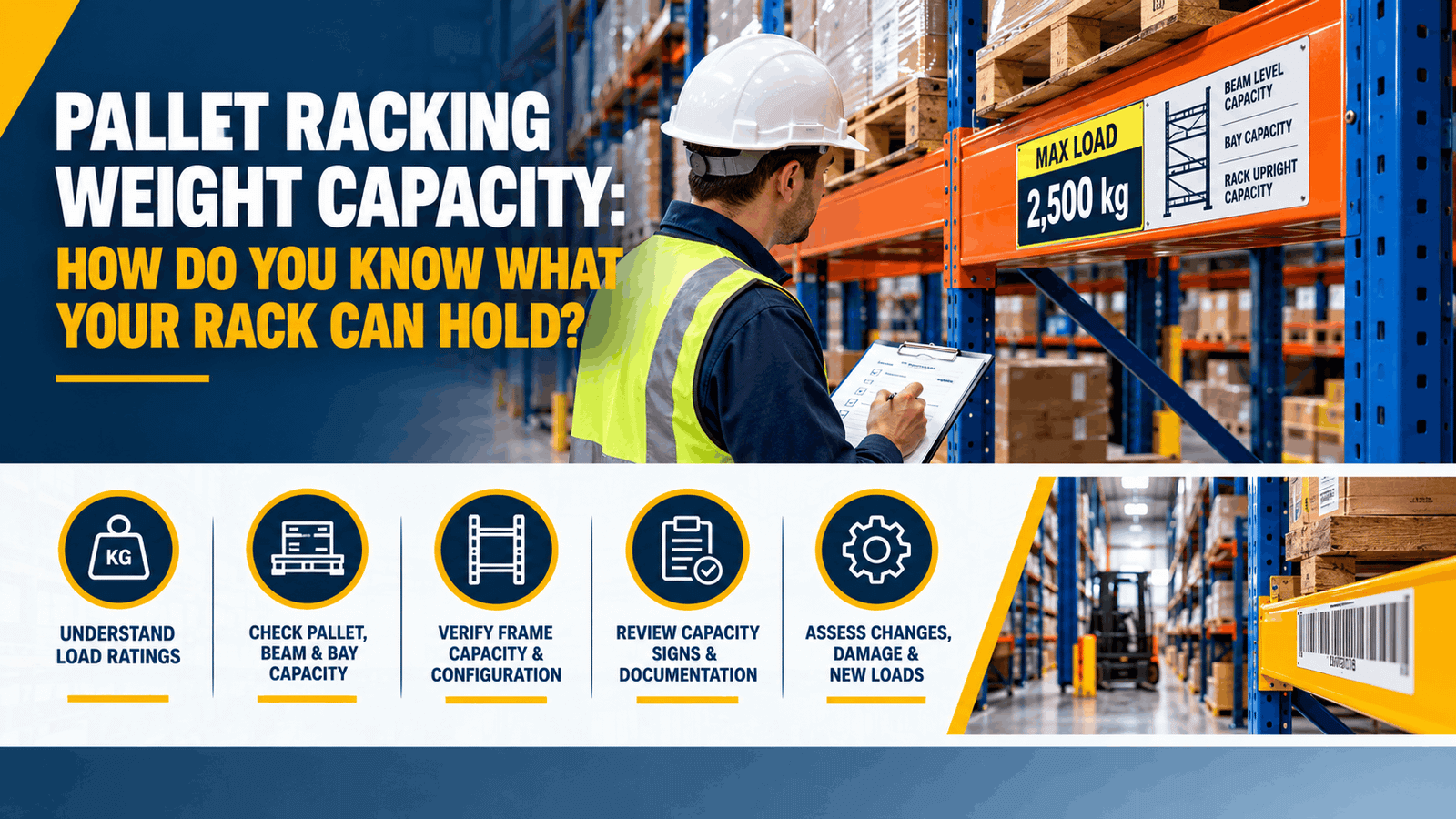
Structural decisions should reflect actual product weight
Racking sized for real beverage and bulk product weights, not general assumptions, avoids both wasted capacity and the structural risk that comes with underestimating actual load.
Getting Warehouse Storage Right for Food & Beverage
Warehouse storage for food and beverage operations has to satisfy compliance, temperature, rotation, and capacity all at once, not just fit more pallets into the same footprint.
Accurate Shelving has spent over 21 years supplying and installing racking systems across Canada, including for food and beverage clients navigating exactly these pressures. Visit our About Us page to learn more, or reach out through Contact Us for a hands-on warehouse storage assessment tailored to your facility.