A rack can fit a warehouse and still be wrong for its pallets. Missing clearance makes a bay difficult to load; an extra level is useless if the forklift cannot reach it.
The right pallet racking dimensions start with your loaded pallets, then account for rack depth, beam length, height, forklift access and the building itself. At accurateshelving, we plan pallet racking systems around those working conditions so the finished layout fits the operation, not just the floor plan.
This guide focuses on conventional selective pallet racking.
Which pallet racking dimensions should you measure first?
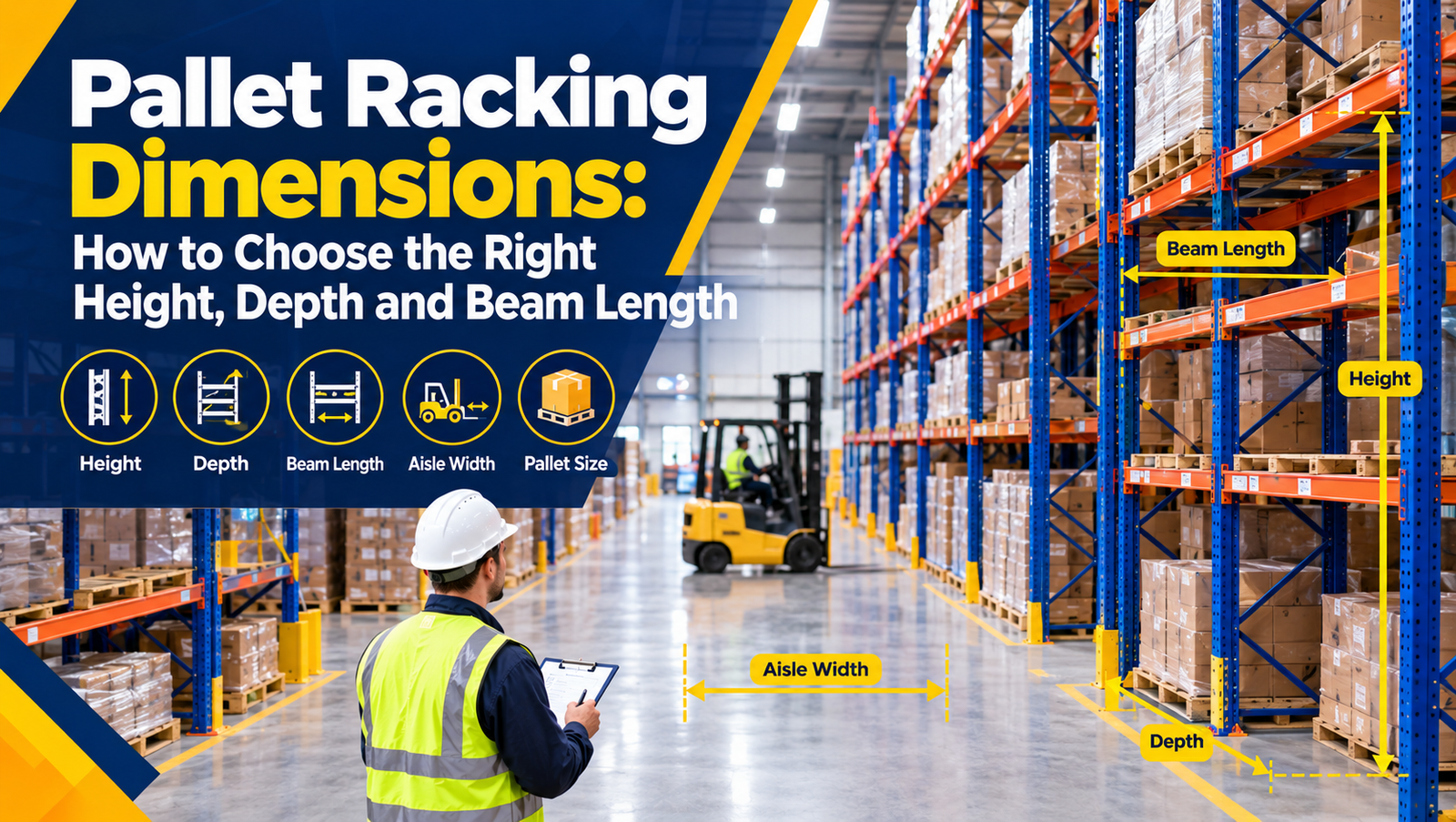
Five measurements shape a selective rack layout: upright frame depth, the clear opening between uprights, upright height, vertical spacing between beam levels, and aisle width. Each describes a different part of the space your pallets and equipment use.
What is the difference between rack depth and beam length?
Frame depth runs from the front upright column to the rear column. It determines how the pallet is supported front to back. Beam length runs horizontally between upright frames and determines how many pallets can sit side by side on a level, subject to the beam pair’s rated capacity.
The pallet or wrapped product may project beyond these measurements. Back-to-back rows also need separation.
Why measure the loaded pallet rather than the empty pallet?
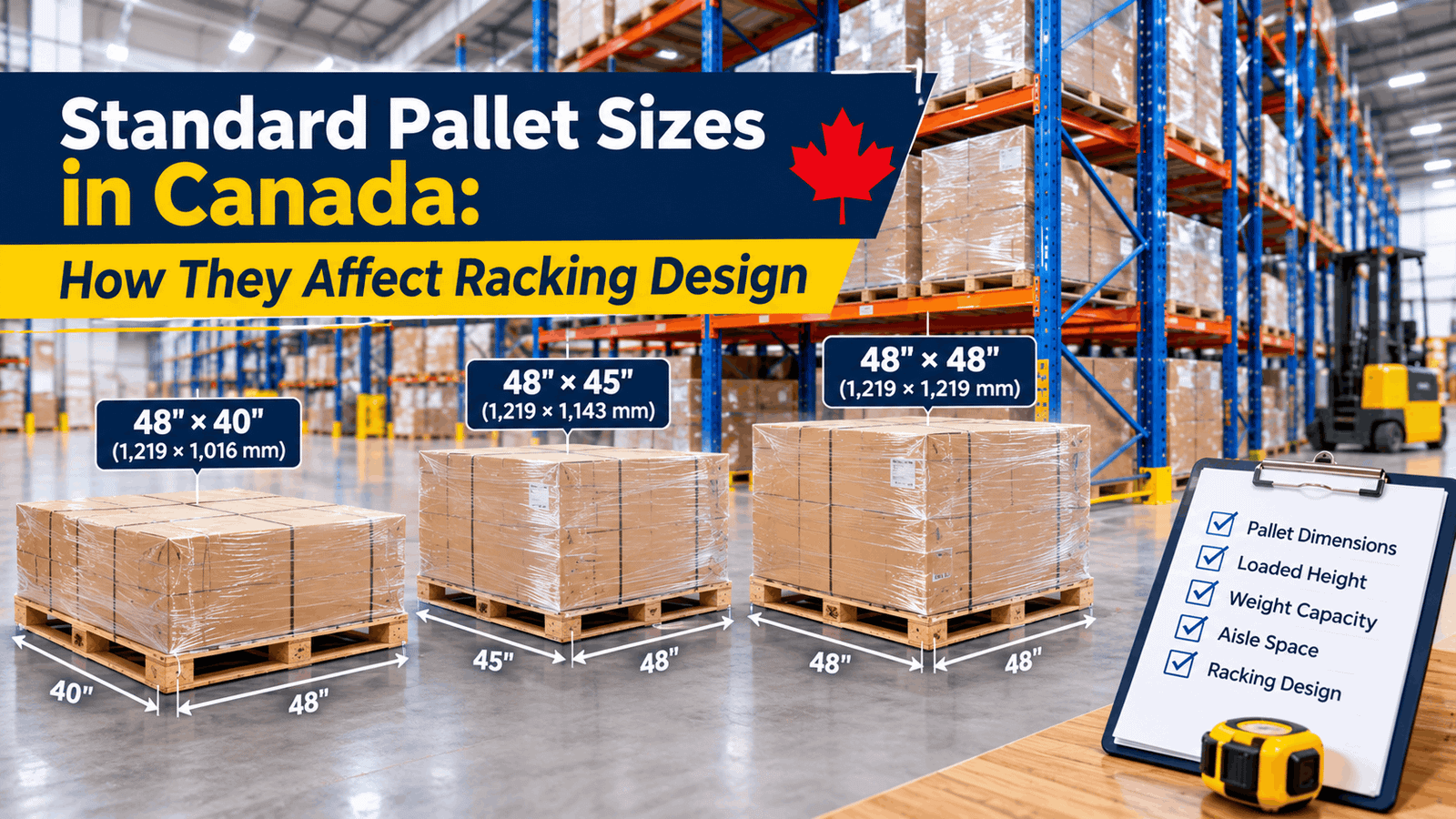
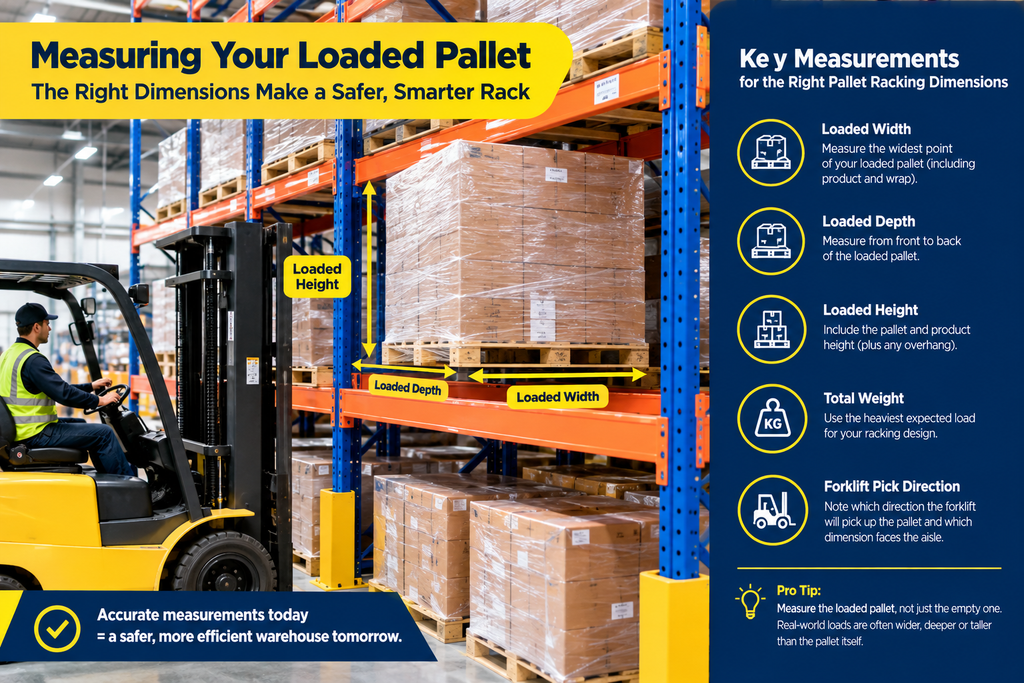
A pallet labelled 48 by 40 inches may carry a wider box, a shifted carton or wrap that extends past the boards. Record the greatest loaded width, depth and height, including the pallet, along with the heaviest expected weight. Note which direction the forklift picks it up and which dimension will face the aisle.
Check how the pallet’s bottom boards bear on the rack. Unusual skids or plastic pallets may need different support.
What are common pallet rack sizes for a standard pallet?
The familiar North American pallet footprint is 48 by 40 inches, but there is no single standard pallet rack size that works for every warehouse. Selective racks are configured from upright frames and beams selected for the pallet, load, handling method and available space.
For a pallet presented 40 inches across the aisle and 48 inches deep, a 42-inch-deep frame and a 96-inch beam are common starting points for a two-pallet bay. They are examples to test, not measurements to order without checking the load envelope, support, clearances and rated capacity.
How does pallet orientation affect rack depth?
With a 48-inch-deep pallet on a 42-inch-deep frame, the pallet may project about three inches past the front and rear supporting beams when centred. That arrangement only works if the pallet bears as intended and the product, adjoining row and building allow the resulting overhang.
Turn the pallet, and the required depth may change. The selective pallet racking layout should reflect how operators present pallets.
How much room should be allowed around each pallet?
Allow room beside the uprights, between adjacent loads and above a load so a driver can place and retrieve it without scraping the rack. Rear space, sprinkler arrangements and the gap between back-to-back rows matter too.
Check your equipment and design rather than copying another building’s clearances. The widest wrapped load sets the practical side clearance.
How do you choose the right pallet rack beam length?
Start with the clear opening needed for the number of pallets on one beam level. Add the actual loaded widths, the space between them and clearance at both uprights. Then select a beam and configuration that provide that opening and carry the intended load.
Can two standard pallets fit on one beam level?
Often, yes. As an illustrative calculation, two loads each 40 inches wide, with six inches between them and three inches at each upright, need 92 inches of clear opening: 40 + 40 + 6 + 3 + 3. A nominal 96-inch beam may offer enough room in that example, but confirm the supplier’s actual clear dimension and the width of the loaded goods.
This arithmetic checks fit, not capacity. Beam profile, span, connection and load distribution affect the beam-pair rating. A longer beam may not carry the same weight as a shorter one.
How do you determine upright height and beam-level spacing?
The usable height of a rack is limited by more than the ceiling. Measure from the floor to the lowest relevant obstruction, then account for the highest stored load, forklift reach and building services such as ducts, lights and sprinklers.
Each beam level needs room for the complete loaded pallet height, the space needed to lift it clear, and the beam above. If those measurements leave no practical room for another level, a taller upright alone will not create another usable pallet position.
Why can changing beam heights affect rack capacity?
Moving a beam changes the distance between support points on the uprights. That can change frame capacity even if the beams and pallet weights stay the same. If your product height or layout changes, check the rack drawings and revised load ratings before moving beams.
This matters for existing installations as well as new ones. Our warehouse racking maintenance article covers how to track changes and inspect a rack over time. In Ontario, some rack modifications may also trigger a pre-start health and safety review unless an applicable exemption is established.
How wide do forklift aisles need to be?
Aisle width is part of pallet rack sizing because the forklift must approach, turn, raise and place the loaded pallet. The rack could fit the floor plan perfectly while leaving too little operating room to use it safely.
Ask for the actual truck model’s turning and stacking requirements, load dimensions and lift capability. Include column guards, pedestrian routes and any equipment that enters the aisle. A counterbalance truck, reach truck and very narrow aisle truck cannot be planned around one universal aisle number.
If you are comparing trucks or changing equipment, read how to match a forklift to your racking system before fixing the aisle layout. A future equipment change can affect both access and the way the rack is used.
What else must fit around the racking?
Look beyond the bays themselves. Building columns, walls, doors, walkways, exits and fire protection can reduce the space available for rack rows or change where pallets may be stored. A nominal building height is especially misleading if pipes or roof structure hang lower over the proposed top level.
Floor and anchoring conditions also belong in the design review. You can use a preliminary dimension sketch to compare layouts, but the final configuration and load information should be checked against the actual building and intended loads. That is how warehouse design connects the storage layout with the movement of people and equipment.
What should you measure before requesting a pallet racking layout?
Bring the warehouse floor plan, usable clear height, column and door locations, and the approximate area available for storage. For the inventory, note each loaded pallet’s width, depth, height, weight and orientation, plus the number of pallet positions and access frequency you need.
The forklift make and model, its load-handling data and any planned changes are just as useful. If you already have racking, include drawings, posted capacities and the current beam positions. Those details let a supplier evaluate actual fit and capacity instead of guessing from a standard-size chart.
Accurate Shelving can review that information with you and plan a layout around your warehouse and handling equipment. Contact us when you are ready to discuss a pallet racking configuration.
Final thoughts
Good pallet racking dimensions begin with the goods you store and the way you move them. Measure the complete load, allow working space around it, then check the beams, uprights, height and aisles together.
Standard dimensions make a useful first sketch. The usable result comes from confirming those dimensions against the rack’s rated configuration and the conditions in your building.
Frequently asked questions
What is the standard depth of pallet racking?
There is no universal depth. A 42-inch frame is a common starting point for some 48-inch-deep pallets, but pallet orientation, support and overhang must be checked.
What size beam do I need for two pallets?
Two 40-inch-wide loaded pallets may fit a nominal 96-inch beam, depending on the actual clear opening and required side clearances. Confirm the beam pair’s load rating as well.
How high can pallet racking be in my warehouse?
That depends on clear building height, obstructions, forklift reach, load height, fire protection and the approved rack configuration. The ceiling height alone does not answer it.
Does moving pallet rack beams change load capacity?
It can. New beam positions can change upright-frame capacity, so have the revised configuration and ratings checked before loading the rack.