Mobile shelving systems are worth considering when you need more storage within a limited floor area and can manage access through shared aisles. Fixed shelving often works better when several employees need immediate access to different locations throughout the day. The right choice depends on how your inventory moves, as well as how much you store.
At Accurateshelving, we help businesses match storage equipment to their space and daily operations. Our supplier range includes Spacesaver high-density mobile shelving, alongside shelving options for permanently accessible storage areas.
How do mobile shelving systems differ from fixed shelving?
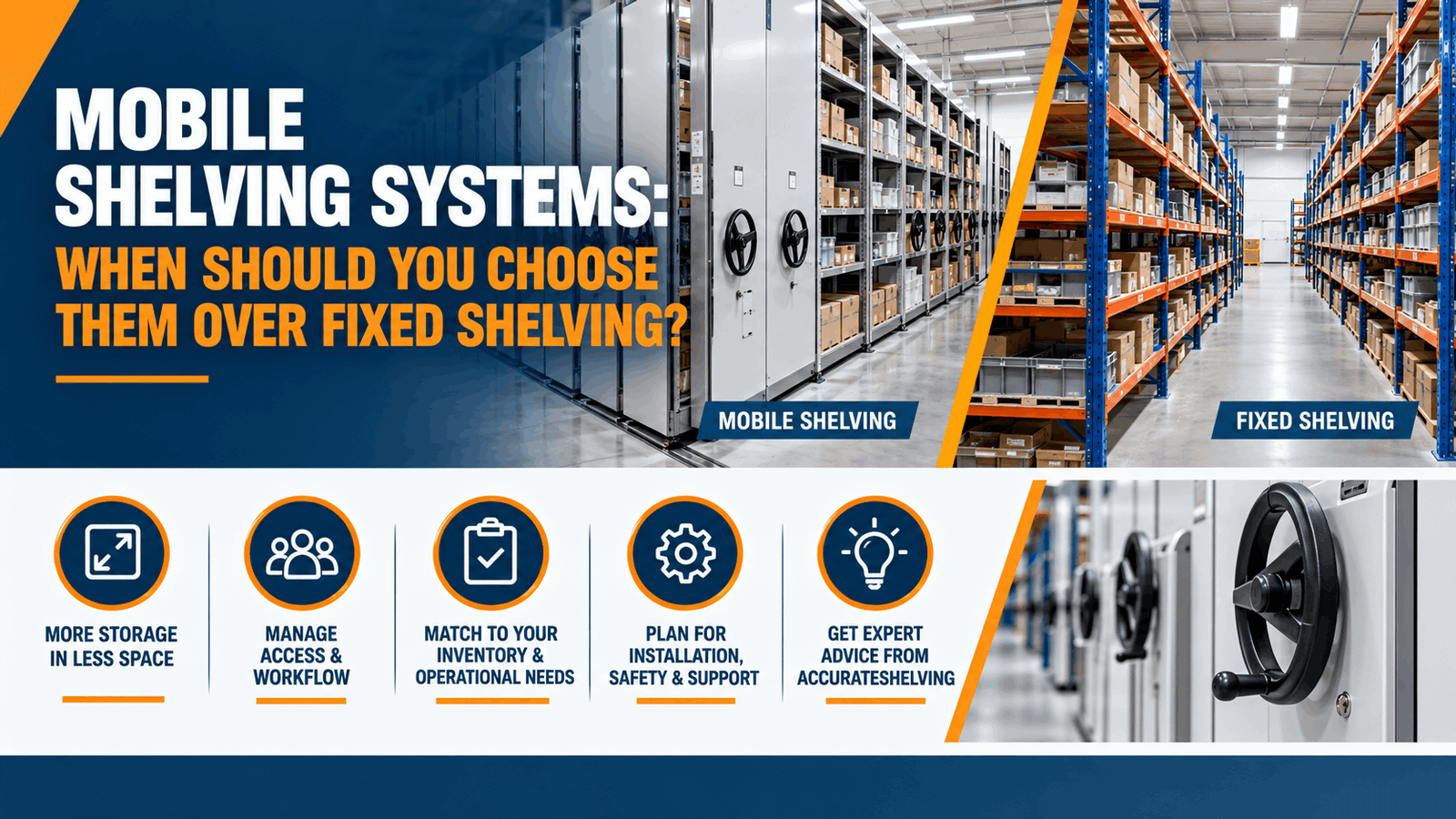
High-density mobile shelving mounts storage units on movable carriages, usually running along rails. Rows move apart to create an access aisle where it is needed. Fixed, or static, shelving stays in place with permanent aisles between rows.
Both can provide organized storage. The main difference is how much floor space remains dedicated to access and how many locations can be reached simultaneously.
How does mobile shelving reclaim aisle space?
In a fixed layout, every storage aisle remains open even when nobody is using it. Mobile shelving brings rows together and shares access space across several rows. That can create room for additional inventory or release space for another activity.
The actual gain depends on shelf depth, room shape, aisle arrangements and required clearances. Compare drawings with the same storage requirement before assuming a particular percentage saving.
What does fixed shelving offer instead?
Fixed shelving lets workers enter different aisles without first moving a carriage. This can be valuable where picking, replenishment and stock checks happen together.
The trade-off is footprint. Permanent aisles take up space that a compact shelving system could potentially use for storage.
When should you choose mobile shelving over fixed shelving?
Mobile shelving is a good candidate when storage space is under pressure and the access pattern suits movable aisles. Reserve parts, records and stockroom supplies are possible applications, provided the system is specified for their dimensions and loads.
Is aisle space limiting your storage capacity?
If shelves are full while several aisles sit empty for much of the day, investigate whether those aisles could be shared. A mobile layout may increase capacity within the existing storage area.
Check whether you need more shelf positions or more usable working space. For example, a parts department may benefit from storing the same inventory in a smaller area and freeing room for a service station.
Are items retrieved periodically rather than continuously?
Mobile storage often suits inventory retrieved at intervals, because opening an aisle becomes part of the retrieval process. An archive accessed occasionally presents different demands from a pick location visited every few minutes.
Use actual retrieval records where possible. A product described as slow-moving may still need urgent access, and related parts may be collected together. Those details affect where items belong.
Can your team work with shared access aisles?
Count how many people need different locations during peak activity. A system with one shared aisle may suit a small maintenance team but create waiting if several employees routinely work in separate rows.
Multiple access aisles may be possible in a designed mobile layout. They also use additional floor space, so the layout should balance density with the number of users.
When is fixed shelving the better choice?
Fixed shelving is often preferable when uninterrupted access supports the operation. It gives workers a predictable arrangement and avoids waiting for a different aisle to open.
Do several employees pick from different aisles at once?
If several pickers need separate locations simultaneously, permanent aisles can keep work moving. Consider replenishment staff too: incoming inventory may need access while orders are being collected.
A useful test is to trace those activities during the busiest hour. If they regularly overlap across several rows, fixed shelving deserves serious consideration.
Do frequently used items need immediate access?
Frequently retrieved tools, consumables and fast-moving cartons may benefit from open access near the work area. Fixed shelving also lets employees inspect several locations without repeatedly repositioning rows.
Accurate Shelving’s Spider shelving system offers configurations and accessories for organized shelf storage. Discuss the intended items and layout when comparing it with a mobile solution.
What are the advantages and limitations of each system?
Mobile shelving prioritizes storage density, while fixed shelving preserves continuous aisle access.
What do you gain and need to manage with mobile shelving?
A compact arrangement can hold more inventory in a given area and may reduce walking distances. However, opening aisles takes time, and shared access can affect picking when demand is high.
Moving equipment also needs operating procedures and the maintenance specified for its mechanisms and controls. Plan for servicing and staff training alongside the storage layout.
What do you gain and give up with fixed shelving?
Fixed shelving provides ready access to multiple rows and a familiar operating pattern. It may be easier to adjust shelving locations without having to redesign a carriage and rail arrangement.
Its main limitation is the space occupied by permanent aisles. Where space is already constrained, adding another fixed row may leave too little room for safe, practical access.
What must you check before installing mobile shelving?
A mobile system must suit the building, the stored load and its users. Confirm those requirements before treating it as a straightforward replacement for fixed shelves.
Can the floor, rails and layout support the proposed system?
Have floor suitability assessed for the fully loaded system and its rail arrangement. Shelving concentrated into a smaller footprint changes how storage loads are distributed.
Account for columns, doors, usable height, accessible routes, emergency exits and fire protection. Rails may be recessed or surface-mounted depending on the system; the proposed arrangement must work with access and handling requirements.
Which controls and safety features suit the users?
Manual, mechanical-assist and powered controls serve different applications. Consider loaded carriage weight, retrieval frequency and the people operating the equipment when choosing between them.
Confirm the specific aisle-protection and stopping features supplied with the chosen system, and how they are checked. Staff should understand how to open and secure an aisle safely before using it. Features and operating procedures vary by model.
Can mobile and fixed shelving work together?
Yes. A combined layout can keep frequently retrieved items on fixed shelves while placing suitable reserve inventory in mobile storage. The division should follow access demand rather than putting all items into one system for visual consistency.
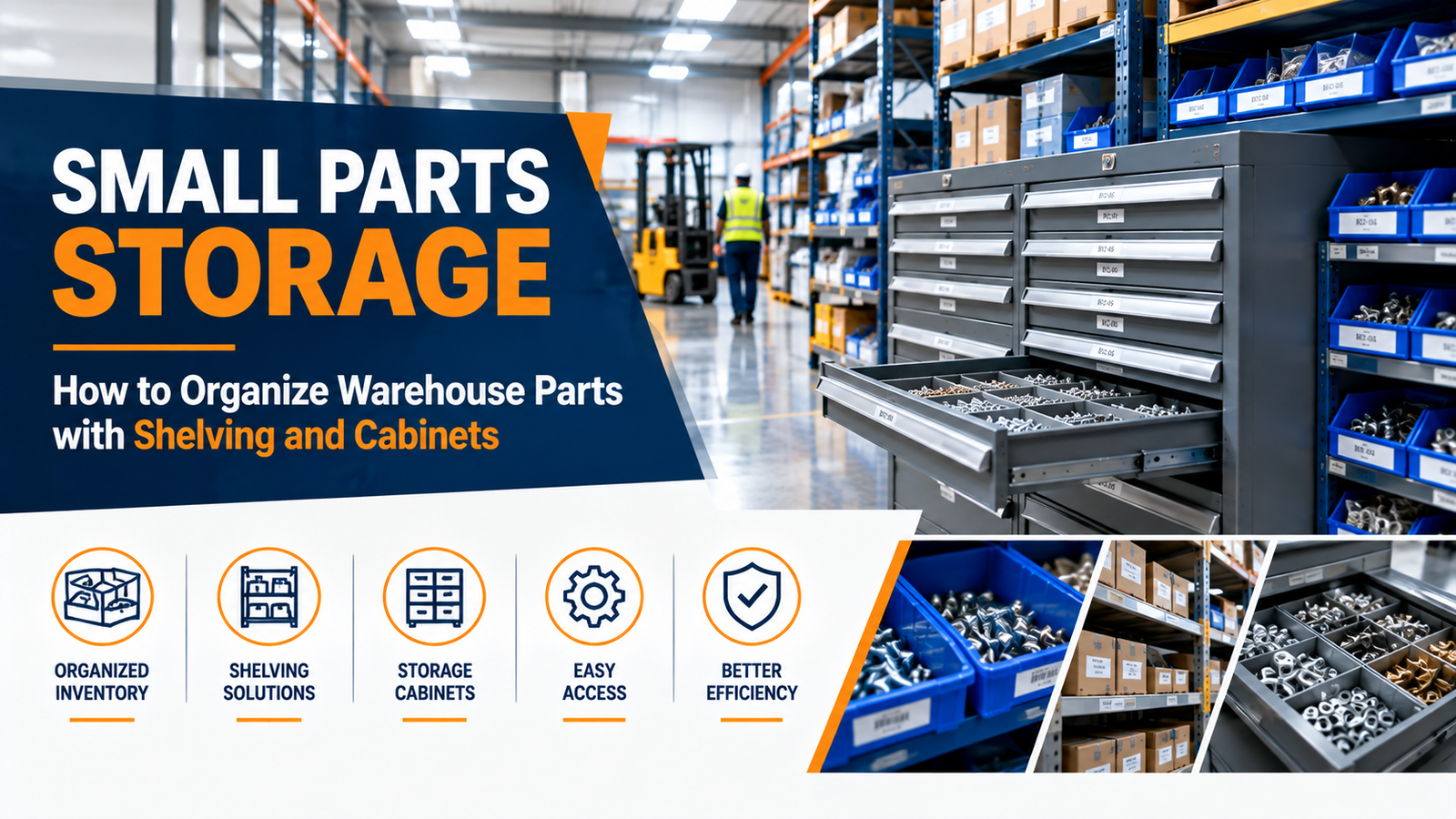
For example, a maintenance department could keep daily-use parts near its workstations and place less frequently retrieved spares in a compact storage area. Our guide to organizing small-parts storage explains why defined locations and suitable containers matter whichever arrangement you choose.
What information helps you choose the right shelving system?
Bring the room dimensions, item sizes and weights, required storage capacity and likely growth. Explain how often stock is retrieved, how many users need access at peak times, and whether carts or other handling equipment enter the aisles.
If you want to reuse existing shelves, provide photographs and manufacturer information. Compatibility with mobile carriages needs confirmation. Good warehouse layout planning brings these details together before equipment is selected.
Final thoughts: Which shelving system fits your operation?
Choose mobile shelving when a compact footprint and managed aisle access suit your inventory and working pattern. Choose fixed shelving when frequent, simultaneous retrieval needs permanently open aisles. A mixed arrangement can support both requirements.
Accurate Shelving can help assess the available space and compare suitable options. Discuss your shelving layout with us using your storage quantities, item dimensions and access requirements as the starting point.
What else should you know about mobile shelving systems?
These common selection questions help clarify fit, installation and everyday use.
How much space can mobile shelving save?
It depends on the room, shelf dimensions and required access aisles. Compare proposed layouts for your facility rather than applying a universal space-saving percentage.
Can existing fixed shelving be converted to mobile shelving?
Sometimes, if its dimensions, condition and loads are compatible with the proposed carriages and rails. A supplier must confirm suitability before conversion.
Is mobile shelving suitable for several users at once?
It can be with a suitable layout and safety provisions. A single shared aisle may create waiting when users need different rows simultaneously.
Does mobile shelving require a particular floor?
The floor must support the specified loaded system and rail installation. Requirements depend on the equipment and building, so assess the actual location.
Is mobile shelving the same as shelving on casters?
No. This guide covers high-density shelving that moves to create shared aisles. Shelving on casters is generally moved as an individual unit for a different operational purpose.