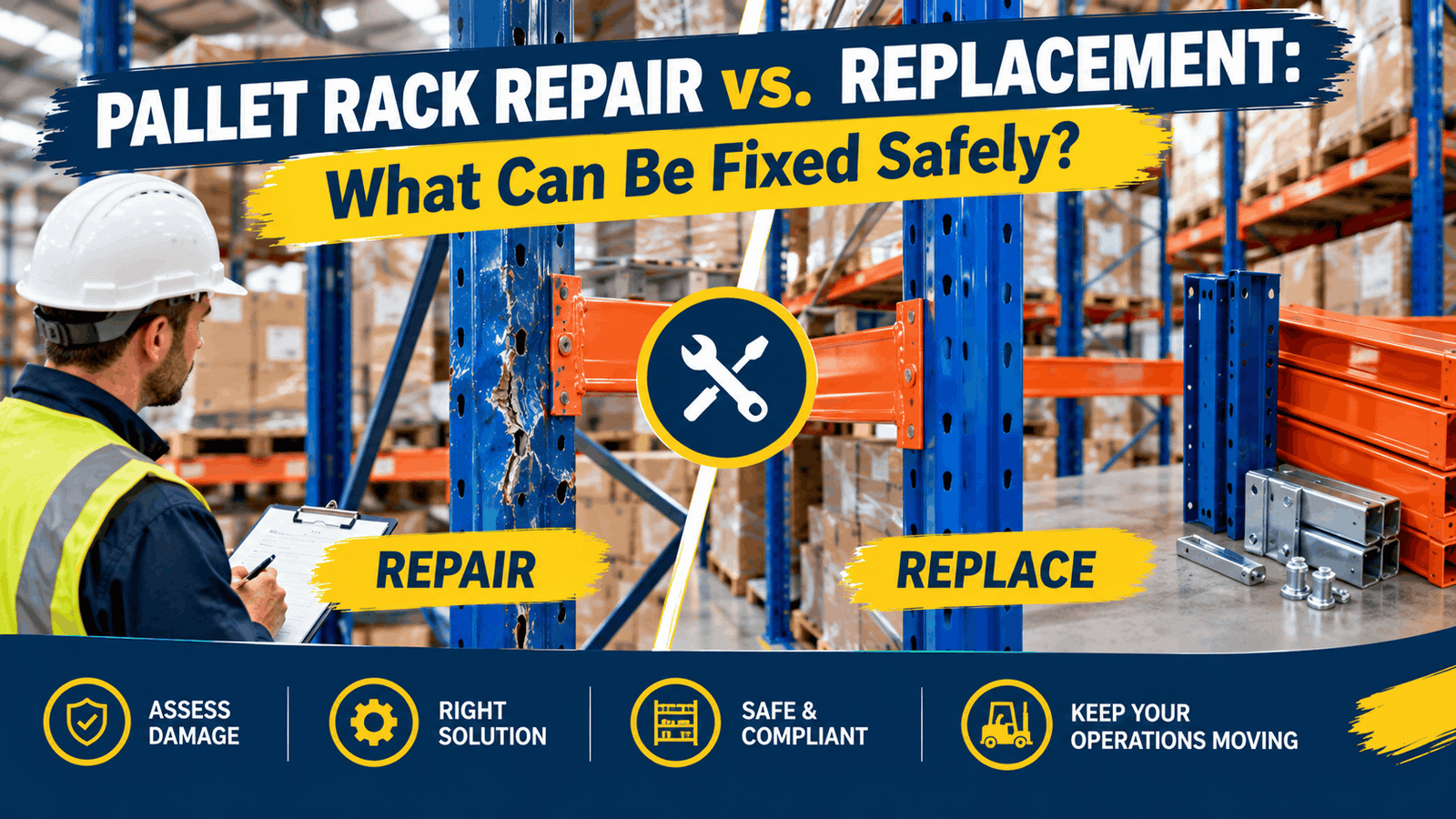
Some pallet rack damage may be suitable for an engineered repair. Other damage requires replacing a beam, upright frame or larger section. The decision depends on the affected components, rack configuration, loading and whether a documented solution can restore the required structural performance.
At Accurate Shelving, we help businesses plan storage around their inventory and operating requirements. When existing pallet racking systems are damaged, identifying the equipment and assessing its condition comes before choosing replacement components or considering repair options.
A rack still standing after an impact is not proof that it remains safe. Equally, one damaged component does not automatically mean replacing the entire warehouse storage system.
What Should You Do When You Find Damaged Pallet Racking?
Stop the affected activity, keep people clear and report the damage through your facility’s procedures. Arrange assessment before deciding whether the rack needs repair, component replacement or broader corrective work.
Do not move loads around simply to relieve visible damage. Unloading a potentially unstable structure requires an assessed plan, including consideration of connected bays and surrounding activity.
Record the location and circumstances from a safe position. Existing drawings, manufacturer details and load information will help the rack specialist evaluate the system.
What Is the Difference Between Rack Repair and Replacement?
The distinction is the amount of the existing structure retained and how its suitability is established. Repair, component replacement and system replacement address different conditions.
What Does an Engineered Rack Repair Involve?
An engineered repair addresses a defined defect using a solution designed for the existing rack and its loading. In suitable situations, a pallet rack repair kit replaces a damaged section of an upright while retaining sound portions.
A kit is not a universal fix. Its suitability depends on the damage, connections, configuration and forces passing through the repaired area.
Does Replacement Mean Removing the Entire System?
Often, replacement means changing one beam or upright frame. The surrounding system may remain usable once its condition and compatibility are confirmed.
Replacing a whole rack section or system is a broader decision, usually involving extensive damage, deterioration or changed storage requirements.
Which Pallet Rack Components May Be Repairable?
Repairability must be established for the actual component and system. An approach suitable for one upright does not automatically suit a beam, brace or anchor.
Can a Bent Upright Be Repaired?
Localized upright damage may be a candidate for an engineered repair when the remaining frame can support the proposed solution.
The assessment must consider both columns, bracing, beam connections and anchorage. A visible bend may be only part of the damage.
Straightening the column until it looks vertical does not demonstrate restored load capacity. RMI guidance identifies repair options that require evaluation and engineering direction.
Should Damaged Beams and Connectors Be Replaced?
Component replacement is often the practical approach for damaged beams, subject to professional assessment. Permanent deformation, twisted connectors and cracked welds need investigation.
Some beam deflection under load can be expected within the design limits. Permanent bending or impact damage is a different issue. Appearance alone cannot determine whether a beam is suitable for continued use.
What About Bracing, Anchors and Baseplates?
These components help the frame resist and transfer forces. Missing bracing, damaged baseplates or compromised anchors require assessment of the surrounding structure and, where relevant, the concrete.
Replacing a fastener without understanding why it failed may leave the underlying problem unresolved.
When Is Replacement the More Suitable Option?
Replacement becomes appropriate when a reliable repair cannot be established or the existing equipment no longer suits its intended use.
Extensive twisting, widespread corrosion, damaged connections or several compromised structural members can make component or frame replacement more suitable than localized repair.
Unknown manufacturer details and missing design records also complicate the decision. A similar-looking upright or beam is not necessarily compatible: steel specifications, connector geometry and performance may differ.
The assessment should establish whether an identical replacement or another verified solution is appropriate. If heavier inventory or a new layout is planned, restoring the old arrangement may not meet the revised requirements.
What Makes a Rack Repair Safe and Which Shortcuts Should You Avoid?
A safe repair depends on assessment, a suitable design, controlled installation and documentation. Neither a quick turnaround nor an apparently stronger piece of steel proves that the repaired system will perform correctly.
Can You Straighten or Weld Damaged Racking?
Do not improvise hammering, heating, cutting or welding. These processes can affect the steel and alter how forces move through the structure.
Where such methods are considered, they require an appropriately designed procedure and qualified oversight. Welding experience alone does not establish the structural suitability of a rack repair.
Can Repairs Be Completed While the Rack Is Loaded?
Do not assume so. RMI identifies limited circumstances where specialist methods may allow repair without unloading, but a qualified storage rack design engineer must determine whether that approach is appropriate. The presence of a repair kit does not establish permission to work beneath a loaded rack.
Does Repair Increase the Load Rating?
Repair is not an automatic capacity upgrade. Its purpose may be to restore the required performance under defined conditions.
Changing beam heights, loading patterns or pallet weights needs separate verification. Our pallet racking weight capacity guide explains why capacity depends on the configuration as well as individual components.
Does Rack Repair or Replacement Require a PSR in Ontario?
Not every repair or component replacement automatically requires a new Pre-Start Health and Safety Review.
Ontario’s guidance identifies circumstances outside the Item 3 PSR requirement, including identical component replacement without configuration changes. It also addresses repairs supported by manufacturer or engineer documentation confirming that original capacity is sufficiently maintained or restored.
Different specifications or changes to configuration and loading may require further review. Confirm the requirements for the proposed work rather than assuming all repairs follow the same approval process.
Being outside the PSR requirement does not remove the employer’s duty to maintain equipment in good condition. Ontario’s racks and stacking structures guidance explains these distinctions. ontario.ca
What Should Be Confirmed Before Racking Returns to Service?
Before loading resumes, the responsible parties should confirm that corrective work follows the specified method and that the affected system is suitable for use.
Checks may include component identification, connections, anchorage, alignment and applicable load information. Retain the assessment, repair or replacement specifications and relevant completion records.
Address the cause as well. Repeated impacts may indicate problems with turning space, pallet placement or traffic routes. Our guide to preventing forklift damage explains those considerations, while ongoing racking maintenance supports continued monitoring.
What Should Guide Your Final Repair or Replacement Decision?
Choose the option that can demonstrate suitable structural performance for the intended use. Localized damage may permit an engineered repair; replacing a damaged component may preserve the surrounding system. Extensive deterioration can justify a broader replacement plan.
Operational disruption matters, but it should be considered after a suitable corrective approach is established.
Contact Accurate Shelving to discuss your existing racking, damage concerns and replacement requirements. Providing manufacturer details, available drawings and load information helps establish the next steps.
Frequently Asked Questions
Can You Straighten a Bent Pallet Rack Upright?
Do not attempt improvised straightening. Any proposed repair needs assessment and an approved method suitable for the component and system.
Does One Damaged Upright Mean Replacing the Entire System?
Usually, that decision starts at component level. Assessment determines whether the surrounding structure can remain or more extensive work is necessary.
Can Replacement Parts Come From Another Manufacturer?
Do not assume compatibility because parts fit together. An alternative component needs verification for the existing system and loading.
Does Rack Repair Restore the Original Load Capacity?
A properly designed repair may restore original capacity, but this must be established and documented. It cannot be assumed from appearance.
Can You Keep Using Racking After a Minor Forklift Impact?
Report the impact and follow the facility’s assessment procedure. A small visible mark does not confirm that the structure or connections remain suitable.