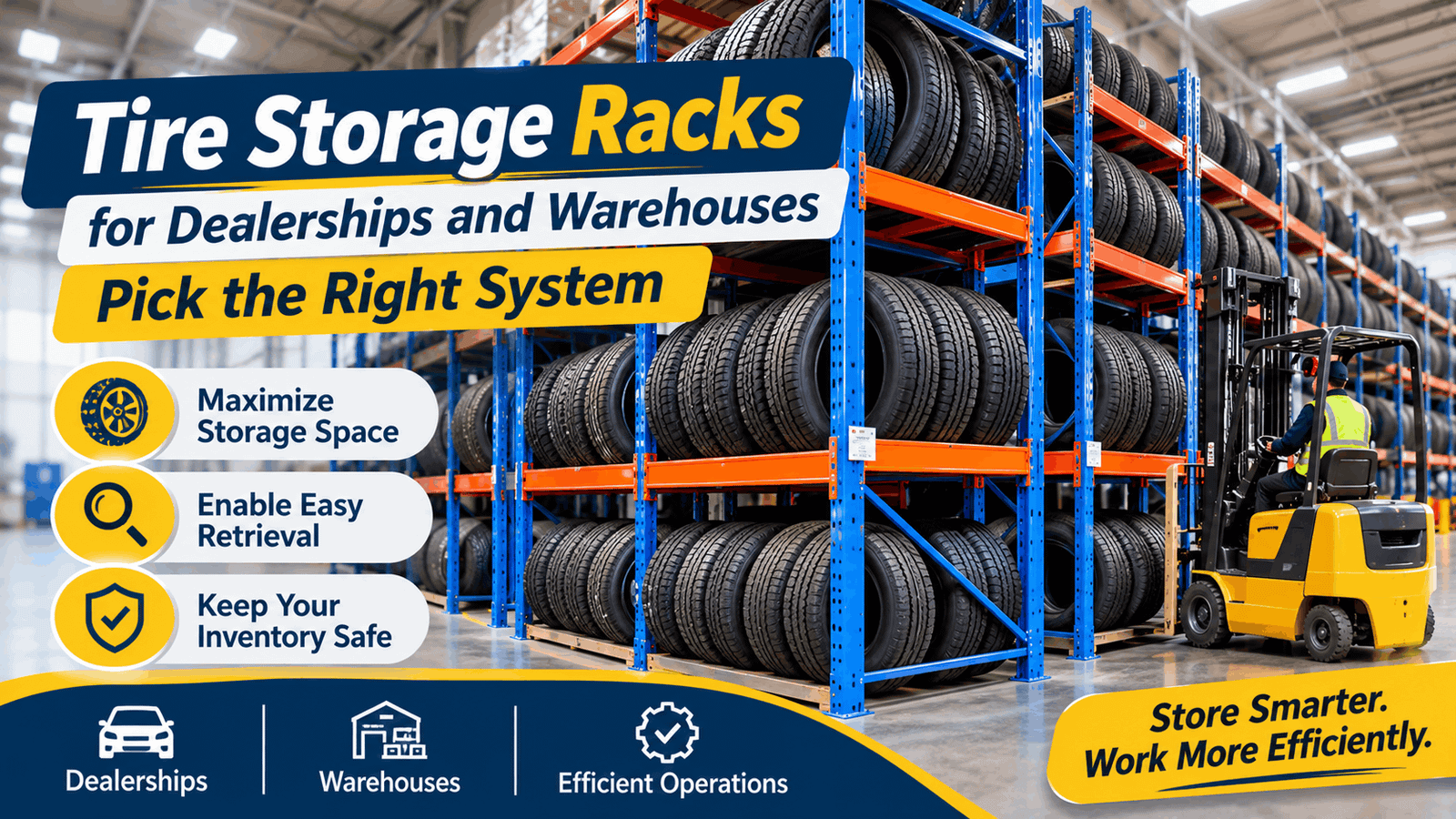
Choose tire storage racks around what you store and how staff retrieve it. A dealership holding customer wheel sets needs reliable identification and access. A warehouse handling larger quantities may prioritize stock grouping and equipment-assisted movement.
At Accurate Shelving, we help businesses match storage equipment to their inventory and available space. We work with manufacturers including Martins Industries, whose range includes tire storage, display and shipping racks.
The best starting point is your actual inventory: tire dimensions, mounted or unmounted condition, weight and peak quantities. Those details matter more than an advertised tire count.
What Should You Know Before Choosing Tire Storage Racks?
Before comparing commercial tire racks, establish what needs storing and how it moves through the facility. Two businesses holding the same number of tires may need different systems.
Are You Storing Unmounted Tires or Wheel Assemblies?
Unmounted tires and mounted tire-and-wheel assemblies present different weights and handling requirements. Confirm that the proposed rack and storage arrangement are suitable for the inventory.
Do not assume a rack designed for loose passenger tires also suits heavier wheel assemblies. Storage orientation, supporting surfaces and the permitted loading arrangement should follow the relevant rack and tire manufacturer guidance.
What Are Your Largest Tires and Peak Inventory Levels?
Record maximum outside diameter, width and weight. Include wheels where fitted, and separate passenger, light-truck and commercial-truck inventory when their requirements differ.
Plan around seasonal peaks rather than today’s count. For a dealership, counting customer sets is useful, but rack capacity still needs to account for the individual tires and assemblies within those sets.
How Do Dealership and Warehouse Storage Needs Differ?
The main difference is often retrieval. Dealerships need the correct customer set for a booked appointment. Warehouses may handle quantities grouped by SKU, size or replenishment requirement.
What Matters Most for Dealership Customer Sets?
A dealership storing four customer wheels needs a location that keeps the set identifiable and practical to retrieve. Label each item with the set ID, then link that ID to a recorded storage position.
For example, a set assigned to bay B04, level 2 should be found from that record. As the appointment approaches, staff can retrieve and stage it without searching through unrelated inventory.
What Matters Most for Tire Warehouses?
Warehouse tire storage needs to support receiving, replenishment and dispatch. Group stock according to how orders are picked and how handling equipment moves through the building.
Greater storage density can be useful, but only when it supports access. A dense arrangement that repeatedly requires moving unrelated stock may slow daily operations.
Which Tire Rack System Fits Your Operation?
Fixed shelving, stackable racks and rolling units serve different tasks. Compare how each format will be loaded, accessed and moved before choosing a configuration.
When Does Fixed Tire Shelving Make Sense?
Fixed tire shelving can suit locations where staff regularly retrieve individual tires or customer sets. Defined bays and levels provide consistent storage positions.
Check usable level spacing against tire diameter and confirm how higher positions will be accessed. Adding tiers creates storage positions, but also changes the retrieval task.
When Are Stackable or Folding Tire Racks Useful?
Stackable tire racks can suit bulk inventory handled with appropriate equipment. Folding designs may reduce the space occupied by empty racks when inventory levels fall.
Read the specifications carefully. Loaded stacking limits differ from empty-folded stacking limits. Martins Industries, for example, publishes separate limits and storage methods for its folding rack models. Those figures are specific to the equipment and its permitted use. A stackable rack is not automatically designed to be rolled across the floor while loaded.
When Should You Consider a Rolling Tire Rack?
A rolling rack may help with staging or short transfers when the selected model is designed for that task. Confirm loaded capacity, caster and brake specifications, floor conditions and the intended travel route.
Also distinguish mobile tire storage from customer-facing display equipment. A display rack may serve merchandising well without being the right choice for seasonal wheel-set storage.
How Do You Calculate the Tire Storage Capacity You Actually Need?
Usable capacity depends on tire fit, weight limits and access. Start with the inventory profile, then check it against the selected rack’s specifications.
Check Both Tire Fit and Load Capacity
Tire width influences how many items fit across a level. Diameter affects level spacing and overall fit. Mounted wheels add weight that must be included in the calculation.
A quoted tire count may assume a particular size or storage method. Do not treat that figure as a guarantee for every load.
For mixed inventory, plan separate positions where needed. One arrangement may not suit every tire category equally well.
Allow Space for Handling and Seasonal Staging
Reserve space for incoming stock, sets awaiting installation and outbound orders. Include room for turning, handling equipment and the people using the storage area.
Good warehouse layout planning connects those activities with storage. A room filled with racks can still struggle if staff cannot retrieve and stage tires efficiently.
Before a busy changeover period, test the route from storage position to staging area with representative equipment and loads.
How Should You Organize Tires for Faster Retrieval?
The rack provides a storage position; the identification process makes that position useful. Keep labels and location records consistent whenever stock moves.
How Should Dealerships Label Customer Sets?
Assign one set ID and ensure each tire or wheel assembly can be linked back to it. Record the storage location against the appropriate customer or service record.
If an item is separated for inspection or other work, update its status. Staff should be able to distinguish an incomplete set from a misplaced one.
Use labels readable from the normal retrieval position, while protecting customer information according to the business’s procedures.
How Should Warehouses Assign Storage Locations?
Give bays and levels clear identifiers. Group stock by the categories that support picking, such as tire size, SKU or replenishment frequency.
Update the location record when inventory moves, including temporary staging. Tire inventory management becomes unreliable when staff move stock without recording its new position.
What Installation and Safety Details Should You Confirm?
Installation and operating requirements depend on the equipment and facility. Follow the selected model’s instructions rather than applying one rule to every tire racking system.
Confirm anchoring or wall attachment where specified, permitted loading arrangements and loaded stacking limits. Establish suitable access to higher positions; rack beams should not become makeshift steps.
For larger projects, discuss racking installation planning before deliveries arrive. Include checks for floor conditions, handling clearances and conflicts with doors or building services.
Tire-storage arrangements can affect fire-protection requirements. Have the proposed layout, quantities and storage height reviewed with the appropriate local authority and qualified specialists.
During operation, report damaged components and follow the facility’s assessment procedure. Where forklifts work nearby, consider the routes and exposure points discussed in our guide to preventing forklift damage to racking.
What Should You Confirm Before Ordering Tire Storage Racks?
The right system balances storage positions with practical retrieval. A dealership may need clearly assigned locations for customer sets, while a warehouse may benefit from grouping stock for equipment-assisted movement.
Before ordering, confirm tire categories, maximum dimensions, loaded weights, peak quantities and handling methods. Check that the proposal also accommodates staging and future inventory changes.
Share those details and your floor plan with Accurate Shelving to discuss suitable tire storage equipment, model availability and installation requirements.
What Else Should You Know About Tire Storage Racks?
These common questions help clarify the specifications before you choose a system.
How Many Tires Can a Tire Storage Rack Hold?
Capacity depends on the model, tire dimensions, weight and approved storage arrangement. Check both the stated count and load limits.
Can Mounted Wheels Use the Same Rack as Unmounted Tires?
Possibly, but confirm suitability for the specific equipment. Wheel assemblies may change the weight, fit and permitted storage method.
Can Tire Storage Racks Be Stacked?
Only models designed for stacking, within their specified loaded limits. Empty-rack stacking limits do not apply to loaded units.
Are Mobile Tire Racks Better Than Fixed Racks?
Mobile units can suit approved transfer or staging tasks. Fixed racks may better support consistent storage locations and regular retrieval.
Can Existing Pallet Racking Be Used for Tire Storage?
It may be possible with a suitable, verified arrangement. Confirm support, loading, compatibility and installation requirements before changing its use.